Apple Plans to Add Face ID and Telephoto Lens to Third-Gen Foldable

Apple is expected to address the most common criticisms of its new foldable phone by adding facial recognition and a dedicated zoom lens in the third generation.
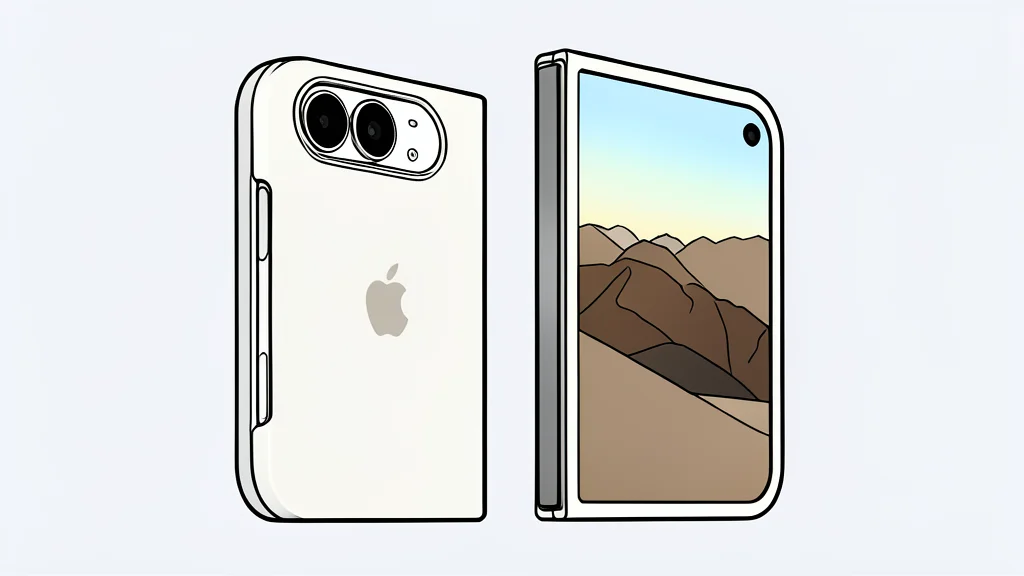
Apple is set to introduce its first foldable smartphone, the iPhone Duo, on October 23. The initial model will rely on Touch ID for security and will feature a standard dual-camera setup. This decision was driven by the physical space limitations inside the device's body, which required engineers to prioritize the hinge mechanism over advanced sensor arrays.
According to reports from MacRumors, Bloomberg’s Mark Gurman expects these compromises to be resolved in the third generation of the device. The goal is to bring the foldable in line with the feature set of Apple’s standard flat-screen iPhones, specifically by integrating Face ID and a dedicated telephoto lens for optical zoom.
Hardware constraints shaped the initial design
The first version of the iPhone Duo faces a difficult engineering challenge. Fitting a flexible hinge and two display panels into a single frame leaves very little room for the depth-sensing sensors required for Face ID. Consequently, Apple opted for a simpler Touch ID sensor, likely embedded in the side button, which is a familiar interface for users but lacks the biometric speed of facial recognition.
Similarly, the camera system in the launch model is limited to wide and ultra-wide lenses. The space required for a telephoto module, which allows for optical zoom without losing image quality, was deemed too large for the initial chassis. This means early adopters will need to rely on digital cropping for zoomed-in shots, a trade-off that may be noticeable in low-light conditions.
AI and miniaturization drive future upgrades
Gurman suggests that Apple will overcome these physical limits in the next two generations through component miniaturization and artificial intelligence. By shrinking the size of the depth-sensing hardware, Apple can free up space for the necessary sensors for Face ID. This approach allows the company to use smaller, less complex physical components while relying on software to process the data effectively.
For the camera system, advances in computational photography will likely play a significant role. Rather than simply installing a larger lens, Apple may use AI to enhance image clarity and zoom capabilities. This strategy mirrors the company’s approach in recent flat-screen iPhones, where software processing compensates for hardware limitations, ensuring that the third-generation foldable feels more complete for users who expect premium photography features.
The launch timeline for new features
While the improvements are expected, they are not immediate. The iPhone Duo launching in October will not include Face ID or a telephoto lens. Buyers looking for these specific features will need to wait for the third-generation model, which is not expected to arrive until after the second-generation refresh. This phased rollout allows Apple to test the foldable market with a viable product before adding the more complex and expensive components.