Volkswagen's Teardrop Concept Sets Aerodynamic Records
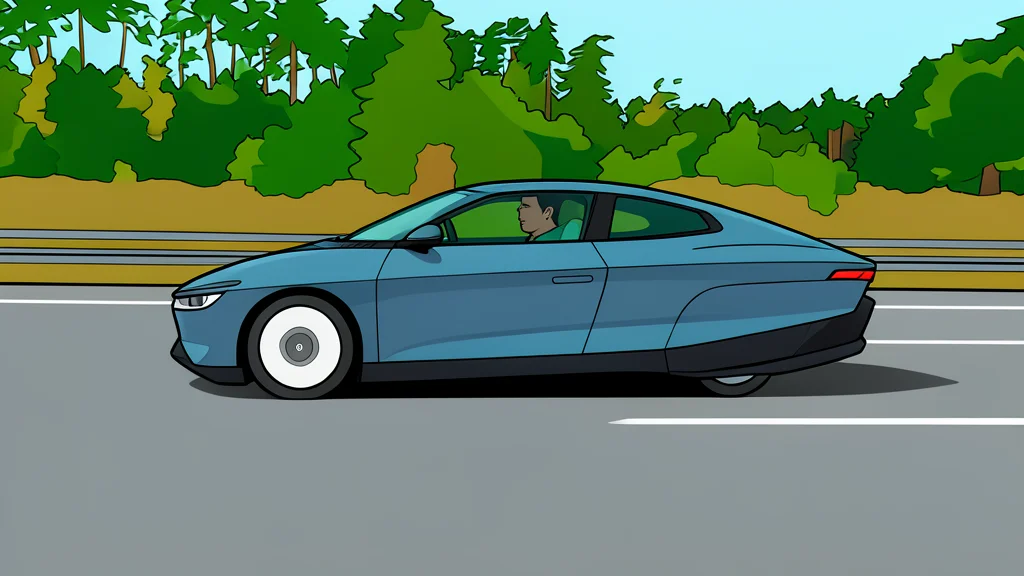
Volkswagen has set a new benchmark for efficiency with a sleek concept vehicle that uses standard ID. Polo hardware to achieve a record-low drag coefficient.
Volkswagen has claimed three world records with its Mission Efficiency concept, demonstrating that extreme aerodynamic efficiency is possible without exotic technology. The vehicle achieved a drag coefficient of 0.158, the lowest figure recorded for any road-approved car, while consuming just 6.48 kWh per 100 km under ideal testing conditions. These achievements were certified by Germany’s Record Institute, confirming the car’s status as a legitimate near-production vehicle rather than a laboratory curiosity.
The company emphasizes that this performance was not the result of bespoke engineering, but rather the application of affordable components from its existing lineup. By using the motor and battery family from the ID. Polo, Volkswagen argues that significant efficiency gains are available to a broader market. This approach positions the concept as a proof of concept for future mass-produced electric vehicles, suggesting that current platform limitations can be mitigated through design rather than expensive upgrades.
Standard Hardware Powers Record Performance
The core of the vehicle relies on the MEB+ platform, which is currently used in the ID. Polo and ID. Cross. The front axle, hydraulic brakes, and electric drive system are identical to those found in these production models. This strategy allows Volkswagen to claim that the efficiency gains are directly transferable to cars that consumers can actually buy, rather than being isolated to a one-off prototype. The rear axle features an electromechanical brake system that reduces friction losses and improves energy recovery during braking.
A documented drive of over 1,278 kilometers from Wolfsburg to Vienna verified the car's real-world capability. The vehicle averaged 67.72 km/h and completed the journey with 164 kilometers of range remaining in its 54.9 kWh battery. This practical test confirms that the theoretical figures cited in the record claims hold up under varied driving conditions, providing a credible baseline for future efficiency standards in the electric vehicle sector.
Aerodynamic Design Minimizes Air Resistance
The vehicle’s shape is a critical factor in its low drag coefficient, featuring a teardrop profile with a long, tapering tail. The body is 4,775 mm long but only 1,392 mm high, reducing the frontal area to 2.08 square meters. To further streamline the airflow, the rear wheels are fully clad, and the underbody is covered to prevent air turbulence. Active cooling flaps at the front admit only the minimum amount of air required for the battery and motor, closing off when less cooling is needed to maintain smooth airflow.
Attention to detail extends to the wheels, which account for a significant portion of a car’s aerodynamic drag. Volkswagen installed patented rim deflectors to stop air from circulating chaotically inside the wheel wells. The tires supplied by Continental feature a rolling resistance of 4.9 kg/t, a figure that is 25% lower than the best standard European tire labels. These combined efforts ensure that the car moves through the air with minimal resistance, directly translating to lower energy consumption.
Cabin Reductions Trade Comfort for Efficiency
To achieve these levels of efficiency, the interior was stripped of traditional amenities. The cabin uses lightweight panelling and replaces the standard speaker system with a portable Bluetooth box. A bring-your-own-device layout means there is no built-in infotainment screen, requiring passengers to use their own phones or tablets mounted on a rail. While this reduces weight, it also removes the convenience of an integrated digital interface, a trade-off that may not suit all daily drivers.
Space and comfort are also compromised. The rear seats are designed for passengers up to 1.6 meters in height, which limits the vehicle's utility for taller occupants. However, the boot offers 481 liters of storage, which is more than the ID. Polo. A photovoltaic system integrated into the roof and boot lid can add up to 30 kilometers of range per day, though this energy is used for electrical systems rather than the main battery. As reported by GN auto tech/ev, the concept is not for sale, serving primarily to showcase the potential of current technology when pushed to its aerodynamic limits.