CATL Signs Egyptian Battery Deal After Xi Visit
China’s largest battery maker has agreed to support a new facility in Egypt, but the project focuses on assembly rather than core cell production, raising questions about the depth of local industrial development.
Contemporary Amperex Technology Co. (CATL) has signed a contract to help build a battery plant in Egypt, a move that occurred less than two weeks after President Xi Jinping’s state visit to Cairo. The agreement, signed in the presence of Prime Minister Mostafa Madbouly, marks a significant step in the Chinese firm’s global expansion, though its scope is narrower than its other international ventures.
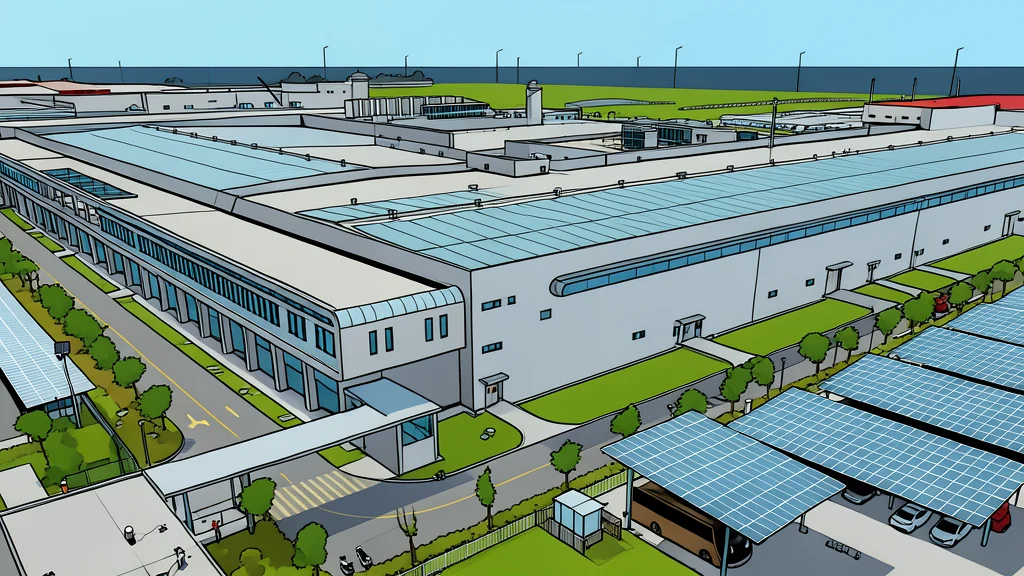
According to reports from GN auto tech/ev: electric vehicle, the facility will function as an industrial base for battery systems, specifically handling pack assembly rather than the production of individual battery cells. This distinction is crucial: while the plant will integrate thermal management and final system components, the core cells are expected to be supplied from China, limiting the local value added to the manufacturing process.
Assembly Focus Limits Local Value
The first phase of the project aims to produce one gigawatt-hour of capacity annually for heavy commercial vehicles, with an investment of approximately $39 million. Industry analysis suggests that the most valuable components of battery technology, including cell chemistry and control software, will not be localized in this initial stage. This means that while Egypt will gain assembly capabilities, the intellectual property and high-margin manufacturing steps remain with CATL.
This approach contrasts sharply with CATL’s European plants, such as those in Germany and Hungary, where the company owns or co-owns the full production lines. In Egypt, the arrangement resembles a licensing model, where local partners handle integration while relying on Chinese inputs. Critics argue that this limits the long-term industrial benefits for the host country compared to full-scale cell manufacturing.
Context of Global Expansion
CATL, headquartered in Ningde, has adopted different strategies in various markets. In the United States, it licenses its technology to Ford, while in Indonesia, it is building an integrated supply chain from mining to recycling. Egypt represents the lightest version of this playbook, focusing on technology transfer and support for an existing customer, MCV, which already uses CATL batteries in its electric buses.
The timing of the deal, shortly after Xi’s visit to mark 70 years of diplomatic relations, underscores the political dimension of such commercial agreements. However, the lack of a confirmed construction date or specific site location suggests that the project is still in early stages, with potential risks regarding execution and local content targets remaining.
Trade-Offs in Industrial Strategy
For Egypt, the deal offers a pathway to enter the electric vehicle supply chain without the massive capital outlay required for cell production. The target of 40% local content is ambitious, but it depends on the extent to which assembly and integration processes can be decoupled from the core cell technology. The trade-off is clear: lower initial investment and faster deployment in exchange for less control over the most critical aspects of battery manufacturing.
As the global electric vehicle market matures, such partnerships will likely become more common. However, for developing economies, the depth of technology transfer remains the key metric for long-term industrial growth. This Egyptian project serves as a case study in how battery giants navigate political and economic landscapes, balancing their own strategic interests with the developmental goals of partner nations.