Why a Cheap Magnetic Puck Beats Built-In Car Charging
Built-in wireless chargers often force phones into awkward spots. A simple magnetic accessory restores control over placement and heat.
Wireless charging in cars is intended to reduce cable clutter, yet the built-in pads frequently create new problems. They often sit in the center console or under the screen, forcing drivers to reach for their phones in inconvenient positions. This fixed placement can also trap heat, especially in sunny climates, leading to slower charging speeds and potential device overheating.
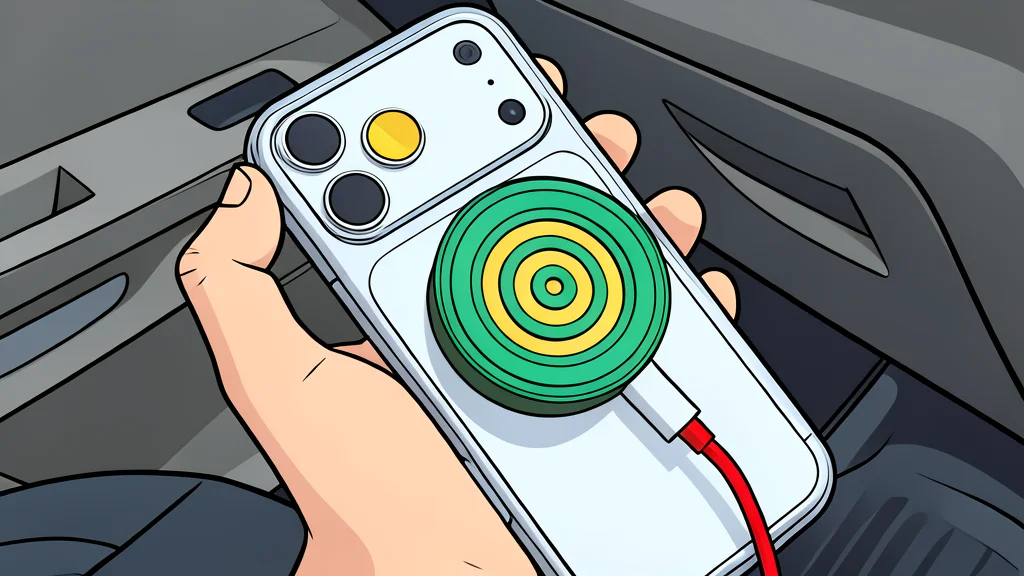
A recent report by XDA Developers highlights a practical workaround: replacing the integrated pad with a standalone magnetic charging puck. This small accessory plugs into the car’s 12V socket via a USB adapter, costing roughly twenty dollars. By treating charging as a flexible accessory rather than a fixed feature, drivers regain control over where their phone sits and how it cools.
Flexibility solves placement and heat issues
The primary advantage of a separate puck is the ability to position the phone wherever it is most useful. A driver can keep the device near the steering wheel for quick access to music or calls, or place it in a bin for storage. This flexibility is critical in hot regions, as it allows the phone to be placed in shaded areas or spots with better air circulation, mitigating the heat generated by wireless charging.
Unlike a fixed plate, the puck does not dictate the phone's location. If a driver needs to answer a call, they can simply detach the phone without fumbling with cables or pulling over. The magnetic connection ensures the phone stays aligned for charging without requiring precise manual placement, reducing the risk of charging failure due to misalignment.
Magnetic connection ensures reliable charging
Many users might ask why they should not simply use a traditional cable. The appeal of the magnetic puck lies in its balance of convenience and reliability. Once the phone is attached to the puck, it remains securely in place while the vehicle moves, eliminating the need to reposition the device repeatedly. This steady connection ensures that charging continues uninterrupted, even on bumpy roads.
The setup is also future-proof. If wireless charging standards evolve, the user only needs to replace the small puck to gain access to faster speeds or newer protocols. The rest of the infrastructure, including the USB adapter and the car’s power socket, remains compatible. This modularity means the investment in the basic cabling and power supply does not become obsolete when phone technology advances.
Simple setup avoids expensive upgrades
Implementing this solution requires no technical expertise. The user selects a compatible magnetic puck, connects it to a USB adapter, and plugs it into the car’s cigarette lighter socket. This process takes only a few seconds and can be done in any vehicle. It transforms a rigid, factory-installed feature into a customizable tool that adapts to the driver’s specific needs.
The trade-off is minimal. The driver must manage a slightly larger accessory than a flat pad, but the gain in usability is significant. By decoupling the charging mechanism from the car’s interior design, users avoid the compromises of fixed placement. This approach offers a practical, low-cost alternative that enhances the daily driving experience without requiring a new vehicle.