Boston Dynamics Opens Georgia Center to Train Atlas Robots
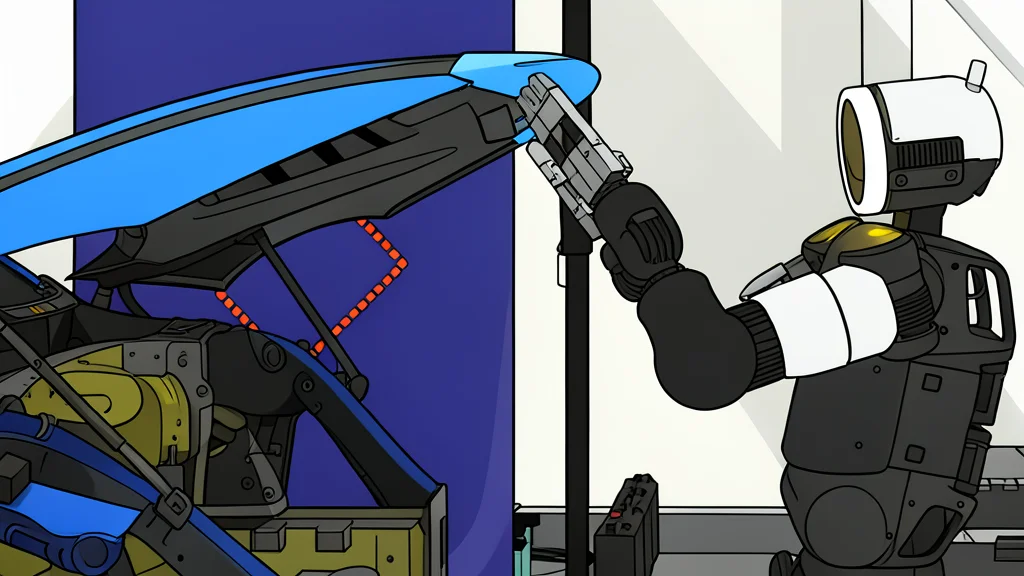
The new facility focuses on dexterous manipulation of automotive parts, marking a shift from short-term trials to permanent data collection.
Key points
- The Georgia facility serves as a permanent 'Robot Behavior Factory' for training Atlas on automotive tasks.
- Training focuses on dexterous manipulation of complex car parts, including grasping and bimanual handling.
- Boston Dynamics aims to expand Atlas capabilities to component assembly by 2030, reducing human physical strain.
Boston Dynamics has opened a permanent training facility in Georgia to prepare its Atlas humanoid robots for real-world factory work. Located at the Hyundai Motor Group Metaplant America, the Robotics Metaplant Application Center serves as a dedicated testbed for integrating the robots into automotive manufacturing operations.
This facility marks a significant shift from previous short-term deployments. According to The Robot Report, the center is designed to function as a "Robot Behavior Factory," generating high-quality data by having robots interact with actual production fixtures and parts. This approach aims to bridge the gap between simulated environments and the complex physical realities of a working auto plant.
Focus on Dexterity and Real Parts
The training emphasizes handling complex automotive components that require precise manipulation. Robots must navigate fragile surfaces, manage awkward weight distributions, and execute bimanual tasks. This includes extracting parts from packaging and inserting them into high-density storage units, a process that demands a level of dexterity not yet common in industrial automation.
Zack Jackowski, chief product and technology officer at Boston Dynamics, noted that the hardware design assumptions for the production version of Atlas have proven largely accurate. The primary learning curve now involves the applications themselves, such as modifying fixtures to be more robot-friendly and optimizing data collection methods within a live production environment.
Shift From Trials to Permanent Facility
Unlike earlier time-boxed trials that focused on gathering initial design lessons, this new center is a permanent anchor for global deployment. It operates in close coordination with the adjacent auto plant, ensuring that the robots are trained on the specific operational realities of the facility. This continuous data loop is intended to improve reliability before wider commercial rollout.
The company plans to expand the robots' capabilities to include component assembly by 2030. Over time, Atlas is expected to take on strenuous and repetitive tasks, such as lifting heavy loads, thereby reducing physical strain on human workers. This strategy aligns with a broader goal to make industrial work safer and more productive through physical AI.