Qiyuan Launches Home Robots Under 20,000 Yuan
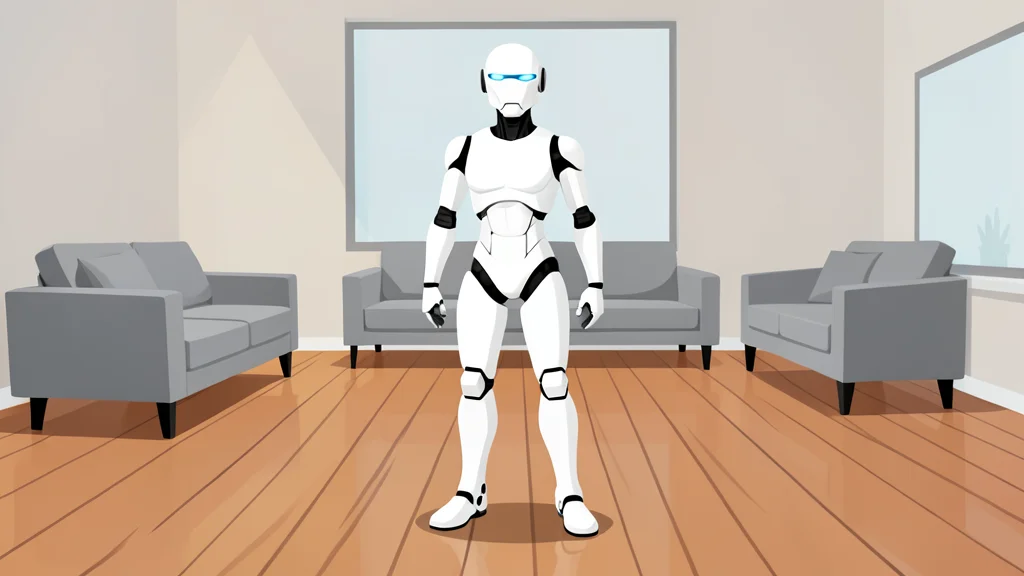
Sunway New Materials enters the consumer market with two personal robots priced below 20,000 yuan, prioritizing companionship over heavy labor.
Key points
- Qiyuan Q1 and T1 robots are priced at 19,999 yuan and 26,999 yuan respectively.
- The company targets the consumer home market despite the technical difficulty of unstructured environments.
- Revenue strategy depends on content subscriptions and services rather than just hardware sales.
Sunway New Materials has officially released its Qiyuan Q1 and T1 personal robots in Shanghai, setting a baseline price of 19,999 yuan. This move marks the company's transition from industrial incubation to the consumer market, positioning the devices as affordable entry points for household technology.
The pricing strategy mirrors recent trends in premium electronics, making the robots comparable in cost to high-end smartphones. However, the immediate availability of these units raises critical questions about their practical utility and the company's long-term sustainability in a competitive sector.
Shifting focus from industrial to home
While many robotics firms target factories due to structured environments, Qiyuan aims for the complex, unstructured space of the home. Industry insiders note that this is a significantly harder path, as household settings lack the predictable data patterns found in manufacturing plants.
To navigate this difficulty, the company avoids promising heavy housework capabilities. Instead, the initial models focus on education, companionship, and entertainment. The Q1 is designed for children's interaction, while the T1 offers versatile movement for family and outdoor use.
Revenue relies on ecosystem services
CEO Tian Hua states that hardware sales are merely the entry point. The company's primary growth strategy involves subscriptions, content licensing, and maintenance services. This approach seeks to create recurring revenue streams rather than relying solely on one-time device purchases.
According to reporting by 36kr.com, this business model mirrors the smartphone industry, where the device serves as a gateway to a broader digital ecosystem. The trade-off is that the hardware must be robust enough to support long-term user engagement.
Generalization remains a technical hurdle
The core challenge for these robots is generalization, or the ability to perform tasks in diverse, unpredictable scenarios. While the T1 can switch between humanoid and quadruped forms, making it useful for carrying objects, it does not yet replace traditional cleaning appliances.
The company acknowledges that the first stage of product evolution is to be interesting rather than fully functional. This positions the robots as novelty items and educational tools, with the expectation that utility will expand as the technology matures.