Figure Robots Test Zero-Shot Housework in 30 Real Homes
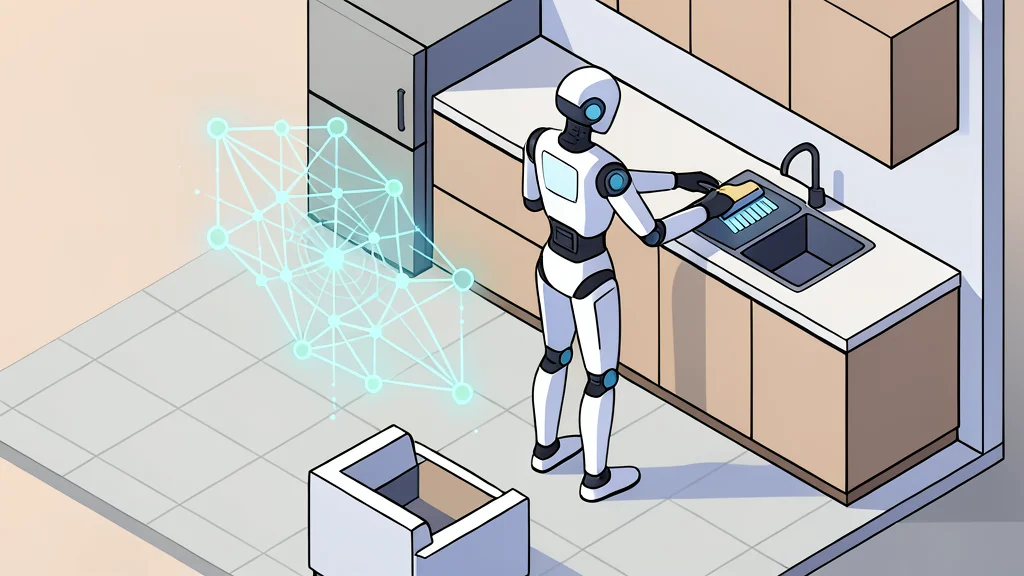
Figure AI reports a significant jump in robot autonomy by testing its latest model in unfamiliar apartments without prior training data.
Humanoid robotics company Figure has reported that its latest neural network model, Helix 2.5, achieved a zero-shot success rate of 56 percent in real-world household tasks. This marks a substantial increase from the previous 9 percent benchmark. The company claims this performance was achieved without collecting new data or adapting the robot to specific environments, challenging the traditional approach of training machines in controlled settings before deploying them.
To validate these claims, Figure rented 30 apartments in the San Francisco Bay Area. The Figure 03 robots were sent into these unadjusted homes to perform daily chores such as tidying living rooms, making beds, and folding towels. The goal was to determine if the robots could rely solely on general knowledge gained from large-scale human behavior data to navigate and manipulate objects in spaces they had never seen before.
Testing autonomy in unfamiliar spaces
The experiment required robots to handle complex, multi-step tasks in cluttered environments. Unlike desktop robotic arms that operate in fixed, open workspaces, humanoid robots must navigate narrow spaces and adjust their body posture while working. In the living room tests, the robots had to actively search for scattered toys, pick them up, and place them into baskets. This process demanded simultaneous coordination of movement, perception, and manipulation.
More difficult tasks involved handling deformable objects, such as pulling and smoothing bed linens or folding towels. The robots had to identify items they had never encountered before and execute precise two-handed coordination. Figure argues that these tasks represent a shift away from environment-specific training, relying instead on a base model pre-trained on diverse human data to generalize skills across different home layouts.
The cost of rapid deployment
While the jump to 56 percent success is notable, it leaves nearly half of the attempts failing. According to GN auto tech/robotics, the trade-off for this speed is that the robots cannot yet guarantee reliable performance in every new home. The current system relies on broad generalization rather than precise adaptation, which may lead to errors when encountering unusual furniture arrangements or object placements that differ from the training data.
Brett Adcock, Figure’s CEO, emphasized that the company aims to break the paradigm of collecting data in specific environments. However, the remaining 44 percent failure rate highlights the difficulty of transferring skills from virtual or observed human behavior to physical reality. The robots must manage their own balance and spatial awareness in real-time, a challenge that remains significant despite the improved neural network architecture.
Implications for future home robotics
This approach suggests a future where robots can enter a home and start working immediately, similar to human workers who do not need to relearn how to use a new kitchen. By leveraging cross-environment transfer abilities, Figure hopes to reduce the setup time required for household automation. The success of Helix 2.5 indicates that general-purpose models are becoming more viable for complex, physical tasks, though widespread adoption will require further improvements in reliability and safety.