Germany Launches First Driverless Grocery Truck
A new era of freight logistics begins as Germany authorizes the first cab-less autonomous truck for regular public road service, marking a shift from testing grounds to daily commerce.
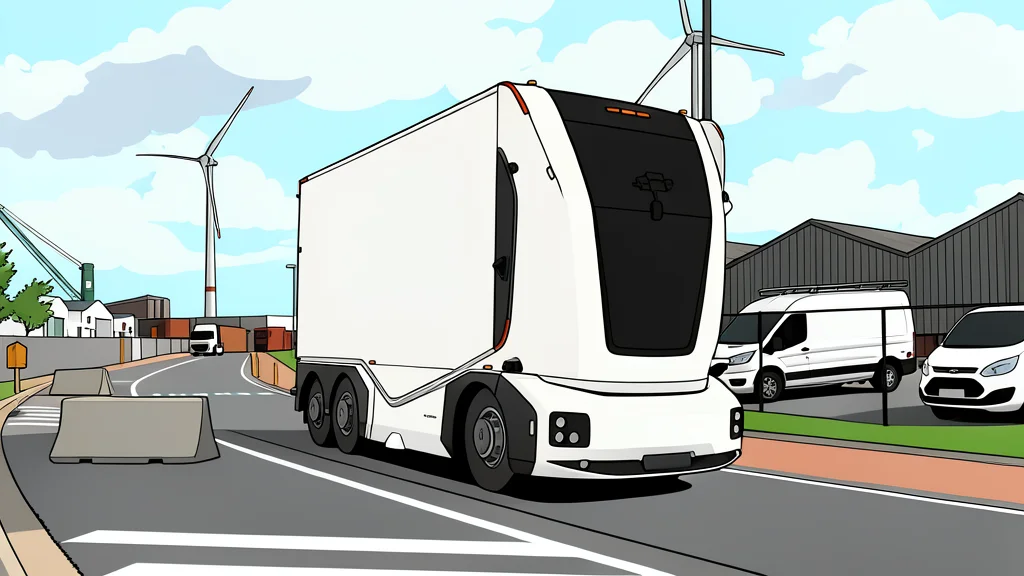
Drivers on German highways may soon share the road with a vehicle that has no steering wheel, no pedals, and no human behind the glass. Swedish manufacturer Einride has begun operating a battery-electric truck in regular service for the grocery chain Lidl, marking a significant milestone in the adoption of autonomous freight technology. This is not a prototype running on a closed test track; it is a working vehicle delivering goods in real-world traffic, operating under a specific permit issued by Germany’s Federal Motor Transport Authority.
The deployment is notable because it represents the first time a fully autonomous truck has been authorized to operate without an onboard safety operator in the country. As reported by GN auto tech/ev: electric vehicle, this approval highlights a shift in regulatory posture. Germany, which typically maintains some of Europe’s strictest safety standards for self-driving vehicles, has validated the technology for commercial use. The truck operates at SAE Level 4 autonomy, meaning it can handle all driving tasks in its designated operational domain without human intervention, though it is still restricted to specific pre-mapped routes rather than unrestricted national travel.
Regulatory Approval Opens New Markets
The significance of this move lies in the regulatory landscape. Germany is the largest road freight market in Europe, making it a critical proving ground for any company seeking to scale autonomous logistics. The permit follows an extensive validation process with the KBA, the federal authority responsible for motor vehicle approval. By granting this authorization, regulators have signaled that the safety case for driverless trucks is strong enough to withstand the scrutiny of a major European economy. This sets a precedent that could influence neighboring countries, potentially accelerating the commercial rollout of similar vehicles across the continent.
However, this approval comes with specific limitations. The truck is not free to roam the entire German highway system. It is confined to a specific route connecting a warehouse, a distribution center, and a retail store. This geofencing is a common trade-off in early-stage autonomous deployments, allowing operators to manage risk by limiting the vehicle’s exposure to unpredictable traffic scenarios. While this restricts immediate scalability, it provides a controlled environment to gather the vast amount of data required to prove long-term reliability and safety, which is essential for expanding the network to include multiple stops and additional locations within the Lidl parent company’s footprint.
Solving Logistical Shortages and Emissions
For logistics providers, the primary driver behind this technology is not just novelty, but necessity. The trucking industry faces a persistent shortage of qualified drivers, a problem that has led to delivery delays and increased costs. Autonomous trucks offer a solution by providing a consistent, fatigue-free workforce that can operate around the clock. Additionally, the vehicle is battery-electric, which addresses the industry’s pressure to reduce carbon emissions. By combining automation with electrification, operators aim to improve both the efficiency and the environmental footprint of their supply chains, ensuring that product availability remains reliable even in the face of labor market constraints.
Challenges Remain for Wide Adoption
Despite the progress, the path to widespread adoption is not without hurdles. The current operation is a controlled experiment in a specific corridor, and scaling this to a national network requires overcoming complex regulatory and technical challenges. Public perception also plays a role; while the technology promises efficiency, some drivers and pedestrians may be wary of sharing the road with a vehicle that has no human in control. Furthermore, the infrastructure must be capable of supporting the high energy demands of electric trucks, requiring robust charging networks along the routes. As Einride and Lidl expand their operations, they will need to demonstrate that the system can handle the unpredictability of everyday traffic, from unexpected obstacles to erratic behavior by other road users, before it can be considered a mainstream solution for freight transport.