Global Humanoid Robot Sales Reach 7,000 Units Last Year
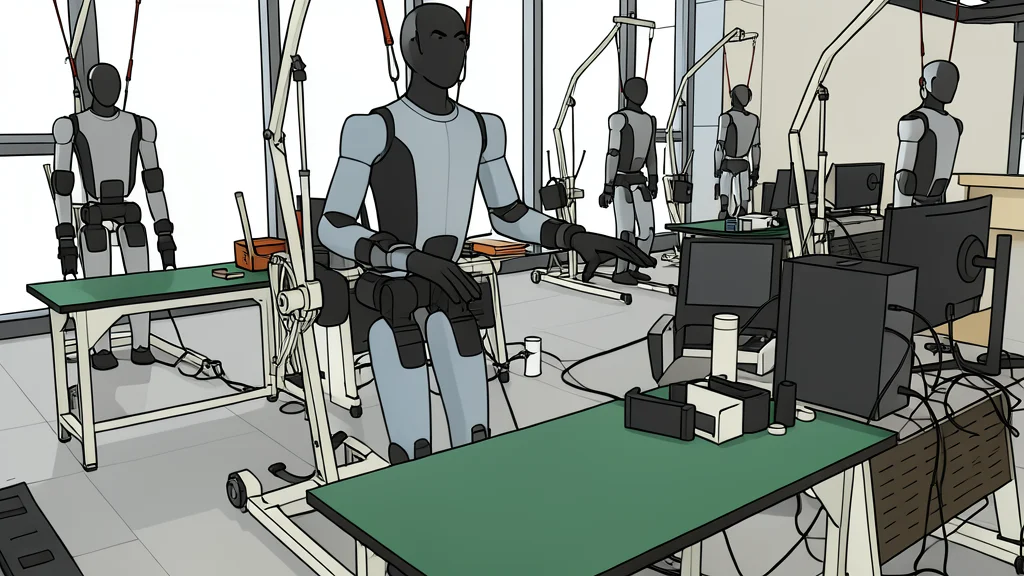
IFR data shows 7,000 humanoids sold, a small fraction of the 542,000 industrial robots installed in 2024.
Key points
- Approximately 7,000 humanoid robots were sold globally last year for industrial and service use.
- This number is a small fraction of the 542,000 industrial robots installed in 2024.
- Bank of America estimates shipments could reach 1.2 million by 2030.
The global market for humanoid robots remains surprisingly small despite intense media attention. According to data from the International Federation of Robotics, approximately 7,000 units were sold worldwide last year for industrial and professional service applications. This figure, reported by KSL News, highlights a significant gap between the current commercial reality and the explosive growth projected by major financial institutions.
The technology is attracting billions of dollars in investment, but its share of the total robot population is still marginal. While humanoid figures are rising, they represent only a fraction of the broader robotics sector. The data provides one of the first industry-wide benchmarks for a category that has been defined more by impressive demonstrations than by consistent workplace utility.
Current market share remains modest
To put the 7,000-unit figure into perspective, manufacturers installed around 542,000 traditional industrial robots in 2024. Additionally, an estimated 199,000 service robots were sold for use in transport, hospitality, and cleaning. Susanne Bieller, secretary general of the Frankfurt-based IFR, noted that humanoids are still a niche segment compared to these established categories. The 2025 data for standard industrial and service robots is scheduled for release on September 24, which will provide a clearer comparison.
Many units serve research purposes
A significant portion of these sales does not involve productive labor. Bieller explained that many humanoids were purchased by research institutions or companies aiming to generate data for improving artificial intelligence models. This suggests that the early market is driven by experimentation and AI training rather than immediate operational efficiency. The primary buyers are exploring the capabilities of autonomous agents in environments designed for humans, even if the robots are not yet performing core manufacturing tasks.
Automotive manufacturers, considered key early adopters, are currently running pilots with only single or double-digit numbers of robots in their plants. This cautious approach reflects the trade-off between the potential for long-term automation and the current limitations in reliability and cost-effectiveness. The industry is in a testing phase, where the focus is on data collection and algorithm refinement rather than large-scale deployment.
Forecasts predict rapid expansion
Despite the modest current numbers, forecasts suggest a coming boom. Bank of America Global Research estimates that 90,000 humanoid robots will be shipped this year, with the number potentially reaching 1.2 million by 2030. China, the world's largest market for industrial robots, is a central part of this growth narrative, having recently showcased humanoid running and boxing at robot games. The IFR’s data, which excludes consumer and military models, indicates that the industry is transitioning from a prototype phase to a commercial one, albeit slowly.