Microsoft Puts $17.5 Billion Behind India's AI Ambitions
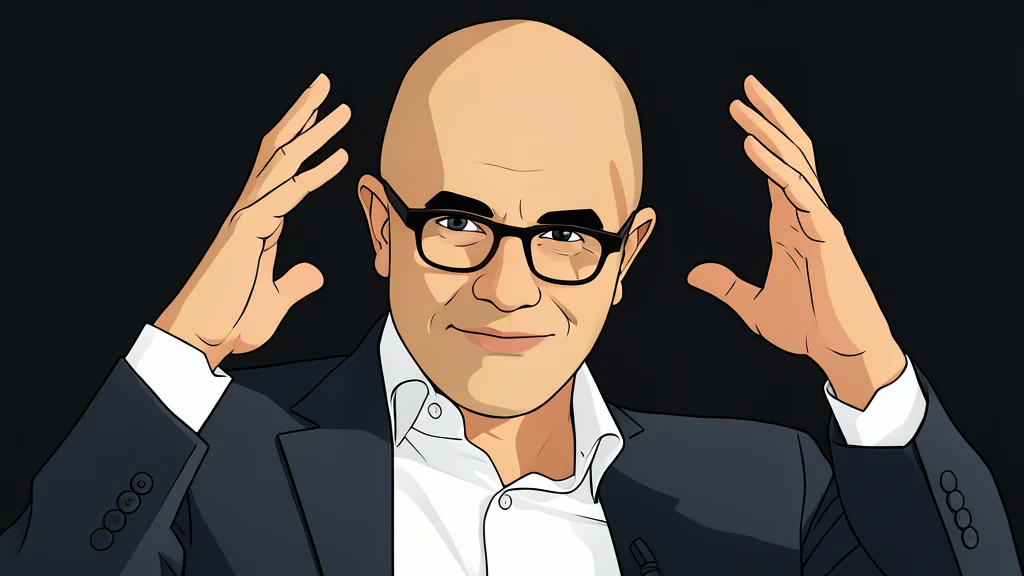
Satya Nadella claims India could host the world's largest developer community by 2030, backed by a massive multi-year investment in cloud and AI infrastructure.
Microsoft’s chief executive, Satya Nadella, has declared that India is poised to become the global leader in artificial intelligence developer talent by 2030. Speaking at a technology forum in Seattle, Nadella emphasized that the country’s human capital is the key driver for this potential. His statement coincides with Microsoft’s announcement of a $17.5 billion investment in India over the next four years, marking the company’s largest financial commitment to any Asian country.
The funds are earmarked for building cloud infrastructure, training local workforces, and establishing sovereign AI capabilities. This move signals a shift from simple outsourcing to deep structural integration, where the goal is to create a self-sufficient ecosystem for AI development within the country. However, this ambition comes with significant trade-offs regarding data sovereignty and the complexity of coordinating across different regulatory landscapes.
Scale of the Financial Commitment
The $17.5 billion outlay spans from 2026 to 2029 and is specifically targeted at advancing cloud and AI infrastructure. Nadella described this as a necessary step to support an AI-first future, noting that raw talent must be paired with the right digital backbone. This investment is not just about buying servers; it is about creating the operational frameworks that allow developers to build and deploy AI applications locally.
While the scale is impressive, the catch lies in the execution timeline. Building sovereign capabilities requires more than capital; it demands a synchronized effort in skills development and policy alignment. Microsoft’s strategy relies heavily on the assumption that India can maintain its competitive edge in software engineering while simultaneously mastering the hardware and infrastructure layers of the AI stack.
Broader Industry Participation
Microsoft is not acting alone in this push. Amazon has announced a separate $48 billion investment plan for the same period, focusing on expanding data center capacity in cities like Mumbai and Hyderabad. Other major players, including Costco, are establishing global capability centers in the region. This collective influx of capital suggests a broader industry consensus that India is a critical hub for the next generation of technology.
The Seattle forum, hosted by the Indian Consulate General, brought together over 40 CEOs and CTOs from firms like Amazon, Boeing, and OpenAI. These discussions aimed to deepen cooperation in areas such as semiconductor design and quantum computing. The presence of such diverse stakeholders indicates that the India-US tech partnership is moving beyond software into more complex, hardware-intensive domains.
Strategic Goals and Trade-offs
The underlying strategy is framed around the India-US TRUST initiative, which seeks to connect innovation ecosystems across both nations. The goal is to foster co-development in AI, space, and biotechnology. However, the emphasis on sovereignty and democratized access creates a delicate balance. Companies must navigate local regulatory requirements while maintaining the global interoperability that their business models depend on.
For the average reader, the stakes are high. If successful, this could mean a surge in local tech jobs and a more robust digital economy. If not, the massive capital expenditure may struggle to yield commensurate returns due to infrastructural or regulatory bottlenecks. The next few years will determine whether this investment translates into tangible leadership or remains a speculative bet on potential.