Japan's Humanoid Robot Advantage Rests on Precise Joint Engineering
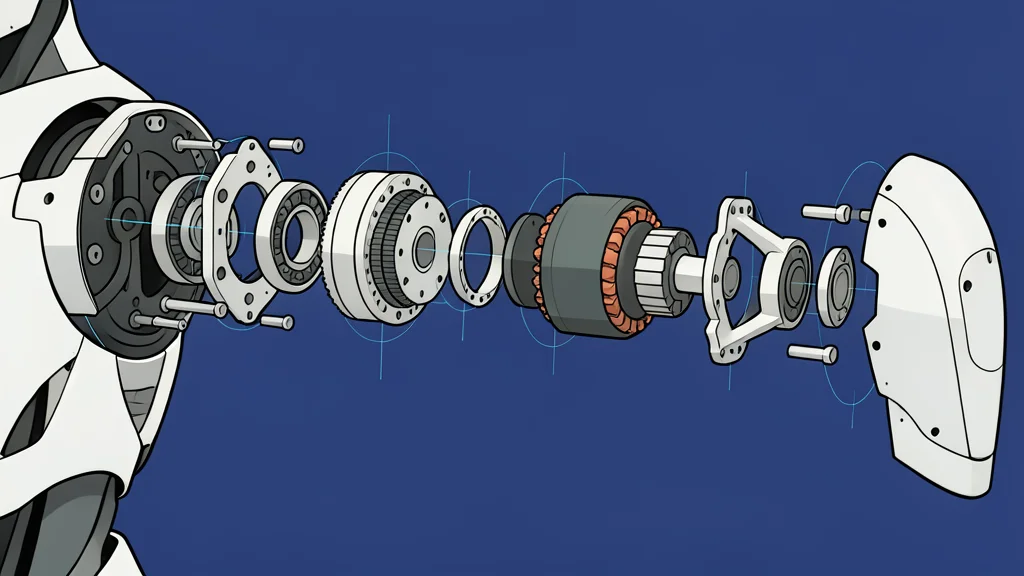
While market forecasts for humanoid robots have exploded, the real barrier to entry is the cost of the mechanical joints that allow them to move.
Financial projections for the humanoid robot industry have grown dramatically in recent years, with some estimates suggesting a market value of nearly $140 billion by 2035. However, these top-down figures often mask the physical reality of building such machines. The critical bottleneck is not the market size, but the manufacturing cost of the specific components that enable movement.
According to reports from GN auto tech/robotics, Japan holds a distinct advantage in this field due to its expertise in precision mechanical joints. While many competitors focus on the overall system design, the difficulty lies in producing the actuators and gears that must operate reliably at scale. This engineering challenge determines whether the robots can become affordable enough for widespread use.
Forecast revisions outpace manufacturing reality
In 2022, analysts noted that no humanoid robot had yet achieved commercial success, predicting economic viability might arrive in the late 2020s. By 2024, forecasts had already increased significantly, citing rapid advancements in artificial intelligence as the primary driver. The most recent updates suggest the market could reach 6.48 million units by 2035, a figure that represents a substantial leap from earlier estimates.
These projections are constructed using penetration rates applied to the global labor market. Small changes in these assumed percentages lead to massive shifts in the total addressable market. For instance, a one-percent increase in adoption rates can add hundreds of billions of dollars to the forecast. This method allows for large swings in predictions without requiring proportional improvements in actual manufacturing capabilities.
The high cost of mechanical actuators
Each robot contains approximately thirty actuators, which are the complex mechanical joints responsible for movement. Industry data suggests that the cost of these components remains the primary obstacle to mass production. While the overall bill of materials is expected to drop to between $13,000 and $17,000 by 2035, the speed of this decline depends entirely on the efficiency of these specific parts.
Cheaper components have become available as the number of suppliers grows, but the precision required for high-performance joints remains difficult to achieve at scale. The gap between the rapid growth of market forecasts and the slower pace of cost reduction in hardware creates a significant risk. Investors must consider that the projected market size is only achievable if these mechanical elements become significantly cheaper and more reliable.
Japan's precision engineering edge
Japan's long history in robotics has given it a specialized advantage in the design and production of these intricate joints. The ability to manufacture high-precision gears and hydraulic systems at a competitive cost is a key differentiator. This technical depth allows Japanese firms to offer components that meet the strict performance requirements of modern humanoid designs, providing a sturdy foundation for the industry's next phase of growth.