Motor Testing Standards Tighten as Robotics and EVs Scale
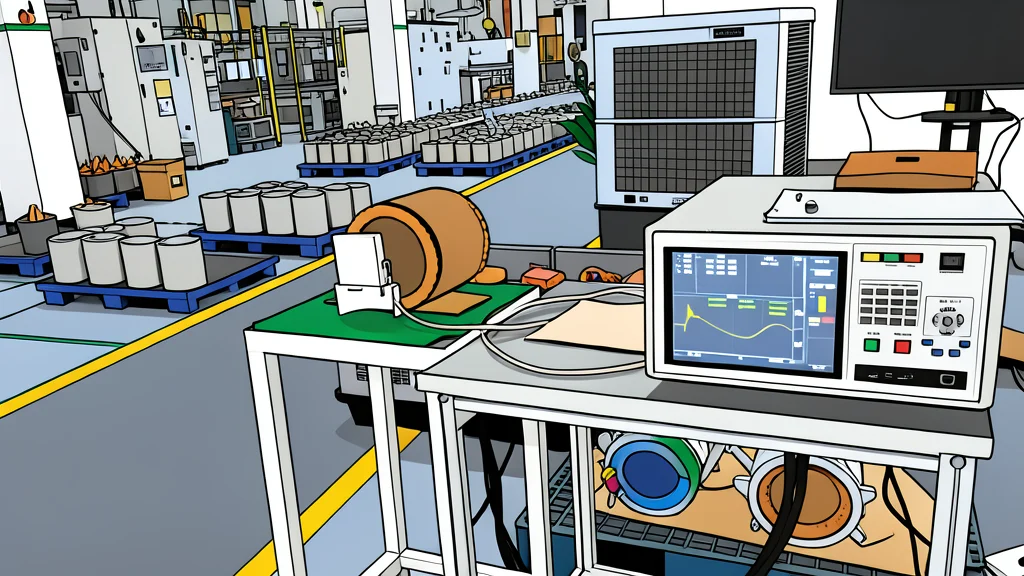
New national standards are forcing a shift from basic checks to complex validation for electric motors, impacting production timelines for robots and vehicles.
The rapid expansion of electric vehicles and humanoid robots is creating a critical bottleneck in the manufacturing supply chain: the inability to test new motors quickly and reliably enough to meet mass production demands. As these technologies move from laboratory prototypes to factory floors, the requirements for motor validation have expanded far beyond simple performance checks. Manufacturers now face a multi-dimensional challenge that includes verifying insulation integrity, dynamic response, and long-term durability, making the testing process itself a primary determinant of how fast new products can reach the market.
This shift is driving a redefinition of industry standards across China’s electrical equipment and robotics sectors. Technical specifications that were once considered routine back-office quality control tasks are now becoming central to product certification. Specialist testing equipment makers are increasingly involved in drafting these new national and industry standards, reflecting a broader trend where validation methodology is no longer just a compliance hurdle but a core component of engineering design.
Standards Define Robot Joint Safety
One of the most significant developments involves the creation of national standards for integrated joints in humanoid robots. These specifications cover rotary and linear joints, as well as the interfaces between components, ensuring that the limbs of these machines can withstand the stresses of real-world use. Companies like Qingdao AIP Intelligent Instruments, which operates internationally as AIP Instrument, have participated in drafting these rules. Their involvement includes taking part in China’s first standard-verification activity for core robot components, signaling that the testing of robot joints is becoming a formalized, regulated discipline rather than an ad-hoc engineering challenge.
High Voltage Tests Move To Factories
Parallel to robotics, the safety of high-voltage motors in electric vehicles is under the microscope. As drive motors operate at higher voltages, the risk of partial discharge—a localized electrical breakdown that can lead to insulation failure—has increased. Traditionally, detecting this issue required controlled laboratory environments, which limited its application to production lines where electrical interference is common. AIP led the drafting of a national test-method standard specifically for partial discharge testing in windings and enameled wire. This standard aims to make such testing feasible on actual production lines, allowing manufacturers to catch early-stage insulation failures before they become safety hazards in finished vehicles.
New Methods Handle Complex Designs
To keep pace with these evolving standards, testing companies are developing new inspection techniques that address gaps left by conventional equipment. For example, new platforms allow for high-precision dynamic analysis of motors used in electric power steering and brake systems. Other innovations include non-destructive tests for single-point wire damage, which replace traditional salt-water immersion methods, and vacuum-based insulation tests that can detect defects invisible under normal atmospheric conditions. These methods are designed to handle the complexity of modern motors, which often integrate the motor, reducer, encoder, and brake into a single unit, requiring testing of the system as a whole rather than as isolated parts.
The trade-off for manufacturers is clear: while these new standards and methods improve safety and reliability, they also raise the complexity and cost of the testing process. Companies must invest in specialized equipment and adapt their production lines to accommodate these rigorous checks. However, as the GN auto tech/robotics sector notes, this investment is becoming mandatory for market entry. The ability to validate motors quickly and accurately is no longer a competitive advantage but a basic requirement for survival in the accelerating race toward mass production of autonomous and robotic systems.