Xpeng Iron Robots Exit Factory Without Human Help
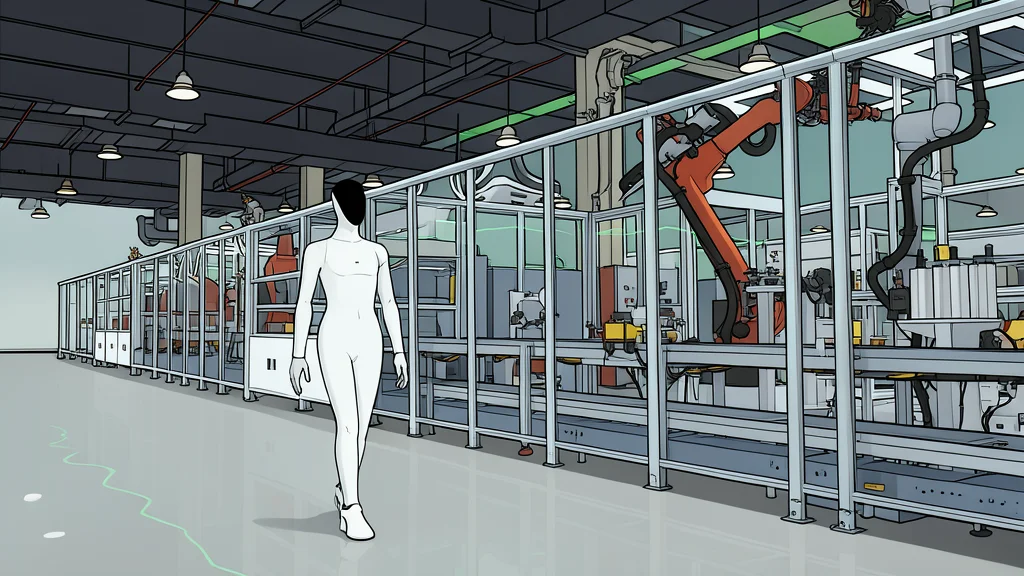
Xpeng has produced its first batch of Iron humanoid robots, marking a shift from staged demos to autonomous assembly line operations.
Xpeng has announced the completion of its first production run of the Iron humanoid robot, a milestone that distinguishes it from previous industry announcements. Unlike Tesla, which has converted its Fremont factory to build the Optimus robot but has yet to deliver a single unit, Xpeng reports that its manufacturing system is already 80% autonomous. The company claims these robots are walking off the assembly line on their own, signaling a move toward consistent, high-volume manufacturing rather than just functional prototypes.
The timeline for widespread availability remains tight. Xpeng expects to begin mass production by the end of 2026, with customer deliveries scheduled for 2027. This places the Iron robot on a similar delivery track to Tesla’s Optimus, which CEO Elon Musk has also promised for 2027. However, the context of Xpeng’s announcement comes with significant financial caveats, as the automaker’s stock has dropped nearly 50% in the first half of 2026.
Designed for Daily Tasks
The Iron robot is engineered to handle a variety of household and industrial chores, from factory work to making coffee. CEO He Xiaopeng describes the device as a companion intended to integrate into everyday life. To achieve this, the unit is equipped with three AI chips to provide the necessary computing power, alongside hardware designed for human-like dexterity. This technical configuration aims to bridge the gap between rigid industrial automation and flexible general-purpose assistance.
The company notes that Iron is already assisting in its own manufacturing process. This self-referential production method suggests a level of operational maturity that goes beyond the tech demonstrations seen in 2025. The physical design has also evolved, with the robot appearing less exposed in its current form, indicating an effort to make the hardware more acceptable for public interaction.
Investor Concerns Persist
Despite the production milestone, transparency remains a challenge for stakeholders. The official website for the Iron robot provides limited specific details, which may be hindering investor confidence. This lack of granular data is particularly notable given the volatile performance of Xpeng’s shares. The market appears skeptical of the company's ability to sustain the high costs associated with developing and scaling such complex robotics.
The competitive landscape is intensifying as well. It is not only Xpeng and Tesla racing to deliver humanoid robots by 2027. Other manufacturers are simultaneously working on their own creations, each with varying levels of technological readiness and design philosophy. China continues to lead in this sector, but the race is becoming a multi-player contest where execution and reliability will determine who actually reaches the consumer market.
Autonomous Production Reality
The claim of an 80% autonomous manufacturing system is a significant technical assertion. It implies that the robots are not just being built by other robots, but that the production line itself is heavily self-regulating. This reduces the need for human intervention in the assembly process, which is a critical step for scaling production efficiently. However, the remaining 20% of human involvement likely handles complex quality control or edge-case troubleshooting that current AI cannot yet resolve.
This development highlights a divergence in strategy between major players. While Tesla focuses on software-defined control and high-end consumer appeal, Xpeng is emphasizing the manufacturability and integration of the hardware into existing industrial workflows. The ability to produce these units at scale without constant human oversight is the key differentiator that could allow Xpeng to meet its 2027 delivery targets, provided the financial pressures do not force a retreat.