Robot Creepiness Is Highly Personal and Subjective
A new study reveals that whether people find social robots unsettling varies wildly between individuals, challenging the idea of a universal design standard for comfort.
The feeling that a robot is "creepy" is not a fixed property of the machine itself, but rather a deeply personal reaction. Research conducted by the University of Waikato indicates that there is no single set of features that universally makes a robot unsettling. Instead, the same machine can be perceived as charming and engaging by one person while appearing threatening or intrusive to another. This variability complicates the deployment of social robots in public spaces where interaction is unavoidable.
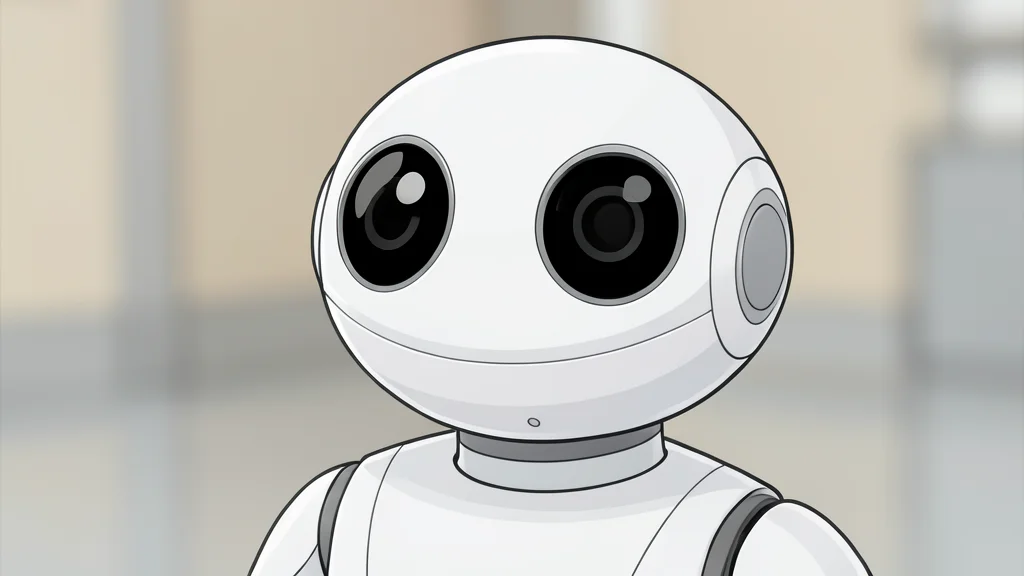
The study, reported by GN auto tech/robotics, examined why certain designs trigger discomfort. While designers often rely on "baby schema" traits like large eyes and rounded shapes to appear friendly, this does not guarantee a positive response. The research highlights that perceived creepiness is subjective, meaning that manufacturers cannot simply optimize for one specific aesthetic to ensure broad acceptance. The human factor remains the primary variable in how these technologies are received.
Subjective reactions defy standard scales
Scientists previously attempted to measure robot creepiness using a scale that focused on three factors: undesirability, implied malice, and unpredictability. The logic was that if a robot felt unwanted, malicious, or unpredictable, it would be classified as creepy. However, when researchers tested this scale against six commercial social robots, the results were inconsistent. A robot could score as non-creepy on the scale while still exhibiting behaviors that many people found concerning, such as handling personal data or attempting to influence decisions.
The disconnect between the metric and human perception suggests that the scale fails to capture the full complexity of the interaction. The study found that respondents had no consensus on which robots were the most or least unsettling. In one notable instance, a robotic dog was ranked as the creepiest by some participants and the least creepy by others. This split demonstrates that individual history, expectations, and context play a larger role in shaping the reaction than the physical design of the robot.
Design cues do not guarantee comfort
The research points to a limitation in how we approach robot design. Often, creators look to animation standards, where characters with baby-like features are designed to be cute and angular, realistic figures are designed to be threatening. The study suggests that translating these visual cues to physical robots does not produce a predictable emotional response. A robot that looks harmless may still feel intrusive to someone who feels pressured to interact with it in a workplace or public setting.
This trade-off is significant for industries deploying these machines. If a robot is designed to be engaging, it may inadvertently cause discomfort for those who perceive its presence as an invasion of personal space. The lack of a universal standard means that developers must consider the diverse range of human reactions rather than assuming that a friendly appearance will resolve the issue. The catch is that what makes a robot acceptable to one group may make it unacceptable to another.
Implications for public deployment
As social robots become more common in schools, hospitals, and airports, the subjective nature of creepiness becomes a practical challenge. People cannot simply ignore these machines if they are in their immediate environment. The study underscores that trust and acceptance are not automatic outcomes of good design. Instead, they depend on how individuals interpret the robot's intent and behavior in real-time. This requires a more nuanced approach to human-robot interaction, one that accounts for personal variance rather than seeking a one-size-fits-all solution.