States Reclaim Federal Funding for EV Charging Networks
A legal victory has restored access to billions in federal dollars, allowing states to resume building public electric vehicle charging stations after a brief federal suspension.
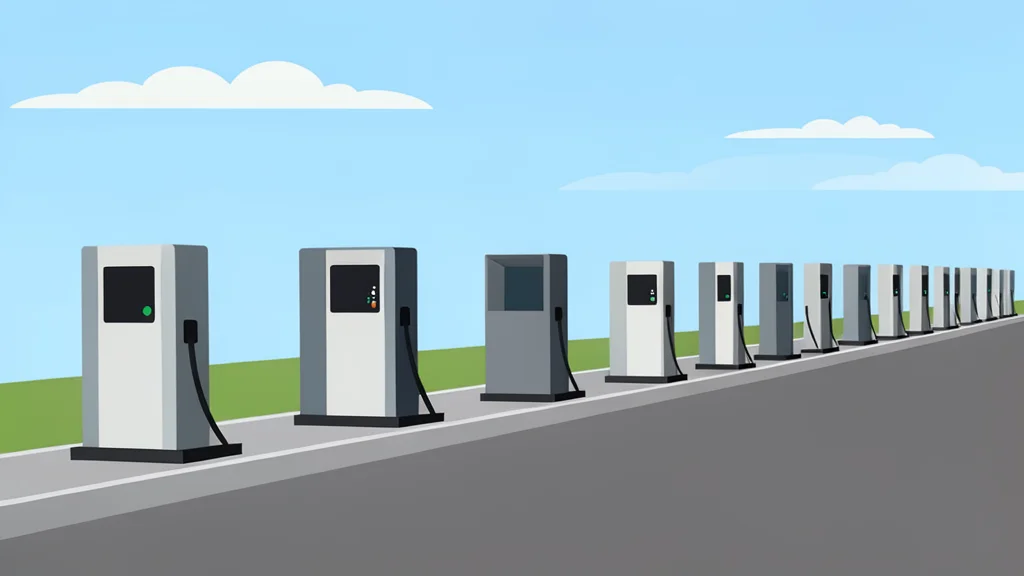
Public electric vehicle charging infrastructure in the United States has secured a new lease on life following a recent legal intervention. A group of states successfully challenged a federal order that had paused the distribution of billions in funding designed to build a national network of fast-charging stations. This move reverses a decision made earlier this year by the Department of Transportation, which had halted the program shortly after the current administration took office.
The suspension created immediate uncertainty for state agencies that were in the middle of planning or construction. While some states had already opened stations funded by this program, others faced the prospect of abandoning projects that were years in the making. The legal battle, reported by GN auto tech/ev: electric vehicle, centered on whether the executive branch could unilaterally stop funding that Congress had explicitly allocated to state governments for infrastructure development.
Federal Funds Return To State Planners
The National Electric Vehicle Infrastructure program, commonly known as NEVI, was established to ensure that long-distance drivers have reliable access to fast-charging stations along major highways. Funded through the Bipartisan Infrastructure Law, the program provided state transportation departments with direct federal dollars to identify locations, build stations, and manage the network. By mid-2024, all fifty states had submitted their plans, and several had begun installing hardware.
When the Department of Transportation suspended the program in early 2025, it effectively froze these funds. States argued that this action violated the law because Congress had mandated the spending, leaving the executive branch with little discretion to withhold it. The lawsuit filed in August argued that the suspension was an overreach of executive power, noting that no federal mandate for electric vehicles existed to be eliminated, as the administration’s executive order had claimed.
Legal Challenges Frame The Dispute
The core of the legal argument focused on the separation of powers and the constitutional duty to execute laws faithfully. Plaintiffs contended that the federal government could not categorically withhold funds that were legally appropriated for a specific purpose. The court’s involvement highlighted a broader tension between federal policy shifts and the ongoing obligations of state governments to maintain essential infrastructure.
The resolution of this dispute allows state agencies to resume their work without the legal limbo that characterized the past few months. However, the episode serves as a reminder that federal infrastructure funding can be politically volatile. States that rely on federal grants for large-scale projects must now navigate a landscape where policy reversals are possible, even when funds are already committed.
Impact On National Charging Coverage
For drivers, the practical implication is the continuation of a growing network of public chargers. Before the suspension, hundreds of charging ports were already in operation, with thousands more in the pipeline. The restoration of these funds ensures that the goal of a coordinated national network remains intact, reducing range anxiety for those making long trips.
The trade-off, however, is the added administrative burden and legal risk that state agencies now face. Having to litigate for funds that were already allocated adds cost and delay. Furthermore, the uncertainty may make it harder for private companies to commit to building stations in areas where federal support is a key part of their business model. This creates a fragile foundation for an industry that requires long-term stability to attract investment.