Rodriguez Launches Movable Axis to Expand Cobot Reach
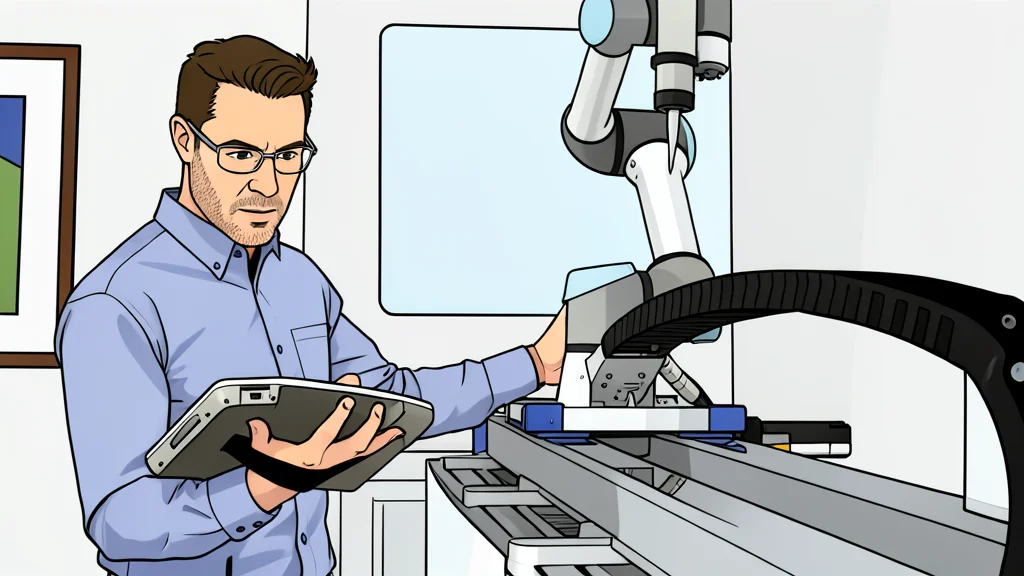
A new linear rail system allows a single collaborative robot to serve multiple workstations, potentially reducing the need for additional hardware.
Rodriguez has introduced a new collaborative transfer unit designed to extend the operational range of collaborative robots. By adding a movable seventh axis, the system enables a single robotic arm to access multiple workstations along a production line. This approach aims to increase flexibility in industrial automation without requiring manufacturers to install additional robotic systems for each station.
The device, based on Thomson's Movotrak Cobot Transfer Unit, allows robots to travel along a linear path. Depending on the configuration, the system can extend a robot's working envelope by up to 10 meters. This expansion supports larger manufacturing cells and facilitates smoother transitions between different process stages, such as inspection, palletizing, or welding, while maintaining a single point of control.
Safety features support human-robot proximity
A distinguishing feature of this unit is its integrated collision detection capability. The system continuously monitors movement and automatically stops the carriage if an impact is detected. Rodriguez highlights that this makes it one of the few collaborative seventh-axis solutions with such safety mechanisms built directly into the transfer unit, rather than relying solely on external sensors.
This functionality is intended to support environments where humans and robots work in close proximity. However, the company notes that this feature complements rather than replaces the safety measures required by applicable standards and regulations. Manufacturers must still ensure that their overall setup meets all legal safety requirements to prevent injury in shared workspaces.
Modular design simplifies installation and setup
The transfer unit is designed for modular integration with a wide range of commercially available collaborative robots. It can be mounted horizontally, on a wall, or suspended from a ceiling, offering flexibility for factories with restricted floor space. Additionally, a manual guiding function allows operators to physically move the robot into position and save these locations, which simplifies programming tasks for applications requiring frequent adjustments.
Rodriguez supplies the complete package, including the motor, gearbox, and control cabinet. The system is built with high rigidity to maintain stability even when the robotic arm is fully extended. This comprehensive approach reduces the complexity of integrating new automation hardware, as the necessary components and engineering support are provided as a single unit.
Trade-offs between reach and precision
While the extended reach offers significant operational benefits, such as reduced changeover times and improved asset utilization, it introduces mechanical complexities. Moving a heavy robotic arm along a long linear axis requires robust engineering to prevent deflection or loss of precision. The system relies on two linear units engineered for high torque capacity to counteract these forces.
Manufacturers must weigh the cost of a single, more complex system against the potential savings of buying multiple stationary robots. The solution is particularly suited for dynamic production environments where layouts change frequently. According to GN auto tech/robotics, the primary goal is to improve the productivity of existing cobot installations by maximizing the utility of each individual arm.