China Moves Humanoid Robots from Labs to Military Testing

Chinese military institutions are actively testing humanoid robots for battlefield roles, signaling a shift from theoretical research to practical deployment.
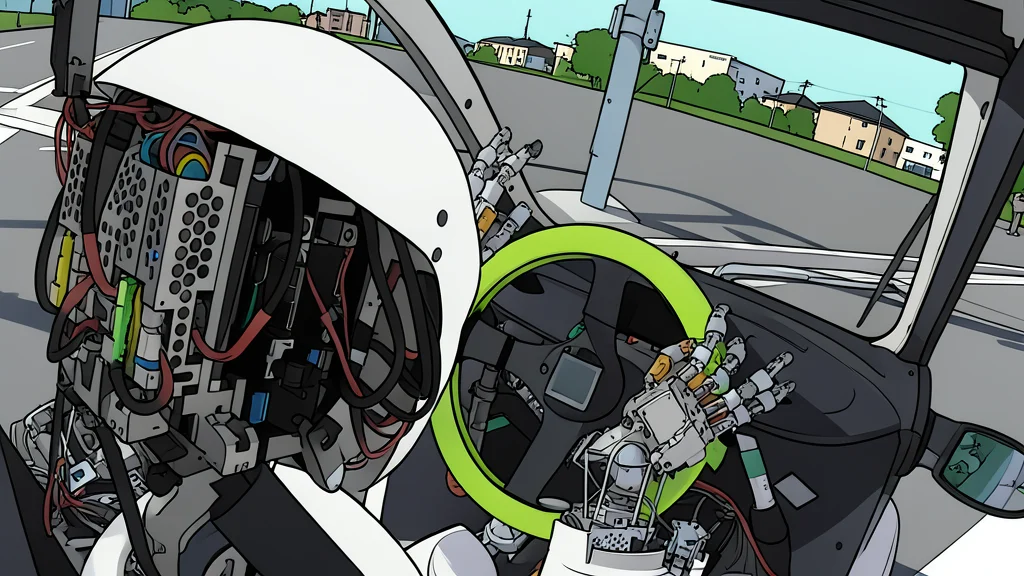
Chinese military institutions are accelerating efforts to integrate humanoid robots into combat operations. Recent reports indicate that the People’s Liberation Army (PLA) is moving beyond theoretical research to test whether these machines can perform specific missions on real-world terrain. This shift marks a significant step in the militarization of advanced robotics, with officials explicitly linking technological innovation to immediate battlefield needs.
The push has gained momentum since 2025, with development focusing on how robots perceive their environment and manipulate objects. According to analysis by Reuters, which reviewed over 100 procurement notices and academic studies, China is planning the eventual deployment of these units in wartime. The strategy involves rapidly transferring technology from laboratories to training grounds to refine intelligent equipment into functional combat assets.
Military forums prioritize battlefield application
Interest in military robotics in China intensified in 2024 when the National University of Defense Technology (NUDT) and the PLA Academy of Military Sciences hosted a national defense forum. The event designated humanoid robot systems as a key area for building new forms of combat power. Participants discussed academic views on applying these machines to military scenarios, signaling a formal institutional commitment to the technology.
In 2025, NUDT hosted the 'Yongzhi Cup,' a competition designed to test humanoid development and design capabilities. One specific event evaluated the robots' ability to conduct reconnaissance in designated areas. The university described the competition as a training ground for advancing humanoids onto the battlefield, emphasizing practical utility over mere mechanical novelty.
Procurement signals growing institutional interest
Financial and logistical moves suggest that the interest is expanding beyond hardware to include sophisticated training systems. In May 2025, the PLA issued a tender for the purchase of humanoid robots, with contracts that included installation and technical training. Four months later, a procurement notice appeared for an intelligent perception and precise manipulation system, with contact details pointing to NUDT. While the specific winners and models remain unconfirmed, the trend indicates a serious intent to equip units with these technologies.
In June, the PLA allocated approximately $300,000 to develop a system for collecting and labeling data from cameras, radar, and motion sensors. This investment highlights a focus on the software and data infrastructure required for autonomous decision-making. GN auto tech/robotics notes that this represents a broader shift toward building the cognitive frameworks necessary for reliable operation in complex environments.
Challenges remain in real-world deployment
Despite the accelerated pace, significant obstacles remain before humanoids can be reliably deployed. In August, state-owned defense company Norinco unveiled 'Fuxi,' a remotely controlled humanoid capable of guard duty, all-weather reconnaissance, and hazardous missions. However, experts point out that the gap between laboratory performance and battlefield reality is substantial. Issues such as battery life, stability on uneven terrain, and the ability to handle unpredictable combat conditions are not yet fully solved.