San Francisco Startup Tests Remote-Controlled Robot Cleaners in Homes
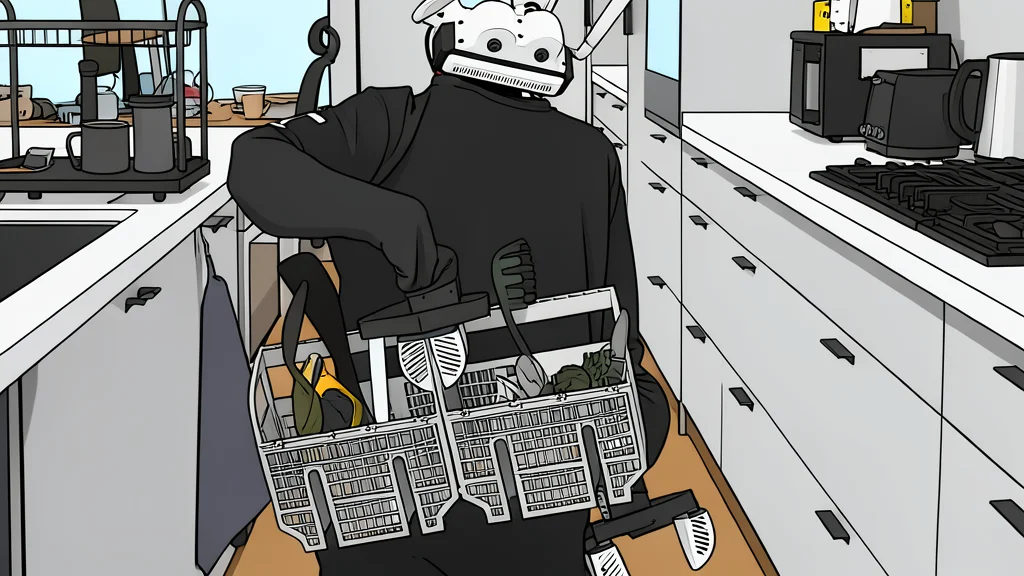
A San Francisco startup has begun placing humanoid robots in private residences for a fee, but the machines are not autonomous. Instead, they are piloted by human operators from a distance, raising questions about the current state of household automation.
Tau Robotics has launched a limited pilot program in San Francisco where humanoid robots enter homes to perform cleaning tasks. The service is priced at $30 per hour and is currently available only to a select group of applicants on a waitlist. The robots handle specific chores such as vacuuming floors, wiping down counters, and clearing clutter, marking one of the first public commercial tests of this technology in a domestic setting.
However, the premise of a fully independent robot servant is not yet reality. The company’s CEO, Alex Koch, clarified that current artificial intelligence cannot yet manage a humanoid robot entirely on its own. Instead, a human operator controls the machine remotely from a central location, using AI as an assistive tool. This setup means the service is closer to a high-tech teleoperation service than an autonomous product, a distinction that complicates the narrative of immediate technological independence.
Human oversight remains essential
The reliance on remote human control highlights a significant gap in current robotic capabilities. While the robots can execute physical movements, they lack the independent decision-making required to navigate complex home environments safely and effectively without supervision. This model requires a centralized operation center where staff can monitor and guide multiple units simultaneously, adding a layer of logistical complexity that pure automation would avoid.
For consumers, this means the service is not a set-and-forget solution. The robots are deployed in pairs for each job, and their operation is tightly managed by the company. This approach allows the startup to gather data and refine the AI assistance layer while mitigating the risks of unsupervised behavior. The trade-off is that the service remains labor-intensive for the provider, potentially limiting scalability and increasing the cost structure compared to a fully automated system.
Skeptics question cleaning capabilities
Experts in the field have voiced doubt about the practical utility of these machines for household chores. Ken Goldberg, a robotics professor at UC Berkeley with four decades of experience, described the current state of the technology as too early for reliable home cleaning. He noted that basic tasks, such as picking up objects from the floor or wiping under furniture, remain technically challenging for humanoid robots.
Goldberg also raised concerns about the promotional materials released by the company. He questioned whether the video footage accurately represents the robots' consistent performance or if it consists of carefully curated clips. This skepticism underscores the difference between a successful demonstration and a reliable, repeatable service. For the technology to be truly useful, it must handle the messy, unpredictable nature of real homes without constant human intervention.
Limited access and market scope
Tau Robotics is positioning this launch as an expansion of the cleaning market rather than a direct replacement for human cleaners. The initial customers are largely individuals who did not previously hire professional cleaning services or did so only infrequently. By offering a service that is more accessible or appealing to this group, the startup aims to grow the overall pie of household maintenance work.
Access to the service remains restricted. Interested parties must join a waitlist by providing their email address and neighborhood information. The company is inviting a limited number of households to sign up, keeping the pilot small enough to manage quality and safety. This cautious rollout reflects the high stakes of introducing unproven technology into private homes, where privacy and safety are paramount concerns.