Shenzhen's Quiet Shift to Robot-Led Urban Life

In Shenzhen, autonomous vehicles and service robots are no longer experimental toys; they are the standard infrastructure of daily life.
Visitors to Shenzhen’s Longgang district often encounter a striking silence. It is not the quiet of an empty street, but the hum of a busy one where cars move without drivers and drones deliver packages without complaint. A humanoid robot at a shop entrance may bow and greet you in multiple languages. This scene, which feels like science fiction, is now the operational norm for a city betting its industrial future on machines that walk, fly, and serve.
This transformation is backed by hard data rather than speculation. Shenzhen, once a small fishing town, has become a global hub for robotics. Local reports indicate that emerging industries, primarily AI and robotics, now contribute nearly half of the city’s GDP. The city hosts over 57,000 robotics-related enterprises, with a specific target to reach $110 billion in AI terminal industry revenue by 2026. This is a structured economic pivot, not a series of isolated tech demos.
Production Lines Replace Laboratory Curiosity
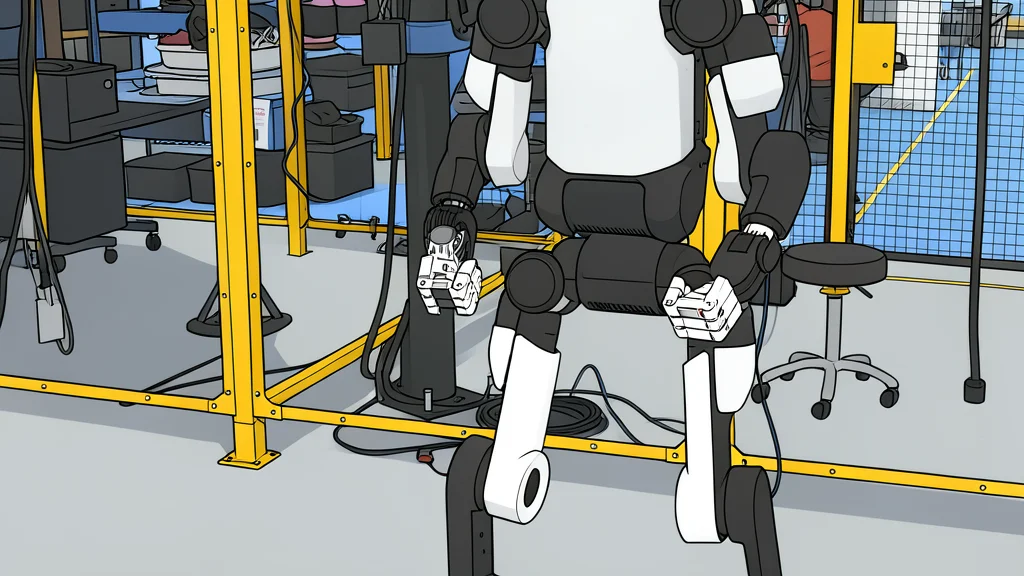
The shift from prototype to product is accelerating. In recent months, Shenzhen activated its first pilot production line for humanoid robots in the Longhua district. This facility can assemble one robot every two hours, with an annual capacity of 1,000 units before scaling up to mass production in nearby Foshan. Companies like UBTECH and LimX Dynamics are no longer just conducting lab tests; their machines are now working alongside humans on car assembly lines and in logistics hubs.
The implications for the workforce are significant. While the technology promises efficiency, it also signals a rapid displacement of manual labor roles. The presence of these machines in public spaces and factories means that the economic value is shifting from human hours to machine uptime. For the city, this represents a competitive advantage in global manufacturing; for the individual worker, it raises questions about job security and the need for rapid reskilling.
Infrastructure Integrates Facial Recognition
Beyond factories, this technology is embedded in public infrastructure. Beijing Daxing International Airport serves as a prime example of this integration. Built with 5G networks and facial recognition systems, it verifies a traveler’s identity against a national database in a fraction of a second. This level of automation is not limited to high-tech zones; it is becoming the standard for major transit hubs, prioritizing speed and security over traditional human check-in processes.
The trade-off for this seamless experience is a heavy reliance on state-linked data systems. The convenience of a face-scan passport control comes with the cost of constant digital surveillance. For residents and visitors, the line between service and monitoring blurs, creating a society where efficiency is high but privacy is a secondary consideration. This model offers a glimpse into a future where the public sphere is deeply algorithmic.
Consumer Robots Enter Daily Routines
The automation is moving into the private sphere as well. Start-ups in the region have launched home-cleaning robots that go beyond vacuuming, performing tasks like folding clothes and organizing shoes. These devices are designed to work alongside human cleaners, aiming to reduce the physical burden of domestic labor. While this offers a solution to labor shortages, it also introduces a new layer of complexity to household management, requiring users to interact with and maintain sophisticated mechanical agents.
As reported by GN auto tech/robotics, these developments mark a turning point. The technology is no longer a novelty or a distant promise. It is a present-day reality in specific Chinese cities, reshaping how goods are produced, how people travel, and how homes are maintained. The challenge now lies in managing the social and economic disruption that such rapid automation inevitably brings.