AI Streamlines Nanoscale Scanning with Simulated Data
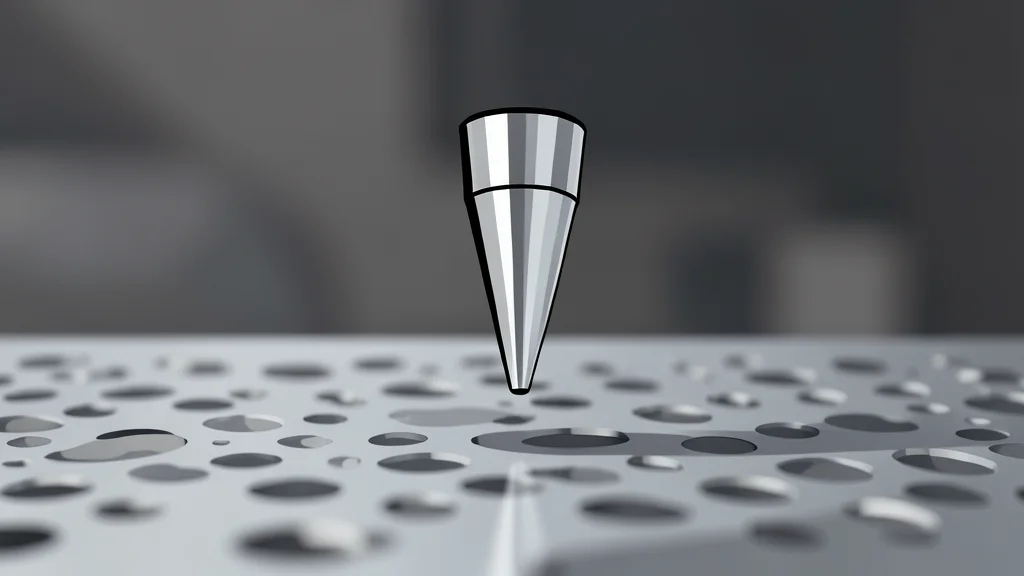
A new framework helps atomic force microscopes find key features faster by using synthetic training data to overcome labeling bottlenecks.
Researchers at Oak Ridge National Laboratory have introduced a method to make atomic force microscopy more accessible and consistent. The system, called SimuScan, uses artificial intelligence to guide the microscope toward the most informative parts of a sample. This reduces the need for constant expert intervention during long scanning sessions.
Operating an atomic force microscope is often compared to piloting a jet; the hardware is powerful, but it requires skilled judgment to use effectively. Traditionally, experts must decide where to scan and how to interpret complex data. This reliance on individual expertise slows down large-scale studies and makes results less uniform across different laboratories.
Synthetic data solves labeling gaps
A major obstacle in training AI for this task is the lack of high-quality labeled images. Unlike photographs, atomic force microscope images are influenced by the measurement process itself, such as probe shape and electronic noise. Experts spend significant time manually labeling these features, creating a bottleneck that limits how well algorithms can learn.
SimuScan addresses this by generating realistic synthetic images. The system simulates common imperfections like tip effects and scanner drift, creating a virtual environment for training. This allows the AI to learn what real artifacts look like without requiring thousands of hours of human annotation. As reported by GN technics/ai (en-US), this approach shifts the heavy lifting from human experts to computational processes.
Realism ensures practical utility
For the system to work in a real lab, the simulated images must accurately reflect experimental conditions. The researchers validated their method by training models on synthetic data and testing them on actual experimental scans. The success of this transfer confirms that the simulator captures the necessary nuances of real-world measurements.
However, the trade-off is that the system is only as good as its simulation. If the synthetic data fails to capture a specific type of artifact, the AI may misinterpret real samples. Therefore, the technology is best suited for standardized environments where the primary sources of error are well understood and can be modeled.
Accelerating discovery in materials science
By automating the identification of key features, this tool makes high-throughput research more feasible. Scientists can now focus on interpreting results rather than managing the instrument. This development could speed up the analysis of complex materials, provided that users maintain oversight to verify the AI's decisions.