Quantum Light Interaction Shifts Off-Center
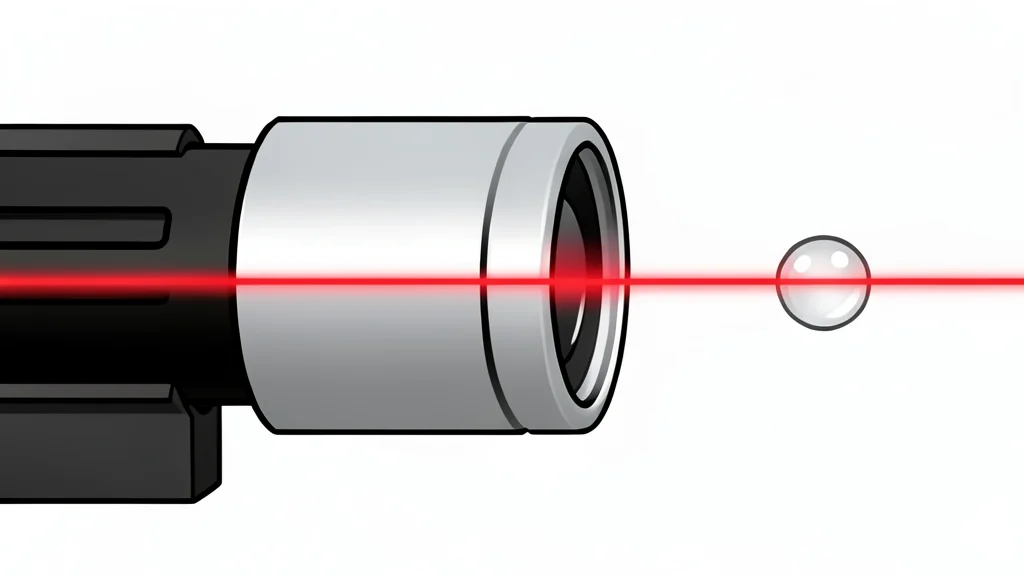
A new experimental finding reveals that laser light interacts most strongly with atoms slightly away from the beam's center, a phenomenon that could disrupt or enhance quantum computing.
Physicists have identified a subtle twist in how light interacts with matter that could reshape the future of quantum computing. The discovery, reported by ScienceDaily, confirms a long-theorized phenomenon known as the optical Magnus effect. This effect causes the strongest interaction between a focused laser and an atom to occur slightly to the side, rather than at the exact center of the beam.
The finding challenges the intuitive assumption that the brightest part of a laser beam always exerts the strongest force on a particle. By demonstrating this shift experimentally for the first time, researchers have revealed a hidden variable in optical control. This has immediate implications for the precision required to manipulate qubits, the basic units of information in quantum computers.
Off-Center Light Interaction
In classical physics, the Magnus effect explains why a spinning ball curves as it moves through air. The optical version of this effect works differently at the atomic scale. It does not cause the atom to move in a curved path. Instead, it shifts the location where the laser light exerts its maximum influence on the ion. This displacement is incredibly small, often just a few hundred nanometers, but it is significant in the realm of quantum mechanics.
The shift occurs because tightly focused laser light creates a complex electromagnetic field structure. When this field interacts with a charged particle, the forces are not symmetric. The result is a sideways displacement of the peak interaction point. This behavior was predicted theoretically years ago by researchers at the University of Amsterdam, but it remained unconfirmed until this recent experimental validation.
Implications for Quantum Accuracy
Quantum computers rely on lasers to control qubits with extreme precision. If engineers ignore this off-center interaction, it could introduce systematic errors into the system. These errors might accumulate and degrade the performance of the computer. The discovery highlights a trade-off: while the effect can be a source of noise, it also represents a new tool for manipulating quantum states.
Philip Leindecker, the first author of the study, notes that the forces generated by this effect could be harnessed to couple qubits together. This capability could enable more complex computations by allowing individual qubits to interact in controlled ways. Thus, the same physical phenomenon that threatens accuracy could also be leveraged to build more powerful quantum logic gates.
Mapping Light With Ions
To observe this effect, the team used a single calcium ion trapped in an electromagnetic field. This ion served as a highly sensitive probe, allowing researchers to measure the laser's force at different positions. By moving the ion through the beam and recording the interaction strength, they mapped the subtle variations in the light field.
A surprising aspect of the results is that the size of the sideways shift depends only on the wavelength of the light, not on how tightly the beam is focused. This independence from beam width simplifies the theoretical model and makes the effect more predictable for engineering applications. The experiment confirms that the optical Magnus effect is a fundamental property of focused light interacting with matter.