Singapore Researchers Convert Waste Paper into Battery Components
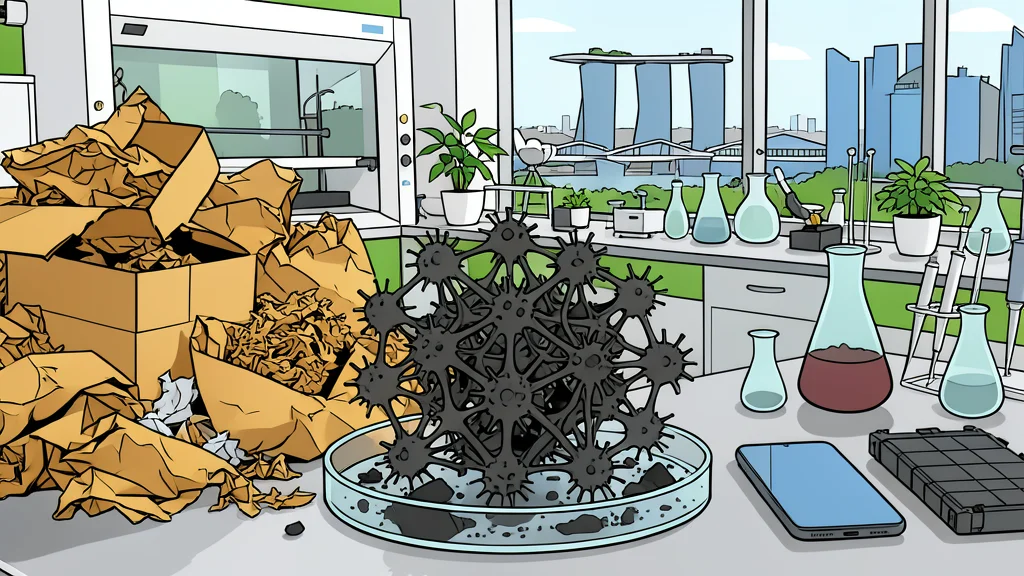
Scientists have found a way to turn discarded cardboard into durable parts for rechargeable batteries, offering a low-cost alternative to traditional materials.
Researchers at Nanyang Technological University in Singapore have developed a method to transform waste paper into functional components for lithium-ion batteries. The process utilizes carbonisation to convert discarded packaging, paper bags, and cardboard boxes into pure carbon electrodes. These electrodes are suitable for use in mobile phones, medical devices, and electric vehicles, giving waste paper a new industrial purpose beyond simple recycling.
According to reports from GN technics/mobile (en-US), this technique addresses the high cost and environmental impact of current battery manufacturing. By using a low-cost waste material, the team aims to reduce the overall expense of battery production. The method also offers a greener disposal option for kraft paper, which is typically incinerated, a process that releases significant greenhouse gases.
Paper fibers become carbon electrodes
The core of the process involves heating paper to 1,200 degrees Celsius in an oxygen-free environment. Before heating, the researchers laser-cut sheets of kraft paper into specific lattice-like structures to shape the material. This carbonisation step strips away non-carbon elements, leaving behind pure carbon that can serve as an anode. The absence of oxygen during this high-temperature phase ensures that carbon dioxide emissions are negligible.
The byproducts of this reaction are also useful. The process generates water vapor and oils that can be repurposed as biofuel. This dual-output approach maximizes the utility of the original waste material. It turns a disposal problem into a resource stream, providing both battery components and energy sources from the same input.
Durability matches current standards
Laboratory tests indicate that these paper-based anodes are robust. The researchers found that the electrodes could endure up to 1,200 charge and discharge cycles. This performance is at least twice as durable as the anodes currently used in standard smartphone batteries. The material also retained flexibility and strong electrochemical properties throughout the testing period, suggesting it can withstand the physical and chemical stresses of daily use.
While the durability is promising, the transition from lab to market faces hurdles. The current process requires precise laser cutting and high-temperature furnaces, which may not be as energy-efficient at a massive industrial scale. However, the reduction in heavy metal usage compared to traditional methods offers a distinct environmental advantage for manufacturers looking to lower their carbon footprint.
Cost and environmental trade-offs
Anodes typically account for 10% to 15% of the total cost of a lithium-ion battery. By substituting expensive raw materials with waste paper, the team hopes to lower this figure. The method relies on fewer heavy metals and less energy-intensive processing than current industrial standards. This could make rechargeable batteries more accessible, particularly for developing markets where cost is a primary barrier to adoption.
The main trade-off is the reliance on a consistent supply of high-quality kraft paper for the feedstock. If the input material varies in purity or structure, the resulting carbon quality may fluctuate. Nevertheless, the potential to divert waste from incineration while creating high-value electronic components represents a significant step toward circular manufacturing in the tech industry.