Engineered Yeast Turns Plastic Waste into Edible Cookie Ingredients

Researchers at Southern Illinois University have developed a method to convert PET plastic and agricultural waste into protein-rich food ingredients using modified yeast, addressing both pollution and supply chain challenges.
Scientists at Southern Illinois University Carbondale have engineered a biological system capable of transforming polyethylene terephthalate, commonly known as PET plastic, into edible food components. By modifying baker’s yeast to consume carbon molecules derived from discarded plastic bottles and agricultural residues, the team can produce proteins, fats, and vitamins. This approach was developed in part to support NASA’s Deep Space Food Challenge, which seeks reliable food sources for long-duration space missions where traditional supply chains are unavailable.
The resulting food product, described as a small, protein-rich cookie, demonstrates that waste materials can be repurposed into nutritionally viable items. While the technology is not yet ready for widespread commercial use, it offers a potential solution to two persistent global issues: the accumulation of non-biodegradable plastic waste and the difficulty of growing or transporting food in extreme environments. As reported by ScienceDaily, the research highlights a shift toward using biological processes to manage industrial byproducts rather than relying solely on chemical recycling methods.
Biological Conversion of Carbon Waste
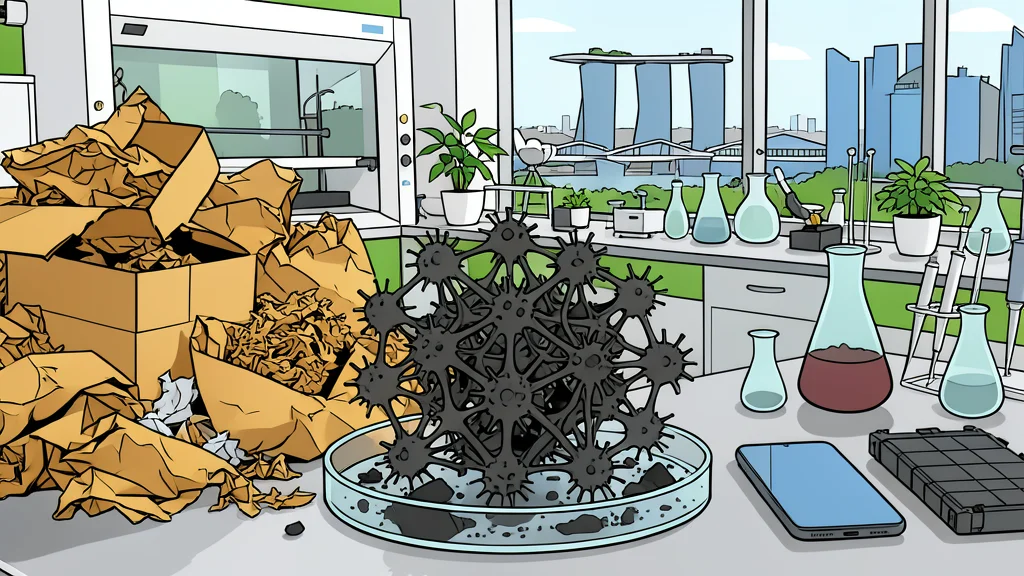
The core innovation lies in the ability of microorganisms to break down complex structures and rebuild them into useful compounds. PET plastic contains carbon-rich molecules that are difficult to degrade naturally. The research team, led by Associate Professor Lahiru Jayakody, used a technique called oxidative hydrothermal dissolution to break down plastic and corn stalks into simpler chemical precursors. These precursors are then fed to genetically modified yeast, which acts as a biological factory to synthesize amino acids, vitamins, and flavoring agents.
This method avoids the need for harsh chemical solvents typically required in traditional chemical recycling. Instead, it leverages the natural metabolic pathways of yeast, which are already used in the production of insulin and other pharmaceuticals. By directing the yeast to produce food-grade molecules, the researchers create a closed-loop system where waste input yields nutritional output. This bio-manufacturing approach is particularly suited for environments where space and energy are limited, such as lunar bases or Mars habitats.
Challenges in Scaling Production
Despite the promising results, significant hurdles remain before this technology can be deployed at scale. The process requires high temperatures and pressure to break down the initial waste materials, which consumes considerable energy. Additionally, ensuring the safety and consistency of the final food product involves rigorous testing to confirm that no toxic byproducts remain from the plastic processing stage. The transition from laboratory-scale experiments to industrial production will require solving these energy and safety constraints.
There is also the matter of consumer acceptance and regulatory approval. While the ingredients are derived from biological sources, the origin of the raw materials may raise concerns among the general public. Regulatory agencies will need to establish clear guidelines for food derived from plastic waste to ensure it meets safety standards. Until these frameworks are in place, the technology is best viewed as a specialized tool for extreme environments rather than a replacement for conventional food systems on Earth.
Applications in Extreme Environments
The primary target for this technology is deep-space exploration, where transporting fresh food is prohibitively expensive and logistically complex. In such settings, the ability to produce calories, protein, and essential nutrients from locally available waste or recycled materials is a critical survival asset. The cookies produced in this study are designed to be shelf-stable and nutrient-dense, making them suitable for long-duration missions where resupply from Earth is infrequent or impossible.
On Earth, similar applications could benefit disaster response operations in remote areas where supply chains are disrupted. By converting local waste streams into food, communities could maintain nutritional security without relying on external aid. However, the current infrastructure required to process plastic and agricultural waste into food-grade inputs is specialized and not yet widely available. The technology represents a proof of concept for circular bioeconomy systems, but its broader impact depends on the development of cost-effective, large-scale processing facilities.