Dell and Diraq Test Hybrid Quantum-Classical Systems in Sydney Lab
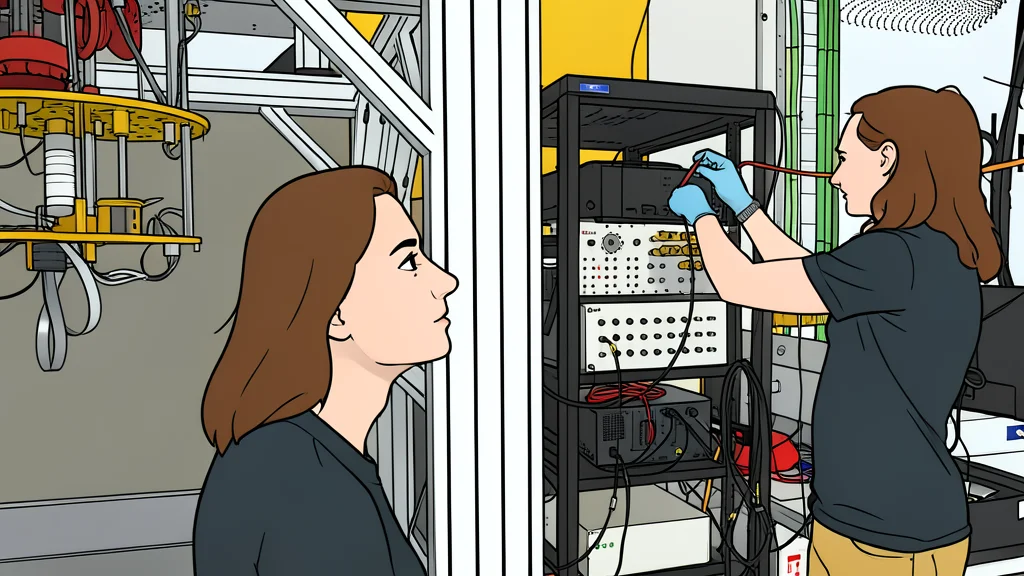
Dell has placed a high-performance computing cluster inside Diraq’s lab to test low-latency integration between classical servers and silicon spin qubits.
Key points
- Dell deployed an HPC cluster in Diraq's Sydney lab to enable low-latency communication with silicon spin qubits.
- New orchestration software manages task distribution between classical servers and quantum processors for real-time control.
- Diraq's silicon-based qubits are compatible with standard semiconductor manufacturing, allowing for scalable data center integration.
Quantum computing often struggles to work effectively alongside the classical supercomputers it needs to function. To solve this, Dell Technologies and Diraq are collaborating on a new approach that physically places high-performance computing hardware directly next to a quantum processor. This setup aims to create a seamless bridge between the two technologies, allowing them to operate as a single, coordinated system.
As reported by HPCwire, the partnership focuses on what is known as hybrid quantum-classical computing. The goal is not just to connect the machines, but to manage the flow of data between them efficiently. By keeping the hardware in close physical proximity, the teams hope to eliminate the delays that typically slow down complex computational tasks, making the system more practical for real-world industrial applications.
Co-location reduces latency for real-time control
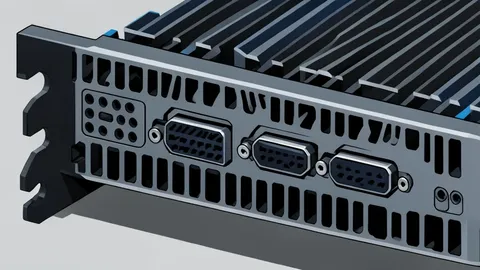
The core of this physical setup is a small high-performance computing cluster installed directly in Diraq’s Sydney laboratory. It sits alongside Diraq’s quantum processor, connected by high-speed networking. This arrangement allows classical servers to send and receive data to the quantum hardware with minimal delay. For silicon spin qubits, which operate at very high speeds, this rapid feedback is critical for maintaining stability and accuracy during operations.
Currently, the team is using this testbed to validate baseline latency and ensure stable connectivity. They are running simple test circuits to confirm that the Dell infrastructure and Diraq’s processor can function together without performance bottlenecks. This initial phase proves that the two systems can act as one unified computing environment, which is a necessary step before tackling more complex scientific problems.
Orchestration layers manage task distribution
Beyond the hardware, a major focus is on software orchestration. Dell is adapting its existing orchestration tools to decide when to use classical compute and when to call upon the quantum processor. This layer translates workloads into sequences that combine both types of computation, schedules them appropriately, and collects the results efficiently. This approach ensures that the quantum hardware is only used for the specific parts of a problem that require its unique capabilities.
A near-term application is automated qubit calibration, where classical resources analyze measurement data and feed adjustments back to the device in real-time. Over time, this same orchestration is expected to support quantum error correction, a process that requires continuous, fast classical processing alongside quantum execution. This method allows quantum processors to be managed using standard data center practices, rather than requiring entirely new operational models.
Silicon qubits enable scalable data center integration
Diraq’s technology uses modified silicon transistors to store quantum information. This design is fully compatible with established semiconductor manufacturing processes, which is a significant advantage over other quantum hardware approaches. It allows for the potential to fit millions of qubits on a single chip, enabling a single cryogenic refrigerator to house a utility-scale quantum computer. This compactness is key to integrating these systems seamlessly into existing data centers worldwide.
The collaboration also explores practical industry use cases, such as drug discovery, where heavy simulation workloads demand massive computational power. By combining the strengths of classical and quantum computing, the system aims to solve problems that are currently too complex for either technology to handle alone. This work demonstrates a pathway toward democratizing quantum technology, making it accessible for broader industrial use rather than remaining a niche laboratory experiment.