New Concrete Mix Boosts Strength 15% While Capturing CO2
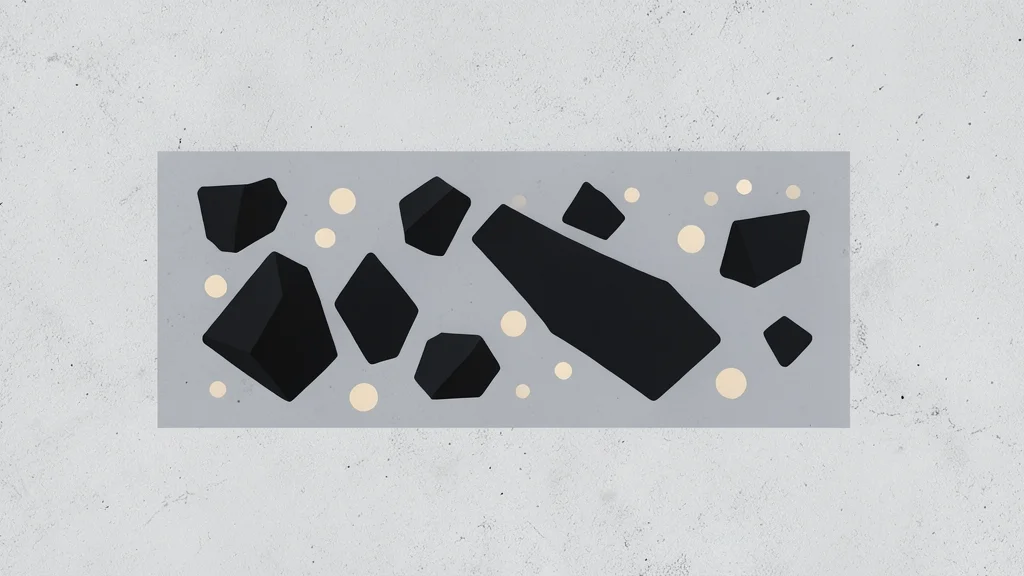
A new concrete blend using zeolite and bamboo biochar is stronger than standard mixes and absorbs carbon dioxide from the air.
Key points
- A new concrete mix using zeolite and bamboo biochar increases tensile strength by 15% compared to standard concrete.
- The material captures approximately 1.2 grams of carbon dioxide per day under laboratory testing conditions.
- The innovation aims to make construction materials more sustainable by integrating structural durability with carbon absorption.
Engineers in India have developed a concrete mixture that outperforms standard building material in strength while simultaneously absorbing carbon dioxide. The innovation combines zeolite, a porous mineral, with bamboo biochar, a carbon-rich byproduct, to create a material that serves a dual purpose in construction and environmental management.
The study, reported by ScienceDaily, highlights a potential shift in how infrastructure materials are designed. By integrating these natural additives, the team aims to address the significant carbon footprint associated with cement production and rising atmospheric greenhouse gas levels.
Natural additives enhance structural durability
Researchers from Mepco Schlenk Engineering College tested various formulations of M35 grade concrete, which is typically used for moderate traffic infrastructure. They replaced portions of fine aggregate and cement with specific concentrations of zeolite and bamboo biochar. The goal was to find a balance where the material absorbed more gas molecules without compromising its load-bearing capacity.
The most effective blend, designated as ZB5, contained 50% zeolite and 1% bamboo biochar. This mixture achieved a compressive strength of 38.49 MPa, a 7.48% increase over conventional concrete. More notably, its split tensile strength reached 4.39 MPa, representing a 15% improvement. The researchers attribute this gain to the interaction between the alumina-silicate structure of zeolite and the hardness of the biochar, which together create a denser and more durable matrix.
Measurable carbon absorption in lab tests
Beyond structural performance, the new concrete demonstrated a measurable ability to capture carbon dioxide. When placed in a carbonation chamber, the material absorbed approximately 1.2 grams of CO2 per day. Over the course of seven days, the gas penetrated 15 millimeters into the concrete, indicating that the absorption process continues beyond the surface layer.
This uptake is linked to the microporous nature of zeolite and the high carbon content of the bamboo biochar. These properties allow the concrete to trap gas molecules effectively. While the absorption rate is modest compared to industrial carbon capture systems, it represents a significant step toward making building materials active participants in reducing local atmospheric carbon levels.
Trade-offs and practical application limits
Despite the promising results, the technology faces practical constraints. The carbon capture capacity is currently limited to laboratory conditions and may vary significantly in outdoor environments. Furthermore, replacing standard aggregates with zeolite and biochar requires precise mixing ratios to maintain the desired strength. If the proportions are off, the concrete could become brittle or fail to meet safety standards for load-bearing structures.
The primary trade-off is the complexity of sourcing and processing these additives. Zeolite and bamboo biochar must be carefully selected for purity and consistency to ensure the final product retains its enhanced strength. For now, this approach is best suited for specific applications like urban roadways or industrial zones where the dual benefit of structural integrity and local carbon reduction offers the most value.