Solar System Favored Hot Rock Beads over Icy Dust at Start
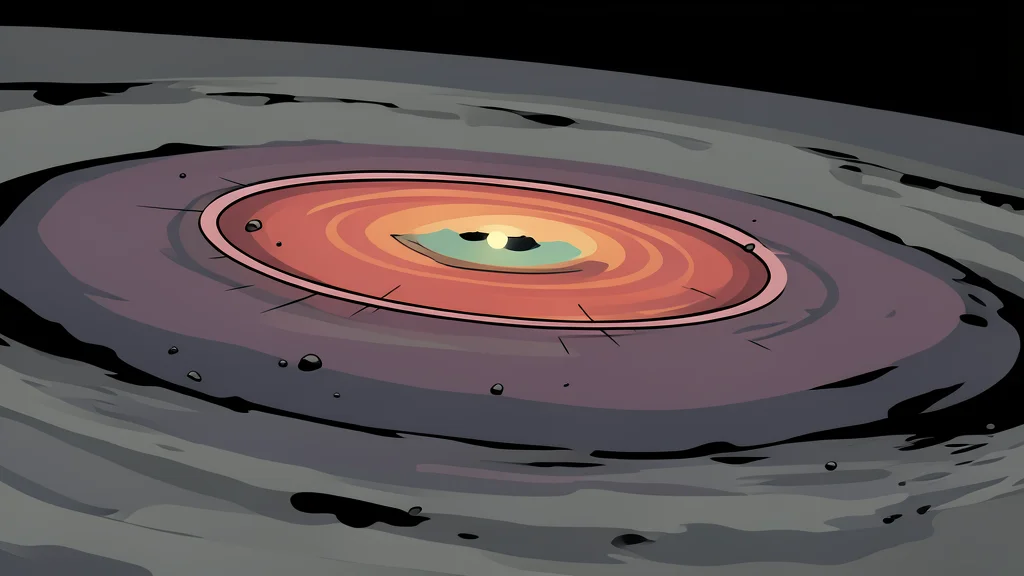
New analysis of iron meteorites suggests the early Solar System selectively excluded water-rich dust, favoring heat-formed rock within the first million years.
Key points
- Yale researchers found that the first Solar System objects were 83-92% composed of heat-formed chondrules.
- The study reveals that water-rich dust was largely excluded from these early bodies within the first million years.
- Chemical analysis of melted iron meteorites provided the first evidence of this early selective sorting process.
The early Solar System appears to have made a decisive choice between fire and ice almost immediately after forming. New research indicates that the first solid objects were constructed primarily from hot, rock-like beads while largely excluding the cold, water-rich dust that would later become common in planetary formation.
This finding pushes the timeline for this selective process back to the very first million years of the Solar System's existence. Previously, scientists could only document this sorting in objects that formed two to four million years later, leaving the earliest stages of planet building somewhat mysterious.
Fire was favored over ice early on
Researchers led by Yale University identified a clear preference for chondrules, which are millimeter-sized rocks formed at high temperatures. The study, reported by ScienceDaily, shows that these early bodies contained between 83% and 92% of these heat-forged beads. In contrast, the matrix, a fine-grained dust rich in water ice and organic material, was significantly underrepresented.
This selective assembly suggests that the environments where the first planetesimals formed were already filtering out volatile-rich materials. The implication is that the building blocks of the outer Solar System were not a random mix of debris, but a carefully curated collection of hot rocks.
Chemical clues reveal hidden history
Determining the composition of objects from the first million years is challenging because no original physical samples have survived. The bodies that formed during this period often melted completely due to radioactive decay, erasing the physical structures that would otherwise show their makeup.
To overcome this, the team analyzed iron meteorites that originated from these melted bodies. By examining two specific chemical tracers, sulfur and the oxidation state of iron, the researchers were able to reconstruct the original ratio of chondrules to matrix. These chemical signatures acted as a proxy for the amount of icy dust that was present before the bodies melted.
Implications for planetary formation models
The discovery that such selectivity occurred so early changes how scientists view the initial stages of planet formation. It indicates that the distinction between dry, rocky bodies and wet, icy objects was established before many planets had even begun to take shape.
This insight provides a clearer picture of the conditions in the early Solar System, suggesting that the distribution of water and organic material was controlled by early sorting mechanisms rather than random accumulation.