Samsung Leverages Chip Division to Offset Memory Cost Crises
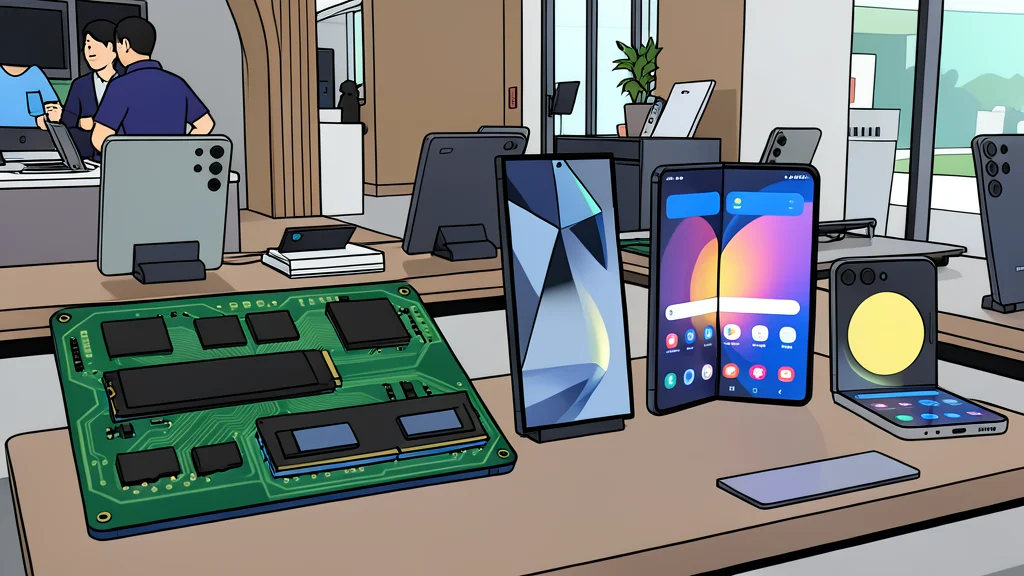
While the global smartphone market contracts due to rising component costs, Samsung’s vertical integration allows it to maintain stability while competitors struggle with supply constraints.
Samsung Electronics is navigating a volatile electronics market by leveraging its internal semiconductor production to offset rising memory chip costs. As global smartphone shipments are projected to decline significantly, the South Korean tech giant maintains a distinct competitive advantage. This advantage stems from its vertically integrated business model, which allows the company to profit from high memory prices in its chip division while its mobile division faces increased component expenses.
The current market environment is defined by supply shortages in DRAM and NAND memory, which have pushed up manufacturing costs across the industry. For most smartphone brands, this inflation in input costs creates a difficult balance between maintaining profit margins and keeping device prices accessible. Samsung, however, benefits from an internal offset where its semiconductor division gains from the same price hikes that hurt its hardware competitors.
Market Shrinkage Hits Rivals Hardest
Analysts from Mizuho Securities, cited by GN technics/mobile (en-US), predict that worldwide smartphone shipments will drop by approximately nine percent to around 1.15 billion units. Despite this broad market contraction, Samsung’s shipment volume is expected to remain stable at roughly 240 million units. This resilience is attributed to the company's ability to secure memory supplies and its strategic focus on premium devices, which offer higher margins to absorb cost increases.
The strain on the market is already evident in recent quarterly data. Counterpoint Research noted an eleven percent year-over-year drop in global shipments during the second quarter. In contrast, Samsung’s market share increased from twenty to twenty-four percent. This divergence highlights how leading manufacturers with strong supply chains can capture greater market share during periods of industry-wide scarcity.
Cost Pressures Target Budget Devices
The financial impact of memory shortages is disproportionately felt by manufacturers of lower-priced smartphones. For these budget devices, memory components constitute a larger portion of the total manufacturing cost. Consequently, these companies have less flexibility to absorb sudden price spikes without significantly raising retail prices, which can further suppress consumer demand.
TrendForce warned that if memory prices continue their upward trajectory, global smartphone output could decrease by ten to fifteen percent. The firm highlighted that contract prices for standard memory packages surged nearly two hundred percent in the first quarter. This sharp increase underscores the severity of the cost pressure, which effectively forces the industry to shift focus toward higher-end models that can better withstand component inflation.
Semiconductor Profits Buffer Mobile Losses
Samsung’s Device Solutions division has emerged as a critical financial buffer for the company’s overall earnings. By producing its own memory chips, Samsung creates an internal hedge against market volatility. While its mobile division incurs higher costs for components, the semiconductor division generates substantial operating profits from selling those same components at elevated market prices.
This internal balancing act allows Samsung to maintain stable overall profits during a period when many competitors are seeing their margins erode. The strategic alignment between its chip manufacturing and device sales provides a structural advantage that is difficult for other smartphone makers to replicate, ensuring the company remains competitive despite the broader economic headwinds affecting the consumer electronics sector.