Atlantis Docked with Mir in First US Crew Swap
In 1996, the shuttle Atlantis performed the first American crew exchange on the Russian Mir station, swapping a record-setting astronaut for a new resident.
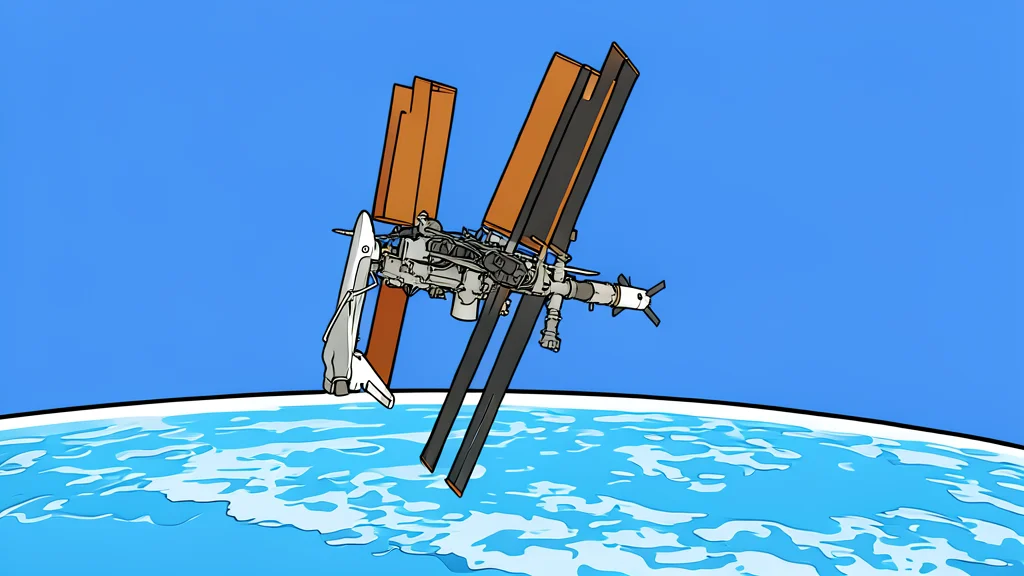
On September 19, 1996, the space shuttle Atlantis docked with Russia’s Mir space station to execute a significant logistical maneuver. This mission, designated STS-79, was not just a supply drop; it marked the first time a U.S. shuttle crew exchanged personnel directly on a Russian orbital laboratory. The operation involved swapping two astronauts, effectively allowing one to return home while the other remained to continue long-duration research.
According to reporting by GN auto tech/science: space discovery, this event was a pivotal moment in international space cooperation. It demonstrated that the U.S. and Russia could work together seamlessly in the vacuum of space, managing complex handovers and cargo transfers. The mission served as a practical test of the protocols that would later define the International Space Station, proving that shared infrastructure could support extended human presence in orbit.
Record-Breaking Stay for Shannon Lucid
The primary human element of the mission was the return of astronaut Shannon Lucid. She had spent 188 days aboard Mir, setting a new record for the longest spaceflight by an American woman at that time. Her departure was facilitated by the shuttle’s arrival, which provided the only means for her to return to Earth. In her place, astronaut John Blaha boarded the station to begin his own four-month residency, ensuring continuity of the U.S. presence on Mir.
This crew swap highlighted the logistical challenges of long-duration spaceflight. Unlike short-duration missions where all crew members return together, station missions require precise timing for handovers. The shuttle had to arrive at the exact moment when the outgoing astronaut was ready to leave and the incoming astronaut was prepared to take over, minimizing the time both spent in the confined quarters of the station.
Heavy Cargo and New Modules
Beyond the crew exchange, Atlantis carried a massive payload of supplies. The shuttle transferred 4,000 pounds of food, water, clothing, and scientific equipment to Mir, while bringing back 2,000 pounds of experiment samples. This volume made STS-79 the largest cargo transfer to the station up to that point. The shuttle also featured a dual SPACEHAB module in its payload bay, a configuration used for the first time to maximize storage capacity for these heavy loads.
The mission included testing of new technology, specifically the Active Rack Isolation System. This system was designed to dampen vibrations that could interfere with sensitive scientific experiments. By validating this hardware on Mir, NASA gathered critical data that would inform the design of similar systems for future stations. The trade-off for carrying such heavy and complex equipment was the reduced space available for other payloads, a common constraint in shuttle missions.
Foundation for International Cooperation
STS-79 was the fourth shuttle mission to dock with Mir, but it was the first to occur after the station’s construction was completed. This timing was crucial for testing the full operational capabilities of the joint program. The success of this mission, along with five subsequent docking operations, built the trust and technical framework necessary for the International Space Station. Without these early shuttle-Mir missions, the ISS program might have faced significant delays in establishing reliable international crew rotations.
The collaboration between NASA and the Russian space program during this era laid the groundwork for nearly three decades of continuous human presence in space. The lessons learned from crew swaps, cargo logistics, and vibration control on Mir were directly applied to the ISS. This historical connection underscores how early cooperative efforts remain fundamental to current space exploration capabilities.