China Deploys Four New Radar Satellites for Real-Time Data
A new constellation of radar satellites is designed to process data in orbit, reducing the need to transmit raw information back to Earth.
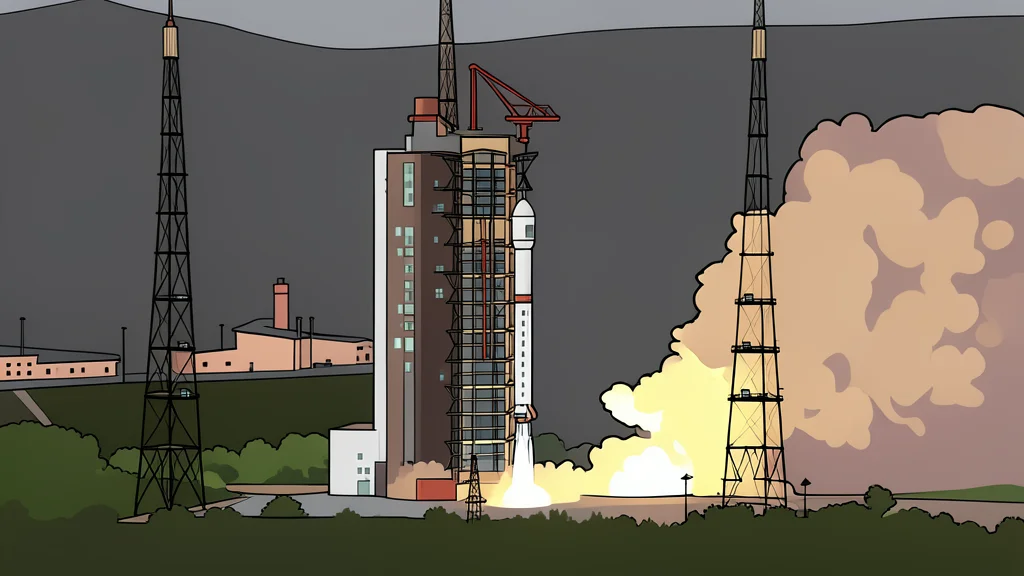
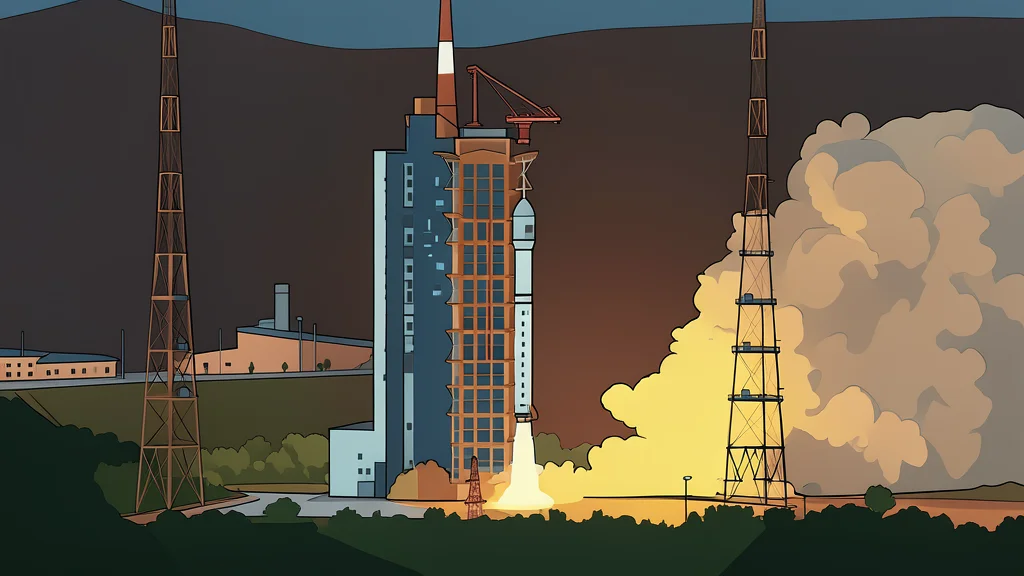
China has added four new radar satellites to its orbit, marking a step toward more autonomous space-based data processing. The Long March 2D rocket launched the craft from the Taiyuan Satellite Launch Center on Saturday evening, placing the satellites into their designated positions as reported by GN auto tech/space: space launch.
These satellites are built by GalaxySpace, a private Beijing-based company. The primary goal is to reduce the burden on ground stations by analyzing satellite data in space rather than transmitting large volumes of raw data to Earth. This approach aims to speed up the availability of remote sensing information for users.
Real-time processing in orbit
The satellites are equipped with high-resolution synthetic aperture radars, which allow them to capture detailed images regardless of weather conditions or daylight. More importantly, they carry onboard intelligent processing systems that can screen, preprocess, and extract key information directly in space.
Traditionally, satellites send raw data to ground stations, where supercomputers perform the analysis. This process can be slow and bandwidth-intensive. By handling initial processing in orbit, the satellites significantly reduce the amount of data that needs to be downloaded. This trade-off favors faster response times for users, though it requires robust computing hardware to withstand the harsh conditions of space.
Growing private satellite fleet
This launch brings GalaxySpace’s total number of independently developed satellites to 53. The company has accumulated experience in building and operating radar satellites, with more than ten such spacecraft already in orbit. Chief designer Duan Xiao noted that multiple satellites have achieved large-scale data processing in space, indicating that the technology is moving from experimental stages to routine operation.
The expansion of China’s private space sector is evident in these numbers. With 69 space launches conducted this year, the country is rapidly increasing its frequency of access to orbit. This volume helps lower costs and improves the reliability of commercial satellite services, although it also increases the density of objects in low Earth orbit, raising concerns about space debris.
Rocket capabilities and limitations
The Long March 2D, manufactured by the Shanghai Academy of Spaceflight Technology, uses liquid propellants to generate 300 metric tons of thrust at liftoff. It is capable of placing a 1.2-ton spacecraft into a sun-synchronous orbit at an altitude of 700 kilometers.
Sun-synchronous orbits are favored for Earth observation because they ensure that the satellite passes over the same part of the Earth at the same local solar time. This consistency is crucial for comparing images taken over different days or seasons. The rocket’s payload capacity is modest compared to modern heavy-lift vehicles, meaning it is tailored for smaller, specialized missions rather than large-scale infrastructure deployment.