Crew-12 Stays on Space Station as Leak Delays Relief Launch

A technical issue with the Dragon capsule has pushed back the next mission to the International Space Station, forcing the current crew to extend their stay in orbit by several weeks.
The upcoming crewed mission to the International Space Station has been rescheduled, moving from early September to early October. NASA and SpaceX cited a leak in the Dragon spacecraft as the primary reason for the delay. This shift means the current crew, Crew-12, will remain in space longer than originally planned while engineers finalize prelaunch checks and readiness reviews.
According to GN auto tech/space: space launch, the delay allows for a thorough assessment of the vehicle's integrity. SpaceX confirmed that the specific leak detected earlier has been addressed, but the company prefers to use the extra time to ensure all systems are fully operational. This cautious approach prioritizes safety over strict adherence to the original timeline, a common trade-off in complex aerospace operations.
Extended stay impacts crew life
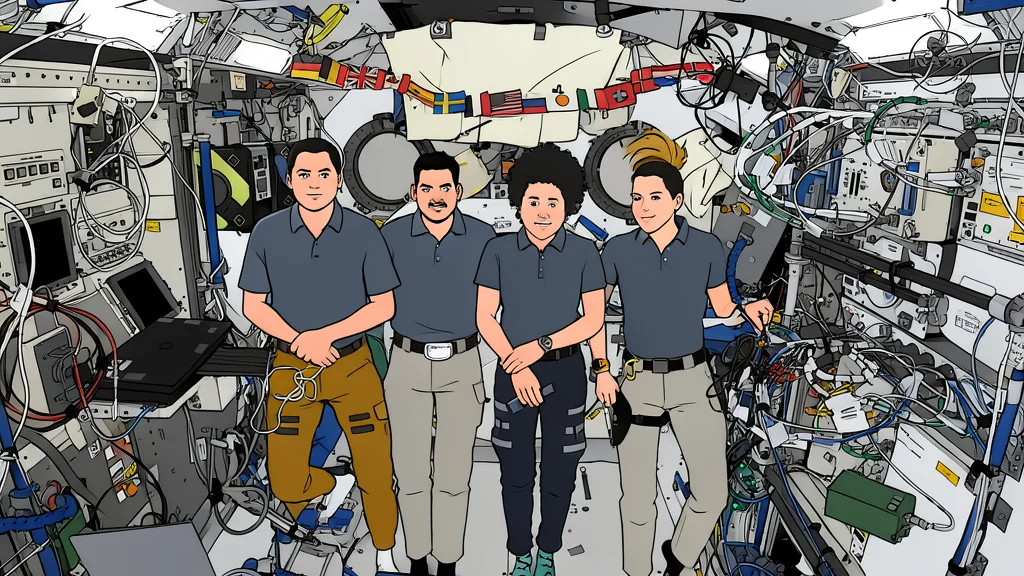
For the four astronauts currently aboard the station, the delay transforms a routine rotation into an extended mission. Jessica Meir, the commander of Crew-12, described the situation as bittersweet. While she is eager to return to Earth to see her young daughter and experience natural elements like wind and leaves, she also expressed a deep appreciation for the unique environment of space. The weightlessness and panoramic views are experiences that cannot be replicated on the ground, making the extra weeks both a physical challenge and a psychological adjustment.
The crew, which includes astronauts from NASA, the European Space Agency, and Roscosmos, must manage their physical and mental health during the additional time. Extended missions require careful planning to maintain muscle mass and bone density, as well as managing team dynamics over a longer period. The delay also affects the handover process, potentially compressing the time available for training the incoming crew and conducting scientific experiments before departure.
Relief crew prepares for delayed launch
The incoming Crew-13 team, which includes astronauts from NASA and the Canadian Space Agency along with a Roscosmos cosmonaut, is now targeting a launch window in early October. This mission marks the fourteenth human spaceflight under NASA’s commercial crew program. The delay provides an opportunity for the new crew to undergo additional training and for ground teams to perform comprehensive system checks, ensuring the Dragon capsule is fully ready for its journey.
Once Crew-13 arrives at the station, there will be a brief handoff period before Crew-12 begins their return journey. They will travel back to Earth in the same Dragon capsule that brought them there, with a planned splashdown in the Pacific Ocean off the coast of California. This extended timeline highlights the complex interplay between technical readiness, crew safety, and operational logistics that defines modern spaceflight.
Technical details behind the delay
The root cause of the delay was a leak in the Dragon spacecraft's systems. In spaceflight, even minor leaks can pose significant risks to crew safety and mission success. SpaceX and NASA chose to postpone the launch rather than risk proceeding with a potential fault. This decision reflects a broader industry standard where safety margins are prioritized over schedule adherence, especially for crewed missions.
The additional time allows for a detailed review of prelaunch activities and coordination of station operations. It also serves as a reminder of the challenges inherent in maintaining complex spacecraft in orbit. For the public, this delay underscores the reality that space travel is not just about launching into orbit, but also about ensuring the vehicle can safely return. The careful management of such technical issues is crucial for the long-term sustainability of human presence in space.