Echo 1A: A 30-Meter Balloon that Reflected Radio Signals
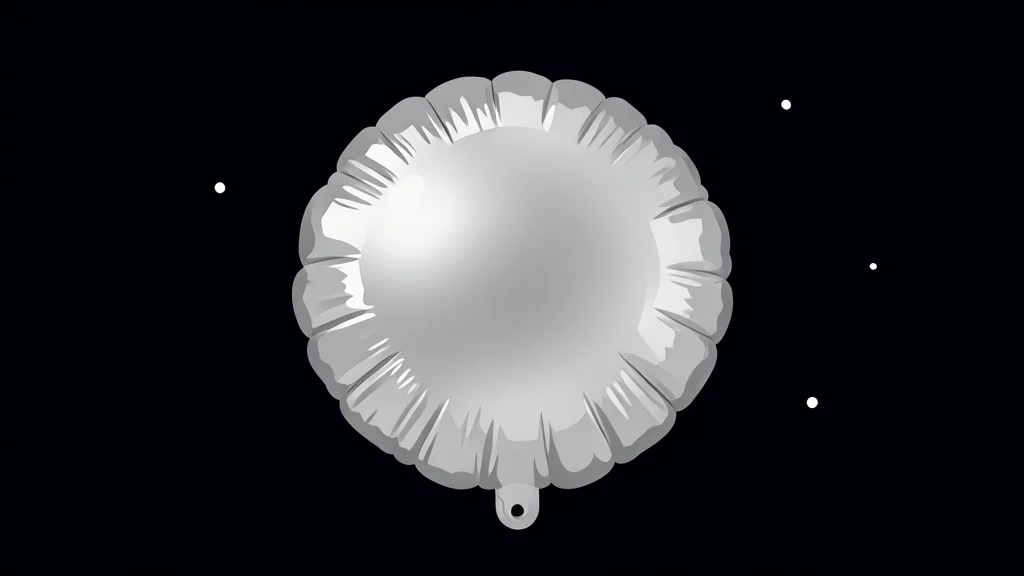
Launched in 1960, Echo 1A was a passive satellite that relayed communications by reflecting radio waves off a metallic balloon surface.
Key points
- Echo 1A was a 30-meter aluminized balloon that relayed signals by reflection rather than active electronic transmission.
- The satellite weighed only 60 kilograms and was made from a 12.7-micrometre thick Mylar film coated in aluminum.
- The project originated from atmospheric density research before being adapted for passive radio communication experiments.
NASA’s first successful communications satellite did not use any electronics to process data. Echo 1A, launched in 1960, was a simple aluminized balloon that worked by reflecting radio signals from Earth stations. It contained no receivers, amplifiers, or transmitters, relying entirely on its physical surface to act as a mirror for wireless communication.
This approach represented a stark contrast to modern satellites, which actively regenerate and boost signals using onboard power and complex hardware. While modern systems offer stronger and more reliable connections, Echo 1A demonstrated that a large, passive object in low orbit could serve as a viable relay point for early long-distance communication experiments.
A passive alternative to active repeaters
Most contemporary satellites function as active repeaters, receiving a weak signal, strengthening it, and retransmitting it. This method requires significant electrical power and sophisticated radio hardware. In contrast, Echo 1A operated as a passive reflector, a concept engineers had previously tested using the Moon as a natural mirror.
The Moon worked as a reflector, but its distance made the signal path extremely weak, often rendering it unusable for practical purposes. By placing a large reflector only about 1,600 kilometers above Earth, the Echo programme offered a much shorter route. Although the satellite added no energy to the signal, ground equipment could recover enough reflected energy to transmit speech, data, and television signals.
Origins in atmospheric research
The project did not begin as a communications initiative. In 1956, scientists at the National Advisory Committee for Aeronautics proposed orbiting balloons to measure the density of the upper atmosphere. A large, lightweight object would respond measurably to the thin air at orbital altitude, providing valuable data on atmospheric drag.
Researchers at Bell Telephone Laboratories and the Jet Propulsion Laboratory recognized a secondary benefit. The same metallic sphere would present a broad radar target, effectively becoming a radio mirror. By early 1959, the agency had merged these goals, combining balloon research with ground-based communication trials to create a dual-purpose spacecraft.
Engineering a fragile orbital mirror
The apparent simplicity of Echo 1A masked significant engineering challenges. The satellite had to launch tightly folded, survive deployment without tearing, and remain smooth enough to reflect radio waves predictably. It also needed to stay inflated in a vacuum while enduring extreme temperature fluctuations from sunlight and shadow.
The sphere was made from Mylar polyester coated with aluminum, with a thickness of only 12.7 micrometres. Before deployment, this enormous membrane was folded into a canister just 66 centimeters across. After release, a solid material turned to gas to inflate the balloon into a 30-meter sphere weighing approximately 60 kilograms. All signal acquisition and beam pointing had to be done from the ground, as the satellite itself could not actively track or amplify any data.