Korea's Nuri Rocket Prepares for First Multi-Satellite Constellation Mission

South Korea’s Nuri rocket is set for its fifth flight in October, aiming to deploy a working group of satellites in a single mission. This marks a significant shift from testing individual payloads to launching a coordinated constellation.
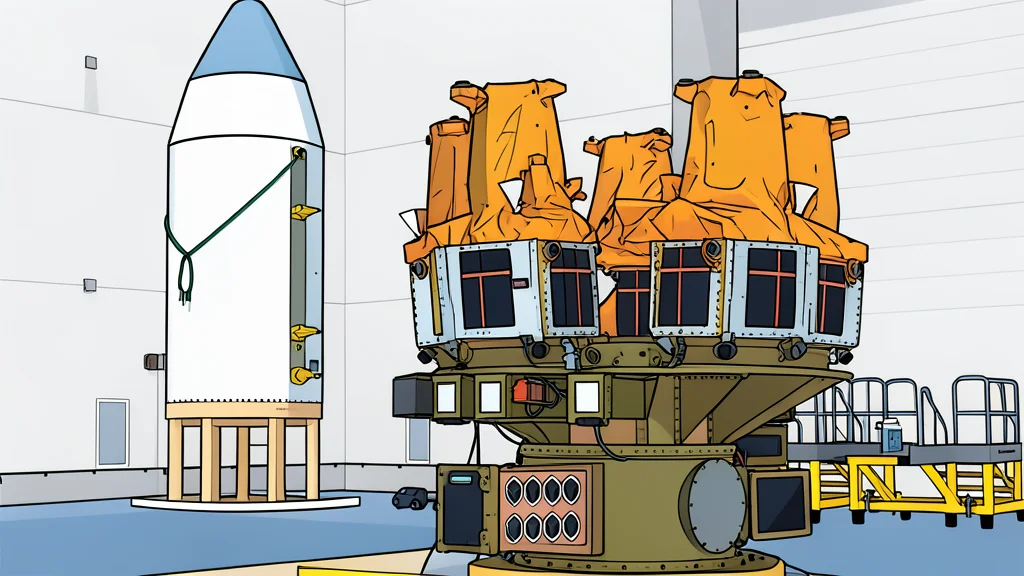
South Korea’s Nuri rocket is preparing for its fifth flight, scheduled for October 7. This mission represents a major milestone for the nation’s space program, as it will be the first time the rocket carries multiple primary satellites designed to work together. The launch will deploy five Neonsat satellites and ten smaller CubeSats, marking the country’s first step toward an operational satellite constellation in a single operation.
According to Park Jong-chan, director of the Korean Launch Vehicle Enhancement Program at the Korea Aerospace Research Institute, the mission is the most complex in Nuri’s history. The primary challenge is not just carrying more weight, but managing the precise release of each satellite. The rocket must maintain strict orientation control to ensure that the satellites separate safely and enter their intended orbits without colliding with the vehicle or each other.
Precision Control Prevents Post-Launch Collisions
The technical heart of this mission is the rocket’s ability to manage its orientation during separation. Park explained that maintaining precise attitude control is critical to prevent the satellites from drifting back into the rocket after release. The goal is to ensure that each of the five primary satellites enters its specific orbit in a stable condition, a requirement that was not necessary for previous single-payload missions.
To protect the delicate satellite hardware during this process, engineers have implemented a newly developed low-shock separation system. This mechanism reduces the physical impact experienced by the satellites during release. The system cuts the shock levels, measured in gravitational acceleration units, from approximately 2,000 to 1,000. This reduction is significant because high shock can damage sensitive instruments, making the satellites less effective or entirely useless after arrival in orbit.
Hardware Upgrades Enable Multiple Payloads
Carrying 15 satellites required structural changes to the rocket’s mounting system. The weight increase in the payload section is not due to heavier satellites, but rather an evolved secondary payload adapter. This new hardware allows multiple satellites to be mounted simultaneously on the rocket. Previous missions carried a single primary payload, so this adapter represents a fundamental shift in how Nuri is configured for commercial and scientific use.
Private Sector Role Expands in Launch
The fifth launch also signals a broader integration of private companies into South Korea’s space operations. Hanwha Aerospace, designated as the system integration company, will play a larger role in launch preparations. This move aligns with national efforts to build a private-sector space launch ecosystem. While the mission has roots in government research, the operational framework now includes significant private sector participation, setting a precedent for future commercial launches.
This mission follows a mixed history for Nuri. The first test flight in 2021 failed to reach orbit, but subsequent launches in 2022, 2023, and 2025 were successful. The October launch will test whether the rocket can handle the increased complexity of constellation deployment. Success will prove that Nuri can support advanced satellite operations, while failure would highlight the technical difficulties of managing multiple payloads simultaneously.