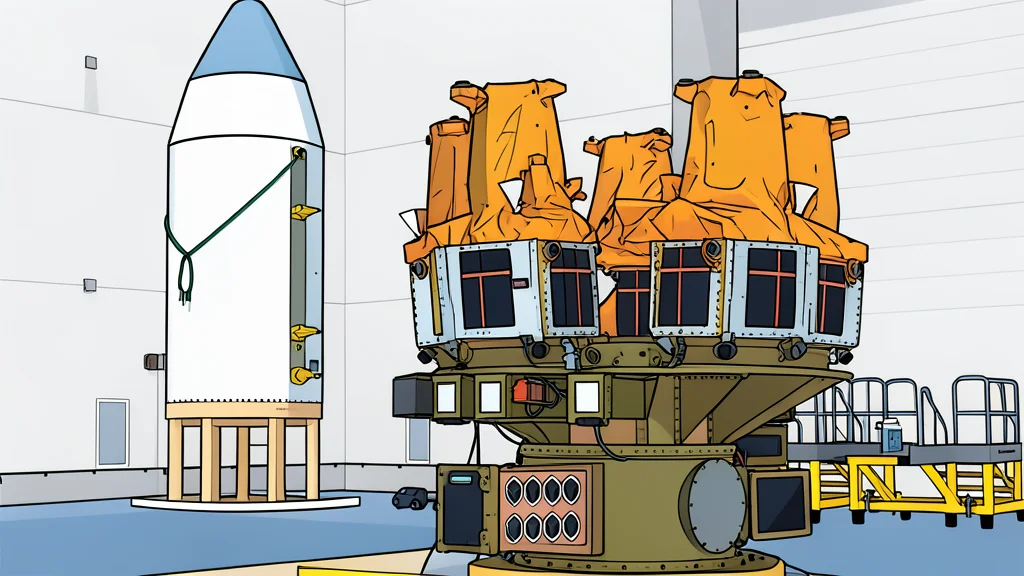
Precise Launch Doubles Life of Roman Telescope

Nancy Grace Roman Space Telescope saves fuel, doubling operational life.
Nancy Grace Roman Space Telescope is expected to operate for over 22 years, more than double its original 10-year fuel budget. This extended lifespan stems from a highly precise launch and fuel-efficient maneuvers during its journey to its final orbit.
According to GN auto tech/space: space launch, the telescope’s extended operational window is a direct result of meticulous planning and execution. The spacecraft, launched on a SpaceX Falcon Heavy, is on track to reach its destination near the second Sun-Earth Lagrange point in early December.
Fuel savings drive extended mission
The key to this extended mission was the first major course correction, which was completed with over 99% accuracy. This maneuver used only about 18 kilograms of fuel, far less than the 200 kilograms initially allocated. This single saving could add approximately four years to the telescope’s operational life.
Additionally, the Roman telescope was lighter at launch than the maximum weight used in NASA’s fuel planning. This allowed engineers to load extra propellant, potentially adding another four years to the mission. The spacecraft is expected to undergo a second, smaller course correction later this month, which could save even more fuel.
Stable orbit enables deep space observation
The telescope is heading to the second Sun-Earth Lagrange point, a location about 1.5 million kilometers from Earth. This position allows the Roman telescope to maintain a relatively stable orientation while observing the universe, with the Sun and Earth on the same side of the spacecraft.
Once in its final orbit, the telescope will require small adjustments roughly every 28 days to remain in position. This stable vantage point is crucial for its mission to survey large areas of the sky in infrared light, aiding in the study of dark energy, dark matter, and the formation of galaxies.
Extended view of the cosmos
The potential for a 22-year mission does not guarantee this exact duration, but it significantly increases the telescope’s operational window. This extended period provides scientists with more time to utilize the Roman telescope’s powerful capabilities for observing the cosmos.
The telescope’s ability to conduct long-term observations is a testament to the precision of its launch and the efficiency of its fuel management. This extended mission will allow for deeper investigations into some of the universe’s most profound mysteries.