South Korea's Nuri Rocket Targets First Satellite Constellation in October Launch
South Korea is preparing for a significant milestone in its space program as the Nuri rocket prepares to deploy its first domestic microsatellite constellation next month.
South Korea’s homegrown Nuri rocket is set to carry out its fifth launch in early October, marking a pivotal moment for the nation’s space capabilities. According to reports from space launch expert GN auto tech/space, the mission will deploy 15 satellites, including five units that form the core of the country's first domestically launched microsatellite constellation. This move signals a shift from individual satellite deployments to coordinated network operations, a capability previously held by only a handful of spacefaring nations.
The launch is scheduled for October 7 from the Naro Space Center in Goheung, approximately 330 kilometers south of Seoul. The payload consists of five primary satellites known as NEONSAT, which weigh about 500 kilograms in total, alongside ten smaller CubeSats weighing roughly 96 kilograms. While the smaller satellites serve as secondary payloads, the NEONSATs represent the primary objective of the mission, designed to work together as a unified system rather than operating independently.
First domestic constellation deployment
This mission is distinct from previous Nuri flights because it involves deploying multiple satellites that perform the same function in a coordinated sequence. Park Jae-sung, head of the Korea AeroSpace Administration’s space transportation division, described this as a turning point for the country’s satellite development. The agency aims to advance toward mass production and operational constellation use, moving beyond the era of single-satellite launches. This capability is crucial for maintaining consistent surveillance and communication coverage, which single satellites cannot provide due to their limited orbital paths.
The five NEONSATs are not being launched as a single rigid unit but will be released individually into orbit. To prevent potential collisions during the deployment process, the satellites will be ejected in different directions at intervals of 35 to 40 seconds. This sequential release is a complex engineering challenge that requires precise timing and trajectory calculations. Successfully executing this maneuver will demonstrate that South Korea has mastered the technical skills necessary for building and operating large-scale satellite networks.
Strategic imaging capabilities for security
Each NEONSAT carries an electro-optical camera designed to capture high-resolution images for national security and disaster response purposes. These images can be used to monitor critical events such as wildfires, floods, and other environmental emergencies. The constellation is designed to provide rapid situational awareness, allowing authorities to respond to unfolding crises with up-to-date visual data. This capability reduces reliance on foreign satellite imagery, which can be subject to delays or access restrictions during critical moments.
Once fully operational, the constellation will be able to image the Korean Peninsula more than three times a day. It will also have the ability to revisit the same location within 24 hours, providing a high-frequency data feed. The full constellation will eventually consist of 10 satellites operating in two separate orbital planes. The current launch will deploy the first five, with the remaining five scheduled for launch in 2027 to complete the network. This phased approach allows the agency to test the system's performance before fully committing to the entire fleet.
Launch preparations and timing
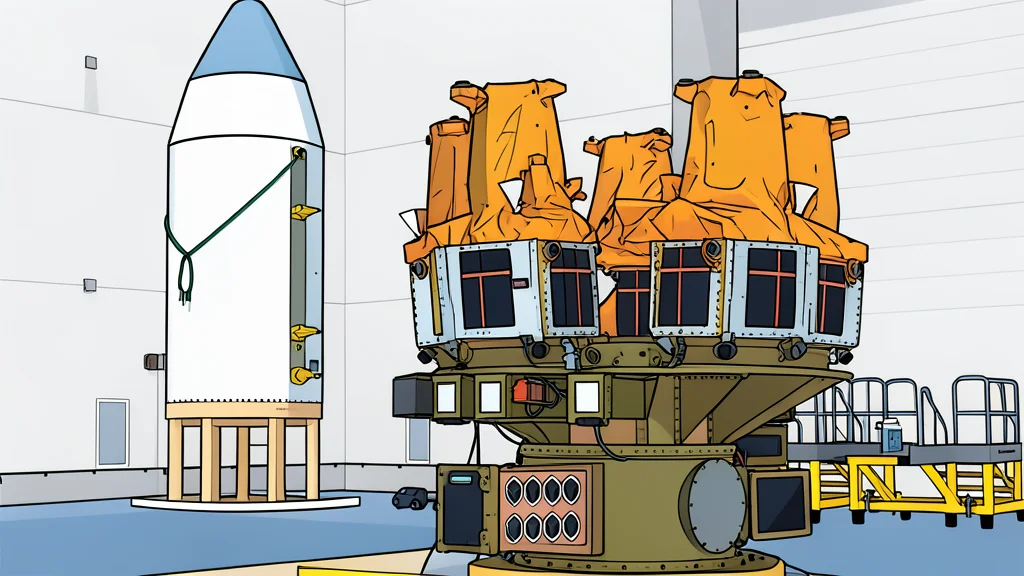
Preparations for the launch are proceeding according to schedule, with the agency pledging close cooperation with relevant government bodies to ensure success. The satellites were mounted on the rocket's upper stage earlier this week, and final assembly is expected to be completed later this month. Final inspections will continue through October 5, after which the rocket will be moved to the launchpad. The exact launch time will be determined on the day of the mission, within a window between 12:23 p.m. and 1:23 p.m. local time. This precise timing is necessary to ensure the satellites achieve the correct orbital inclination and altitude for their intended operations.