NASA Funds Twelve Studies for Space Food and Health
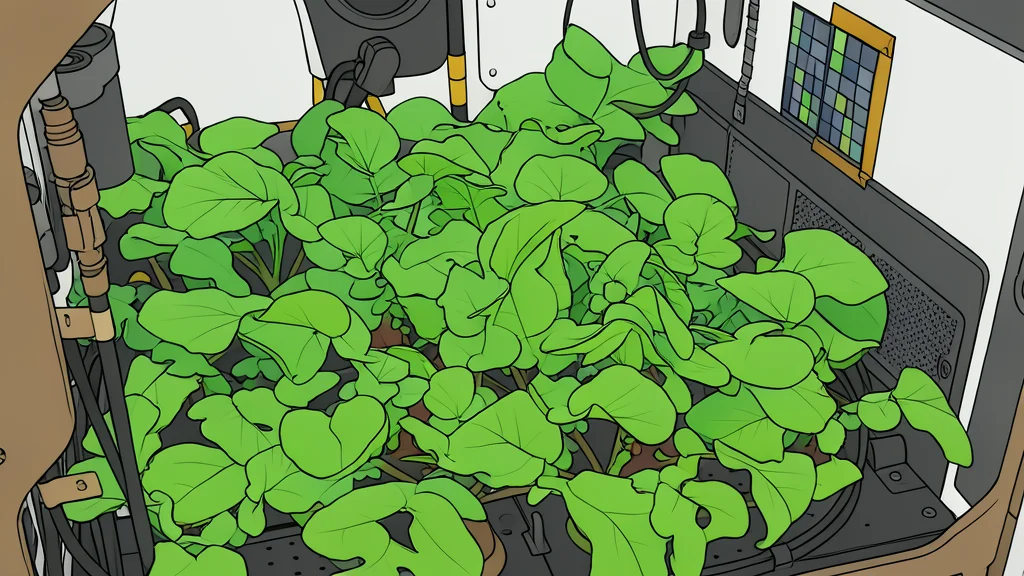
NASA has selected twelve new research projects to solve critical challenges for future astronauts. Half focus on growing food in space, while the other half investigate how spaceflight impacts human health and physiology.
NASA has selected twelve new investigations to support human explorers in deep space. Six of these projects aim to improve the ability to grow food off-planet, while the other six focus on understanding how the unique conditions of space exploration affect astronaut health and physiology. These efforts are part of a broader strategy to make long-duration missions to the Moon and Mars more sustainable and safer for crews.
Growing Food in Space Environments
The six food-focused studies, supported by the Space Crops grants, seek to harness plant biology to enhance quality of life and enable exploration. Four proposals examine how edible plants and their associated microbial communities respond to the environmental stresses of space or other planetary bodies. Understanding these interactions is crucial for developing sustainable farming systems that can operate in low-carbon, high-radiation environments.
Two other proposals explore different biological mechanisms. One investigates how certain "resurrection plants" withstand extreme dryness, a trait that could be leveraged for space life-support systems. The other builds on International Space Station research to uncover the functions of algal genes modified by spaceflight. By understanding how these organisms survive and adapt, scientists hope to integrate biological solutions into closed-loop life support systems.
Researching Astronaut Health Risks
The second set of six proposals addresses precision health, aiming to unravel how space exploration affects well-being. One study looks at how lunar dust exposure impacts respiratory, immune, and inflammation responses. Another identifies repurposed drugs that could mitigate the negative effects of space travel on human physiology. These studies are designed to create early-warning detection systems and therapeutic strategies for crews.
Additional research focuses on the combined effects of radiation and other stressors on aging characteristics in various organ systems. Two proposals assess molecular and cellular changes that alter gene expression or protein function. This work is essential for developing countermeasures against health issues that may arise during long-duration missions, ensuring that astronauts remain healthy upon return to Earth or during extended stays in space.
Diverse Institutions Lead New Studies
The principal investigators behind these space biology studies come from ten institutions across eight states. Notably, nine of the awards are for researchers receiving funding from the Space Biology Program for the first time. This diversification of the research community helps bring fresh perspectives and innovative approaches to the complex challenges of space exploration, as reported by GN auto tech/science: space discovery.