NASA Integrates SLS Boosters for 2027 Crewed Lunar Mission
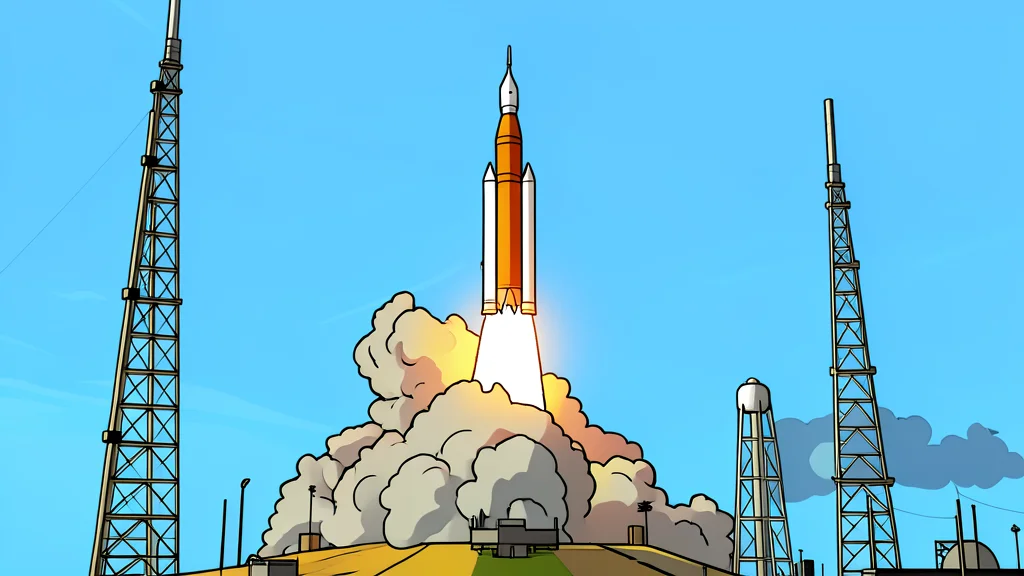
Technicians attached the first booster segment to the Space Launch System, a critical step toward testing docking capabilities in 2027.
Key points
- NASA integrated the left forward booster segment for the Space Launch System at Kennedy Space Center.
- The solid rocket boosters will supply over 75 percent of the total thrust for the 2027 launch.
- Artemis III will test docking in Earth orbit, a necessary step before the 2028 lunar landing.
NASA has completed a significant engineering milestone for its lunar return program by integrating the first major propulsion component for the next crewed flight. This week, technicians attached the left forward booster segment to the Space Launch System at Kennedy Space Center. The move represents a tangible step forward in preparing the hardware required for the Artemis III mission, currently targeted for 2027.
According to reports from the New York Post, this integration is essential for generating the massive thrust needed to launch astronauts toward the Moon. The solid rocket boosters are the primary source of power for the initial ascent, and their successful assembly on the mobile launcher clears a major path in the production schedule. Without these components properly fitted, the vehicle cannot proceed to final testing phases.
Boosters provide majority of launch power
The SLS rocket relies on two large solid rocket boosters to provide more than 75 percent of its total thrust at liftoff. Each booster is constructed from five segments manufactured by Northrop Grumman in Utah. The current integration work focuses on the left-side stack, which is now being positioned atop the mobile launcher. This infrastructure is critical because the boosters must be perfectly aligned to handle the extreme forces of a lunar trajectory launch.
The trade-off in this complex assembly process is the sheer scale of the hardware. Handling segments of this size requires specialized equipment and precise coordination among ground crews. Any misalignment or structural issue at this stage could delay the entire mission timeline. The focus on the left booster signals that NASA is moving from individual component testing to full-stack integration, a phase where potential flaws are harder to fix.
Artemis III tests critical docking maneuvers
The primary goal of the upcoming Artemis III mission is not to land astronauts on the lunar surface, but to test rendezvous and docking capabilities in Earth orbit. The Orion spacecraft will carry the crew to orbit, where it will meet with commercial spacecraft. This maneuver is a prerequisite for the final phase of the program, where astronauts will land on the Moon during Artemis IV in 2028.
This staged approach reduces risk by validating the docking technology before committing to a lunar landing. The earlier Artemis II mission, which launched in April, successfully flew astronauts around the Moon, marking the first crewed flight of the Orion capsule. That flight proved the vehicle's safety and navigation systems, but the docking test remains a distinct technical challenge that must be mastered before the final landing attempt.
Progress follows successful uncrewed test flight
The current integration work builds on the success of the Artemis II test flight earlier this year. Four astronauts, including representatives from NASA and the Canadian Space Agency, completed a nearly 10-day voyage around the Moon. This mission validated the life support and navigation systems of the Orion spacecraft. The success of that flight provides the confidence needed to proceed with the more complex docking and landing phases now being prepared.