RSAT Space Signs Deal to Sell INNOSPACE Rocket Launches in Canada
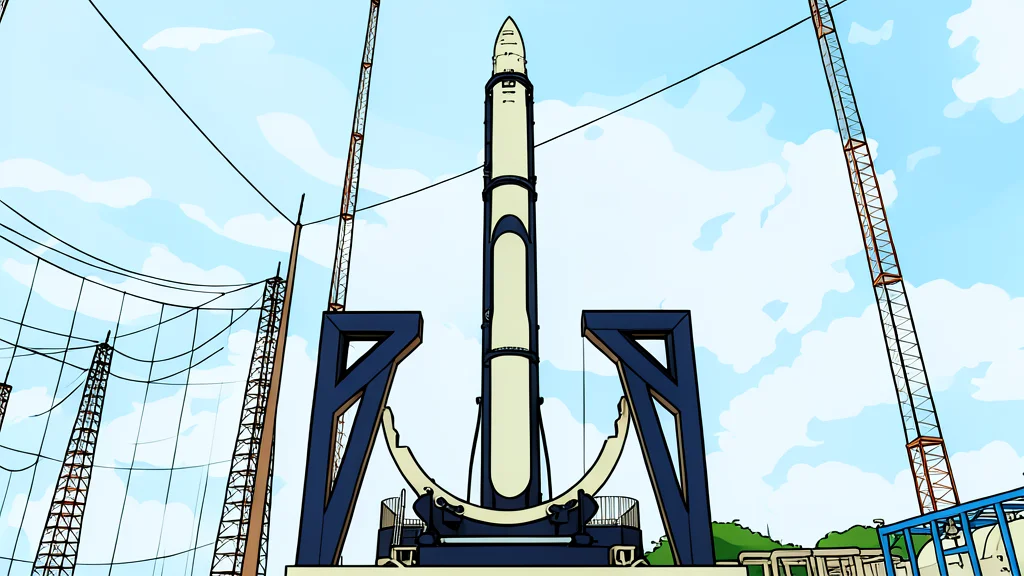
Montreal-based RSAT Space has secured non-exclusive rights to market South Korean INNOSPACE's small-satellite rockets to Canadian customers.
Key points
- RSAT Space has secured non-exclusive rights to sell INNOSPACE's HANBIT series rockets to Canadian customers.
- INNOSPACE's first orbital launch of the HANBIT-Nano failed in December 2025 due to an engine sealing issue.
- The agreement is a sales-only deal; RSAT handles marketing while INNOSPACE retains technical responsibility and other partners.
Montreal’s RSAT Space Inc. has formally agreed to sell satellite launch services for South Korean rocket developer INNOSPACE in Canada. The deal, announced Monday, converts a memorandum of understanding signed in April into a binding distribution agreement, allowing RSAT to pitch INNOSPACE’s small rockets to Canadian government and commercial operators.
However, the arrangement is strictly a sales role, not a technical partnership. RSAT, which primarily builds satellites and payloads, will handle customer acquisition and contract negotiations. The agreement grants non-exclusive rights, meaning INNOSPACE remains free to sign other Canadian partners, and no specific launch contract has been closed yet.
Sales role without technical control
RSAT’s involvement is limited to commercial activities. The company is tasked with identifying prospective clients, presenting launch options, and finalizing deals. This shift places the Montreal firm in a broker-like position, leveraging its existing relationships in the Canadian space sector to open doors for INNOSPACE’s HANBIT-Nano, HANBIT-Micro, and HANBIT-Mini vehicles.
The financial terms of the distribution agreement have not been disclosed. Neither company has provided details on commission structures or revenue projections. For RSAT, the move represents a diversification into launch services sales, complementing its core business of payload development and prime contracting for the Canadian Department of National Defence.
Recent launch failure complicates outlook
The commercial push coincides with a significant technical setback for INNOSPACE. The company’s first orbital launch of the HANBIT-Nano from Brazil’s Alcântara Space Center on December 22, 2025, ended in failure. A sealing problem in the first-stage engine caused the rocket to disintegrate shortly after liftoff.
INNOSPACE stated it is working toward a second attempt, but a firm date for the retry has not been publicly confirmed. This reliability issue is a critical trade-off for potential Canadian customers, as the primary product being sold has not yet demonstrated a successful orbital insertion. The lack of a confirmed recovery timeline adds uncertainty to the value proposition RSAT is now promoting.
Part of broader global network
This is the third distribution deal INNOSPACE has signed in the past year, following agreements with American firms Arrow Science and Technology and Ensemble Commercial Services. RSAT is the first Canadian company added to this expanding network, which already includes distributors in Japan, Italy, the Netherlands, Germany, and the U.K.
According to spaceq.ca, the expansion reflects INNOSPACE’s strategy to build a global sales infrastructure for its small-satellite market. For RSAT, the deal leverages the background of CEO Gurvinder Chohan, who previously managed commercial operations for MDA Space and Maxar’s Asia-Pacific business. The move positions RSAT to capture a share of Canada’s growing demand for dedicated small-satellite launches.