Rocket Lab Deploys Radar Satellite for Japanese Infrastructure Monitoring
A new radar satellite has entered orbit to help Japan monitor construction and prepare for disasters, continuing a dedicated launch partnership between Rocket Lab and Synspective.
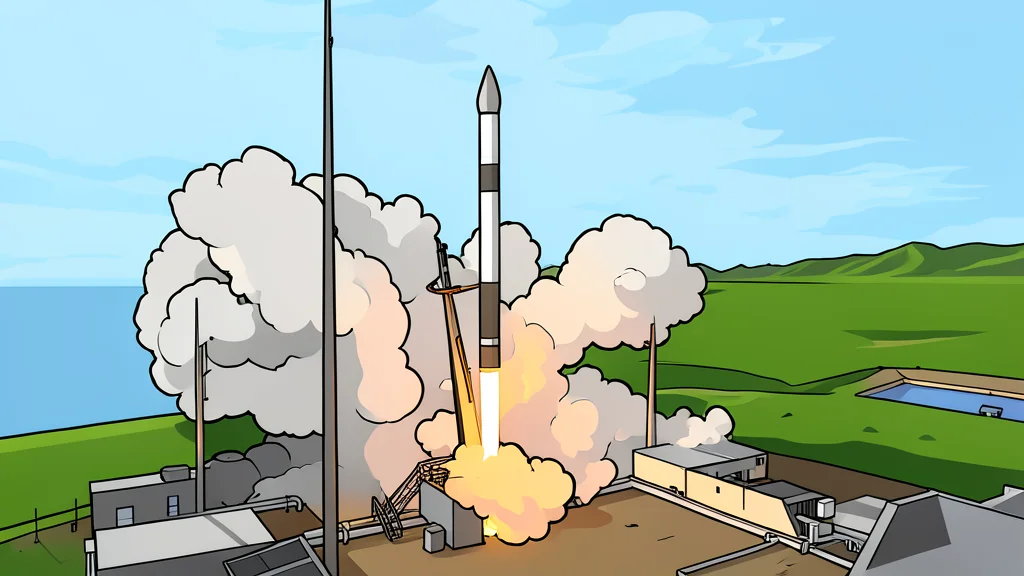
A slender white rocket lifted off from New Zealand’s Mahia Peninsula in the early hours of September 19, carrying a single customer payload into space. This launch was not for a government agency or a high-profile tourist flight, but for a Tokyo-based technology firm building a network of eyes in the sky. The mission, playfully named “Owl By The Dozen,” marked the twelfth dedicated flight for this specific customer and represents a steady, commercial approach to orbital infrastructure.
The satellite is equipped with synthetic aperture radar, a technology that allows it to see through clouds and operate effectively at night. This capability is critical for the target markets in Japan, where data is needed for urban planning, construction oversight, and rapid disaster response. Unlike optical cameras that rely on sunlight and clear weather, this system provides consistent imagery regardless of atmospheric conditions, offering reliability for critical infrastructure management.
Radar technology enables all-weather monitoring
Synthetic aperture radar works by emitting radio waves toward the Earth and measuring the time it takes for them to bounce back. This creates a detailed image of the surface, allowing operators to detect changes in terrain, track structural integrity, or identify areas affected by natural disasters. For a country like Japan, which faces frequent seismic and meteorological events, having a constellation that can provide data during heavy rain or nighttime outages is a significant operational advantage.
The spacecraft has been placed into a low Earth orbit at an altitude of approximately 572 kilometers. This region of space is crowded with commercial assets, but the specific value here lies in the continuity of the data stream. By maintaining a dedicated constellation, the operator can ensure frequent revisit times, meaning the same area can be imaged multiple times a day. This frequency is essential for monitoring dynamic processes like construction progress or the rapid evolution of a flood zone.
Dedicated rides for small satellite constellations
Rocket Lab’s Electron rocket is designed specifically for this type of mission. Unlike larger vehicles that carry dozens of small satellites as secondary passengers, Electron offers a dedicated launch where the customer’s satellite is the sole payload. This eliminates the risk of interference or scheduling conflicts with other customers. The 18-meter-tall vehicle is a workhorse for the small-satellite market, providing a predictable and reliable path to orbit for operators who need consistent access to space.
The company reports that it has performed 17 launches in 2026 so far, with this specific customer accounting for a significant portion of that activity. The partnership highlights a shift in the space economy where specialized data providers are building their own assets rather than relying on third-party data. This vertical integration allows for greater control over data quality and delivery times, creating a more robust product for end-users in government and industry.
Future plans for reusable rocket systems
While the current fleet relies on expendable rockets, the industry is moving toward reusability to reduce costs. Rocket Lab is developing a larger, partially reusable vehicle called Neutron, which is expected to debut in late 2026 or early 2027. This rocket aims to compete in the medium-lift market, offering a more cost-effective option for larger payloads. The transition from expendable to reusable hardware is a key factor in making space-based services more accessible and affordable for a wider range of customers.
The success of the recent launch underscores the viability of specialized satellite constellations. As more companies build their own networks for specific purposes like environmental monitoring or logistics tracking, the demand for reliable, dedicated launch services will continue to grow. The trade-off for customers is a higher upfront cost for building the constellation, but the long-term benefit is a direct, unmediated source of data that can be tailored precisely to their operational needs.