Wrist OS Projects Face Unresolved Battery and Heat Limits
New flexible displays aim to turn forearms into computing surfaces, but engineers still struggle with heat and power constraints.
Key points
- IBM and DIY makers established early proof that full operating systems can run on wrist-worn hardware.
- New devices like Polyera's Wove use flexible E-ink screens to offer larger display areas on the arm.
- Heat management and battery drain remain the primary obstacles preventing widespread adoption of wrist computers.
The idea of running a full operating system on a device worn on the arm is not a recent invention born from artificial intelligence hype. It has a documented history stretching back decades, driven by the simple fact that the wrist is the most accessible space on the human body while computing components continue to shrink. Recent developments show that this concept is moving from experimental prototypes toward more serious engineering attempts, though significant physical limitations remain.
Several independent projects are now converging on the bracelet as a potential computing surface. While some early experiments focused on proving that desktop software could technically run on tiny hardware, newer initiatives aim to create usable, low-power platforms. The transition from a novelty to a functional tool involves solving complex trade-offs between screen size, power consumption, and heat management.
Early experiments proved feasibility
The engineering roots of wrist-based computing run deeper than most people realize. IBM’s research division demonstrated the concept early by building a Linux wristwatch prototype that included full graphics, Bluetooth connectivity, and a standard display interface. The goal was to allow developers to use standard desktop tools without learning a proprietary platform, proving that complex software could theoretically fit into a small form factor.
On the DIY side, makers have built watches running Windows 98 via emulation on Raspberry Pi hardware. While the operating system did boot, the interactions were described as unbearably slow, and the hardware resembled a bulky first-generation iPod nano strapped to the wrist. Despite the poor user experience, these projects established the proof of concept that a full OS could function on wearable hardware.
Modern platforms prioritize flexibility
Current projects show how the bracelet-as-computer idea has matured. Polyera’s Wove band uses a flexible E-ink panel that wraps around the arm, running an Android-based platform connected over Bluetooth. This device targets developers first, aiming to open up a different kind of platform focused on low power and persistent displays on the body, rather than just serving as a remote for a smartphone.
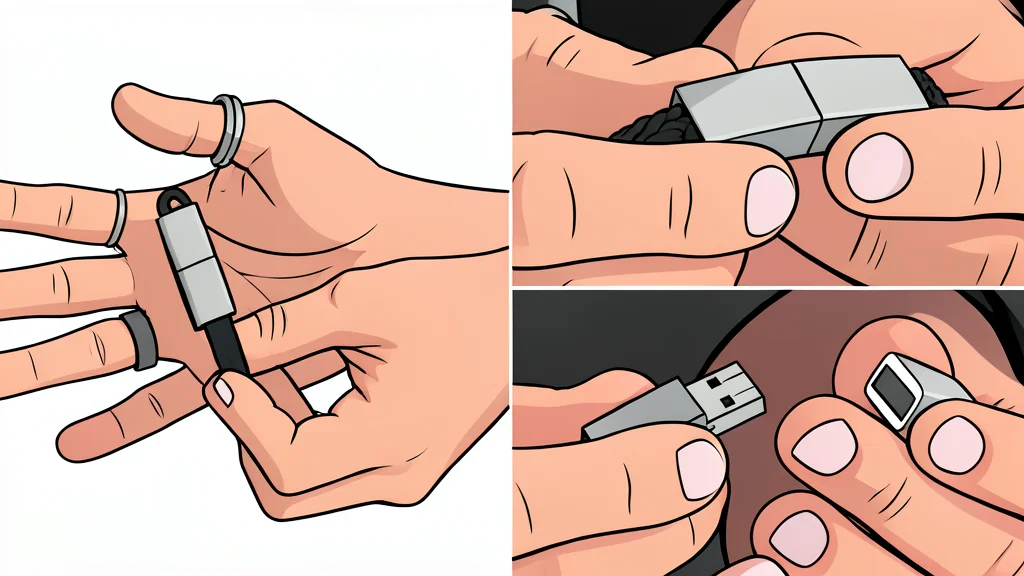
Other approaches focus on security and versatility. PlugOS built an Android 14 environment inside a thumb-sized device with its own processor and secure module, allowing it to connect to various host systems. Meanwhile, Lingverse introduced a pendant with a detachable core that can switch between a desk robot and a wearable shell. These designs contrast with standard watch operating systems, which primarily function as phone companions rather than independent computing platforms.
Physical constraints remain unsolved
Battery life, thermals, and screen size remain the three major constraints no bracelet project has solved simultaneously. Battery life is the first hurdle, as desktop OS emulation drains power far faster than optimized watch software. Thermals are the second problem, because a bracelet sits directly against skin, making heat management critical for user comfort and safety.
The third constraint is the interaction surface. A bracelet display forces significant user interface compromises that no current operating system handles gracefully at that scale. As reported by Currently.com, while each of these problems is solvable individually, solving all three simultaneously inside a device that is comfortable to wear remains the primary engineering gap.