Garmin Cirqa's Screen-Free Design Hides a Data Glitch
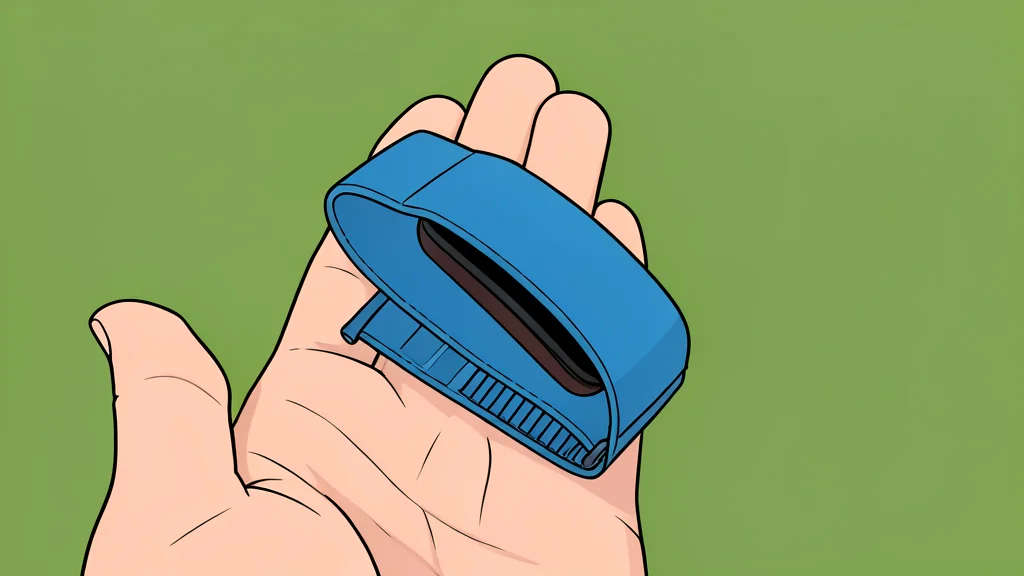
A week of testing in Berlin reveals that while the new fitness band is comfortable and battery-efficient, its inability to distinguish between walking and riding a train leads to wildly inaccurate speed readings.
Wearing a fitness tracker at a large tech conference is often a grueling task, but the new Garmin Cirqa offered a different experience. Unlike traditional smartwatches with bright displays, this device relies on a screen-free interface, prioritizing comfort and battery life over constant data visualization. For many users, this minimalist approach is a welcome break from the notification overload of modern wearables. However, the convenience of having no screen to check comes with a significant trade-off: you cannot verify your data in real-time, meaning errors can accumulate without your knowledge until you sync the device later.
During a two-day stint at the IFA 2026 show in Berlin, the band recorded nearly 29,000 steps, a testament to the sheer scale of the exhibition halls. The physical comfort of the band was notable, allowing it to be worn for extended periods without distraction. Yet, the core function of a fitness tracker—accurately measuring movement—proved to be the weak link. The device struggled to differentiate between actual walking and passive movement, resulting in data that was technically correct in step count but misleading in pace and distance. This highlights a common issue in wearable technology: sensors are good at detecting motion, but bad at understanding context.
Step counts remained reliable throughout
The most consistent aspect of the Cirqa’s performance was its ability to count steps accurately. On the first day of the event, the user logged nearly 18,000 steps, a figure that aligns with the sprawling nature of the Berlin Messe complex. The second day saw a lower count of around 10,000 steps, reflecting a more structured schedule of meetings. These numbers are plausible given the environment, suggesting that the accelerometer, which measures movement, is functioning as intended. For users whose primary goal is to track daily activity levels without needing precise speed metrics, the Cirqa delivers a solid, low-maintenance experience.
Train rides distorted speed data
The critical failure occurred during transit. The user walked to the U-Bahn station and then rode the metro for approximately two miles to the venue. The Cirqa interpreted this entire journey as a continuous walking workout. Consequently, it calculated an average moving pace of 8 minutes and 41 seconds per mile. While a human can maintain that pace while running, it is impossible to achieve it while sitting on a train. The device effectively treated the mechanical movement of the train as personal exertion, skewing the pace and distance data significantly. This is not a minor error; it fundamentally changes how a user might interpret their daily fitness levels.
This issue underscores a limitation in current motion sensors. Without a screen or immediate feedback, the user had no way to pause the workout or correct the data in the moment. They had to trust the device to make the right call, which it did not. For athletes or fitness enthusiasts who rely on accurate pace data for training, this flaw is a deal-breaker. The trade-off for the sleek, screen-free design is a lack of control and verification, leaving users vulnerable to data anomalies that only become apparent after the fact.
Comfort and battery life excel
Despite the data issues, the hardware itself performed well. The Garmin Cirqa is designed to be discreet, with a form factor that feels more like a simple accessory than a piece of technology. It does not draw attention, which is ideal for professional settings or casual wear. The battery life was also sufficient for the multi-day usage, avoiding the daily charging ritual that plagues many smartwatches. According to coverage from GN auto tech/wearables: fitness tracker, these aspects make it a strong contender for those who prioritize simplicity and longevity over granular data accuracy.
The decision to buy a screen-free tracker comes down to what you value most. If you need real-time stats, heart rate zones, or the ability to pause a workout when you start a car ride, the Cirqa is likely the wrong choice. Its inability to distinguish between active movement and passive transport is a significant oversight. However, if your goal is to simply get off the couch and move more, without the pressure of watching numbers tick by, the device offers a streamlined, comfortable experience. The catch is clear: you get the benefit of a lightweight, long-lasting tracker, but you lose the precision and control that come with a more complex, screen-equipped device.