Luna Band's Design Flair Hides Unreliable Health Tracking
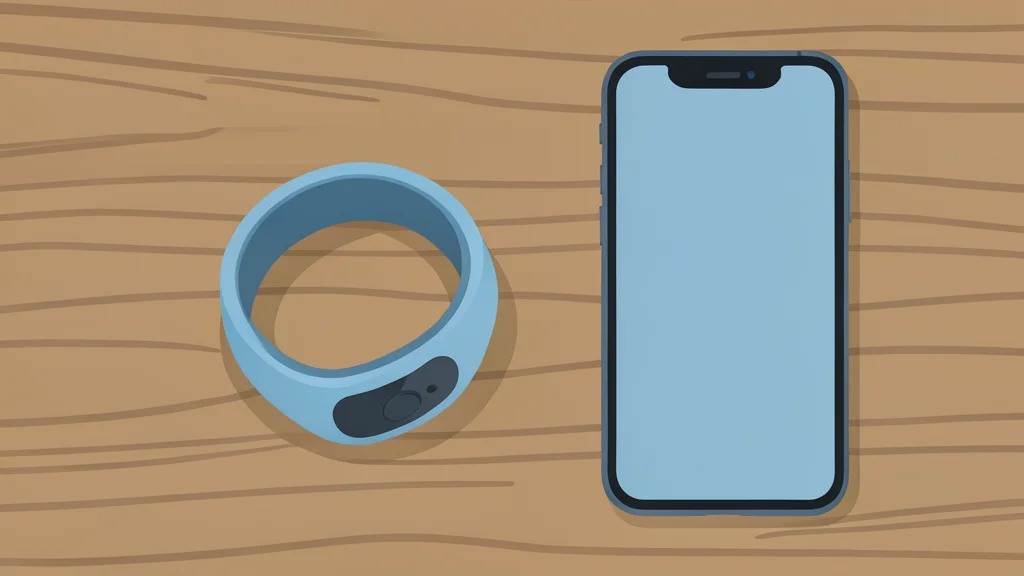
The new Luna Band looks sleek and offers a customizable app, but recent reviews suggest its core health tracking functions lack the accuracy needed for serious fitness monitoring.
The Luna Band is arriving in the crowded wearable market with a $150 price tag and a focus on modular design. According to reporting from GN auto tech/wearables: fitness tracker, the device aims to stand out through aesthetics and app customization. However, initial assessments indicate that the device struggles to deliver on its primary promise of reliable health data, creating a significant gap between its visual appeal and functional utility.
For consumers considering a purchase, the trade-off is clear: you get a stylish, modern interface but potentially lose access to accurate physiological metrics. The reviews highlight that while the hardware looks refined, the sensor performance lags behind established competitors. This makes the Luna Band a difficult choice for users who prioritize data integrity over form, as the core metrics often fail to provide consistent or reliable insights during daily use.
Heart rate data proves erratic
Heart rate monitoring is a fundamental feature for any fitness tracker, and the Luna Band shows mixed performance here. During rest, the readings align reasonably well with reference medical devices, suggesting that baseline tracking is acceptable. However, the device struggles significantly during physical activity. The sensor often fails to keep pace with rapid changes in heart rate, leading to erratic data spikes and drops that do not reflect the user's actual physiological state.
This inconsistency renders the device less useful for high-intensity workouts or rigorous training sessions. Competitors like the Fitbit Air are noted for providing stable data across both resting and active states. For fitness enthusiasts who rely on precise metrics to optimize their training, the Luna Band’s inability to capture accurate exercise data is a major drawback that undermines its value proposition.
Sleep analysis lacks precision
Sleep tracking is another area where the Luna Band falls short of industry standards. Testing revealed that the device frequently misclassifies sleep stages, often recording light sleep as deep sleep or failing to identify REM cycles correctly. For users who depend on wearables to understand their sleep architecture and improve their rest quality, these inaccuracies make the data largely useless for actionable insights.
The lack of precision in sleep analytics means the device cannot compete with alternatives that offer detailed and accurate sleep analysis. Users seeking to track their health improvements overnight may find the Luna Band’s output frustrating, particularly when compared to rivals that provide reliable stage-by-stage breakdowns. This limitation suggests that the device is better suited for casual monitoring rather than serious health management.
Software limitations and market competition
Beyond hardware performance, the software experience presents its own set of challenges. The app interface is visually appealing and highly customizable, but it relies heavily on internet connectivity for key functions. Several advanced features, including VO2 max and SpO2 tracking, are still under development, meaning users are paying for a product that is not yet fully functional. Additionally, shipping times are reported to be longer than those of established competitors.
The market is saturated with alternatives that offer better accuracy and more complete feature sets at similar or lower price points. Devices like the Garmin Circa and Fitbit Air provide more reliable data and established ecosystems. For the Luna Band to succeed, it must improve its sensor accuracy and finalize its software suite. Until then, it remains a niche option for those who prioritize style over substance, but a risky choice for anyone seeking dependable health tracking.