Somali Army Commander Reviews Security Posture in Galgaduud
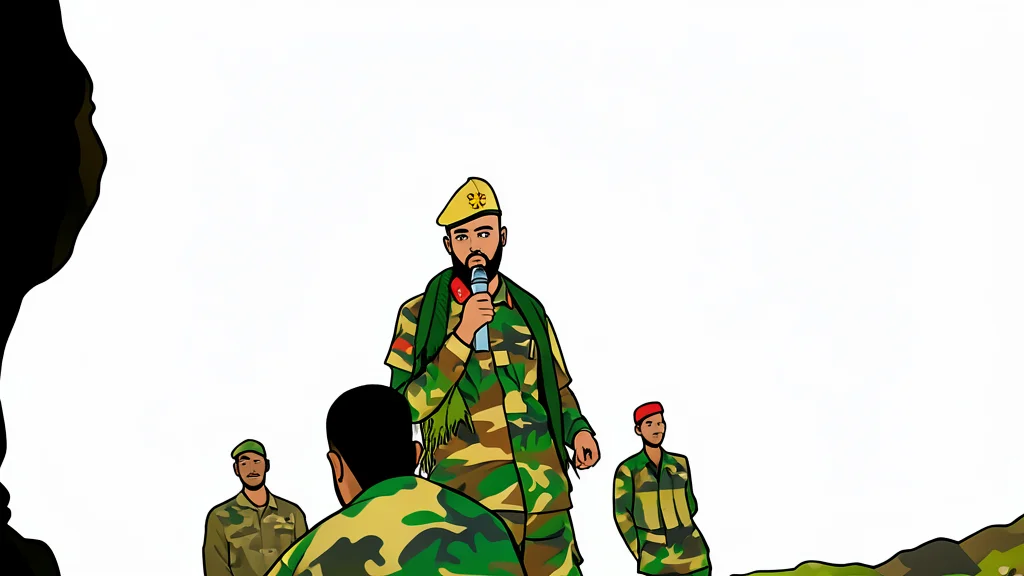
Colonel Maslax Mahmoud Mohamed inspected the 77th Brigade in Masagawaa, signaling continued military pressure against Al-Shabaab amid ongoing regional instability.
Colonel Maslax Mahmoud Mohamed, commander of the 77th Brigade of the Somali National Army, recently conducted a strategic inspection of troop positions in the Masagawaa district of the Galgaduud region. According to reports, the visit focused on assessing the operational readiness of forces stationed in the area and reviewing the progress of ongoing security missions. The commander observed the conditions of the bases and received detailed briefings from unit leaders regarding the local security environment.
The inspection serves as a reaffirmation of the federal government’s commitment to maintaining pressure on Al-Shabaab in central Somalia. Masagawaa has historically been a flashpoint for militant activity, with the 77th Brigade playing a central role in recent defensive operations. By verifying the state of the forces and their logistical support, the military aims to ensure that units remain capable of responding effectively to threats and conducting counter-insurgency operations in this volatile area.
Strategic Importance of the Masagawaa Corridor
Masagawaa holds significant tactical importance due to its location in central Somalia, which has seen repeated clashes between government forces and Al-Shabaab. In late 2024, federal troops successfully thwarted a large-scale attack in the region, reporting the destruction of militant combat vehicles and the killing of numerous fighters. The ability of local forces to anticipate and counter these offensives has been crucial in preventing the consolidation of militant control in the area.
Beyond kinetic military operations, there are ongoing efforts to extend state authority through civilian institutions. In mid-2026, officials laid the foundation for a new police station in Masagawaa, a project intended to improve access to justice and security services for local communities. According to regional officials, this infrastructure development is a key step in addressing the governance vacuum that often exacerbates security challenges in the district.
Broader Security Dynamics in Galgaduud
The security landscape in the Galgaduud region remains complex, characterized by a mix of military operations and inter-clan tensions. In early 2026, a high-ranking Al-Shabaab commander surrendered to Galmudug regional forces, marking a notable development in the counter-insurgency effort. Additionally, coordinated offensives in neighboring districts have resulted in the dismantling of militant command bases, according to military sources. These operations suggest a sustained effort to degrade the operational capacity of armed groups across the central zones.
Cooperation between federal and regional entities has also seen recent developments. In July 2026, senior officials from the Somali National Army and the Galmudug regional state agreed on enhanced border security measures in the Balanbale district. This bilateral agreement aims to curb the flow of illicit weapons and address security incidents that destabilize the region. Such coordination is viewed as essential for creating a more cohesive security architecture in central Somalia.
Challenges for Long-Term Stability
Despite recent military successes, analysts note that the security situation in Galgaduud remains fragile. Al-Shabaab retains the capability to launch attacks on military positions, and the region continues to experience social tensions that complicate stabilization efforts. The effectiveness of operations by the 77th Brigade and other units depends not only on military pressure but also on the ability of local authorities to provide essential services and governance.
The establishment of the new police station represents an attempt to address these underlying grievances by providing a formal mechanism for justice and security. However, the long-term success of this approach will hinge on consistent funding, community engagement, and the reduction of inter-clan violence. As the military continues its inspections and operations, the focus is shifting toward ensuring that state presence is perceived as protective rather than purely coercive, a balance that is critical for lasting stability in the region.