Sudan's Silent Partition: The Emergence of Dual State Structures

The conflict in Sudan is hardening into a stable but fragile two-state reality, with distinct administrative and economic systems emerging in the north and west.
The political landscape of Sudan is undergoing a profound structural shift that extends far beyond the immediate battlefield. According to recent reporting from GN auto geopolitics/africa: Sudan conflict, the country is developing a de facto territorial and administrative partition without a formal declaration of sovereignty split. In the coastal hub of Port Sudan, foreign diplomats continue to present credentials to General Abdel Fattah al-Burhan, who heads the Transitional Sovereignty Council. This coastal city has functioned as the primary wartime administrative base, maintaining core state functions such as passport services and civil administration. Even as the Sudanese Armed Forces have recaptured parts of Khartoum and begun shifting administrative functions back toward the capital, a starkly different authority governs the western regions. This duality suggests that the war is not merely a conflict of armies, but a process of institutional bifurcation that is quietly creating two parallel centers of power.
In the southwest, particularly in Nyala, South Darfur, Mohamed Hamdan Dagalo and his Rapid Support Forces (RSF) administer a rival authority. This administration collects local market fees, appoints civil administrators, and enforces security. Crucially, it derives significant revenue from informal gold trading networks. The separation is becoming increasingly institutional; the RSF-backed administration has begun building parallel financial institutions, including a central bank and a distinct currency system. Meanwhile, the SAF-backed state retains the established monetary apparatus. This contrast illustrates a deepening divide where the international community continues to recognize a single Sudanese state on paper, but the territorial reality reflects two rival centers of authority surrounded by contested zones.
Geographic Fragmentation and Military Stalemate
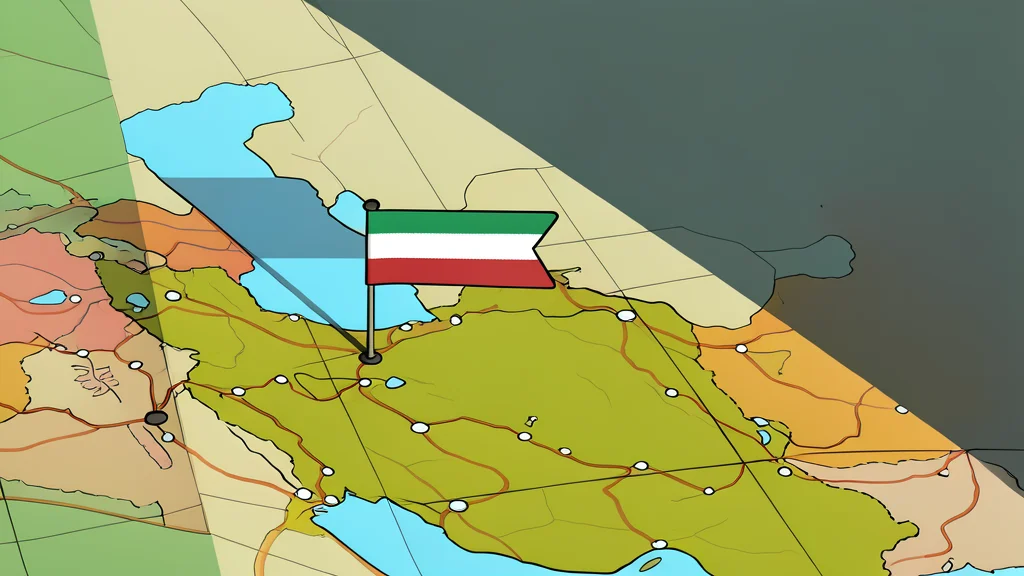
Neither major belligerent has demonstrated the ability to decisively defeat the other across Sudan’s vast geography. Consequently, the conflict has evolved into a two-pole civil war surrounded by autonomous territories and contested spaces. The Sudanese Armed Forces maintain control over most of northern, eastern, and central Sudan, including the central Nile corridor, Gezira, and Sennar. They rely on conventional military command structures, heavy artillery, and foreign-supplied air and drone capabilities, positioning themselves as the sole legitimate custodian of state authority. Conversely, the Rapid Support Forces exercise dominant control over most of Darfur alongside significant portions of West Kordofan. Their strategy relies on high mobility, tribal recruitment networks, and cross-border logistics extending into Chad, Libya, and the Central African Republic.
The map of Sudan is not cleanly dividing into two monolithic blocks. Other armed actors complicate the geographic divide. Abdelaziz al-Hilu’s SPLA-N, aligned with the RSF, controls large parts of the Nuba Mountains in South Kordofan, while Abdel Wahid al-Nur’s Sudan Liberation Army remains outside both major coalitions and controls territory in Jebel Marra. Kordofan functions as a critical, highly active theater where El Obeid, the capital of North Kordofan, and surrounding transit corridors are intensely contested. This multi-tiered geographic divide creates a complex mosaic of control rather than a simple binary partition, with various groups holding sway over specific regions based on local alliances and military capabilities.
Institutional Bifurcation in Daily Life
Beyond the battlefield, institutional fragmentation is embedding this multi-polar division into daily life. The SAF-backed authorities retain control of most formal state apparatuses, preserving the established state’s diplomatic representation and formal banking institutions. In areas under paramilitary control, the Rapid Support Forces have appointed senior officials covering civil administration and policing. They rely on alternative communications networks as national telecommunications infrastructure fractured during the conflict. This institutional bifurcation extends into the economy, where Port Sudan and Khartoum manage formal state imports, while the western regions develop their own economic circuits. The result is a society where citizens in different parts of the country interact with entirely different sets of government services, legal frameworks, and economic regulations.
This parallel governance structure poses significant challenges for humanitarian aid and international intervention. Organizations operating in the country must navigate a complex web of competing authorities, each with its own rules and demands. The emergence of distinct administrative systems in the north and west suggests that the conflict is settling into a long-term status quo rather than moving toward a quick military resolution. The quiet division of Sudan is creating a new geopolitical reality that international bodies are yet to fully acknowledge or address.
Forward Questions on State Unity
The central question now is whether this de facto partition will become a formalized political reality. Observers are watching for signs of further institutional separation, such as the issuance of separate passports or the establishment of distinct diplomatic missions. The ability of each side to maintain control over their respective territories will determine whether the current fragmentation solidifies into a lasting two-state arrangement. The international community’s response to this evolving situation will also play a crucial role in shaping the future of Sudan. For now, the war continues to create a divided nation, with two distinct centers of power emerging from the ashes of a collapsing state.