Mexico Balances U.S. Pressure and Chinese Tech Ties
Mexico is expanding scientific and technological cooperation with China in sectors critical to U.S. security, creating a complex diplomatic dilemma amidst rising trade tensions with Washington.
Mexico has significantly deepened its scientific and technological partnership with China, moving into sectors that are central to Washington’s strategic concerns. This shift occurred during a period of heightened friction between Mexico and the United States, where trade disputes and diplomatic rhetoric have intensified. The Mexican government is actively engaging with Beijing in areas such as artificial intelligence and semiconductors, despite U.S. pressure to limit China's economic influence in North America.
According to The Diplomat, recent high-level meetings in late 2026 marked a new level of engagement, including the first personal participation by a Chinese science minister in the binational commission since 2004. These interactions have led to agreements on research, digital infrastructure, and talent development, signaling a commitment to long-term collaboration in sensitive technological fields.
Escalation in Scientific Partnerships
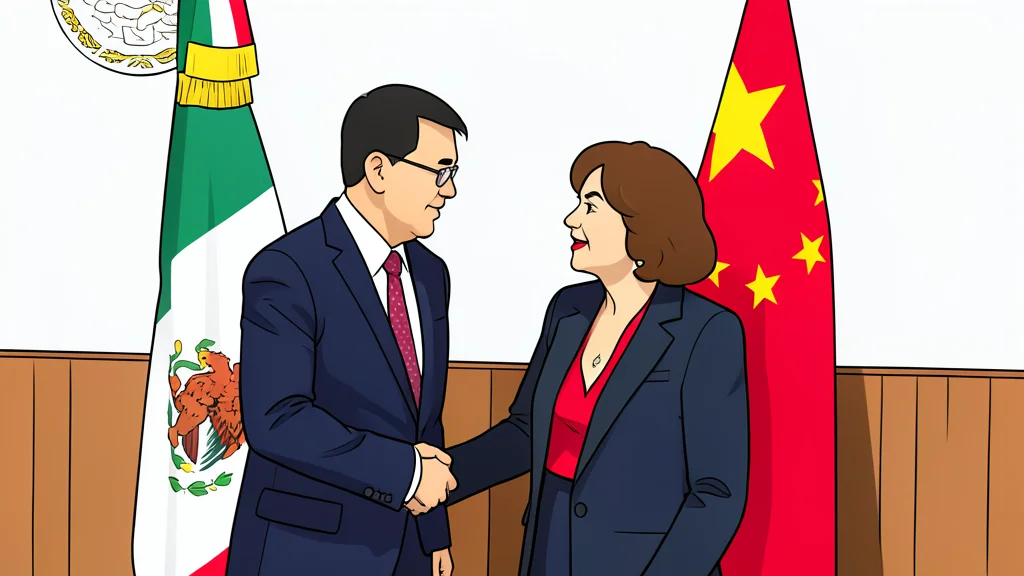
The momentum in Mexico-China relations gained visibility in the third quarter of 2026, driven by direct engagement between top officials. Rosaura Ruiz Gutiérrez, head of Mexico’s science and technology secretariat, met with Chinese Ambassador Chen Daojiang and subsequently co-chaired the Ninth Meeting of the Science and Technology Subcommittee with Chinese Minister of Science and Technology Yin Hejun. This level of ministerial involvement represents a notable escalation in diplomatic protocol, as no Chinese science minister had personally attended these subcommittee meetings for over two decades.
During these sessions, both governments signed a memorandum of understanding aimed at expanding collaboration among universities, public institutions, and private companies. The scope of this cooperation includes advanced technology transfer, public-private partnerships, and specific focus areas such as robotics, electromobility, and high-performance computing. Furthermore, Mexican authorities have acknowledged ongoing explorations into working with Huawei on AI and specialized talent development, indicating a pragmatic approach to securing technological capabilities.
Trade Tensions and Diplomatic Friction
These technological advancements are unfolding against a backdrop of significant trade friction. Since January, Mexico has imposed tariffs on thousands of product categories from countries without free trade agreements, a measure that has disproportionately affected Chinese imports. Between January and May, imports of covered goods from China fell by nearly 29 percent, with steeper declines in sectors like footwear and passenger vehicles. While Economy Secretary Marcelo Ebrard defends these measures as protective of Mexican industry, observers note the difficulty in separating them from U.S. pressure regarding China’s economic presence in the region.
Diplomatic relations with Washington have also soured, with President Donald Trump publicly dismissing the economic value of Mexico beyond agricultural products. In response, Mexican Foreign Secretary Roberto Velasco traveled to Beijing in early September to meet with Chinese Foreign Minister Wang Yi. During their discussions, Wang Yi expressed support for Mexico against foreign interference, emphasizing that bilateral relations should not be affected by third parties. Although neither government explicitly named the United States, the context of the remarks pointed clearly to the ongoing diplomatic tensions.
Strategic Security Implications
The specific technologies targeted for cooperation carry significant security implications. Artificial intelligence, semiconductors, and high-performance computing are not merely commercial sectors but are central to the geopolitical competition between the United States and China. Washington has spent the past decade restricting China’s access to these fields to preserve its technological and military advantages. By deepening ties in these areas, Mexico is navigating a complex landscape where economic diversification may conflict with allied security expectations.
While diversifying international relations is a standard diplomatic strategy, the timing and nature of Mexico’s engagement with Beijing raise questions about its alignment with U.S. strategic interests. The Mexican government appears to be balancing the need to reduce commercial frictions with Washington against the desire to secure advanced technological capabilities from China. This delicate balancing act highlights the challenges Mexico faces in maintaining its sovereignty while managing the competing demands of its two most significant geopolitical partners.