Coordinated Attack on Pakistan Police and Mosque Kills 21
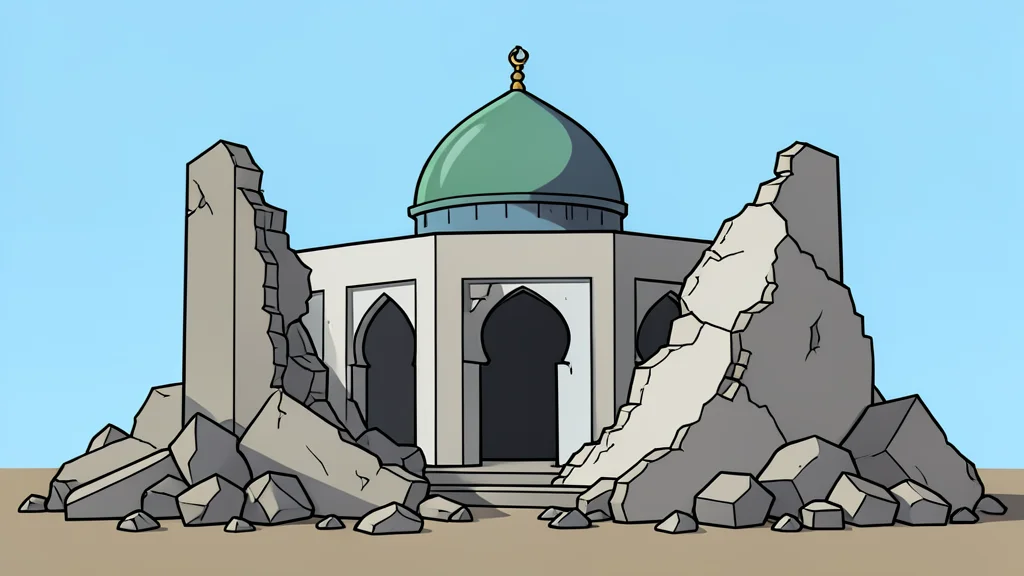
A vehicle-borne explosive and simultaneous gunfire targeted a religious site and security compound in northwestern Pakistan, resulting in significant casualties among law enforcement personnel.
A coordinated assault struck a mosque and adjacent police headquarters in the Khyber Pakhtunkhwa province of Pakistan on Friday, leaving at least 21 people dead and 80 others wounded. According to provincial police chief Zulfiqar Hameed, an attacker rammed an explosives-laden vehicle into the place of worship while armed gunmen attempted to breach the nearby security compound. The incident marks a significant escalation in violence in the region, with most of the fatalities reported to be police officers who were attending prayers at the time of the blast.
Witnesses described a chaotic scene where the outer walls of the police offices collapsed and the mosque structure was severely damaged, with rubble and debris filling the interior spaces. Gunfire followed the initial explosion, and residents reported that the exchange of fire continued for several hours. While no group has immediately claimed responsibility, authorities and analysts suspect the Tehrik-e-Taliban Pakistan (TTP) is behind the attack, given the group’s recent pattern of targeting security forces in the area.
Regional Security Dynamics
The attack occurs against a backdrop of intensifying militant activity near the Afghan border. The TTP has increasingly targeted police and military assets as the Pakistani government expands its counter-terrorism operations. This incident follows a roadside bomb attack in the Hangu district that killed six soldiers just days prior, highlighting the persistent threat posed by non-state actors in the northwest.
Cross-border tensions have further complicated the security environment. Since Pakistan conducted airstrikes on alleged TTP hideouts in Afghanistan, relations between the two nations have remained strained. Diplomatic efforts, including mediation by Qatar and Turkey, have so far failed to produce a lasting agreement, leaving the region vulnerable to further spillover of violence.
Diplomatic Mediation Efforts
International actors are actively seeking to de-escalate the situation. According to reports from the GN auto geopolitics/terrorism counter-terrorism desk, Turkish intelligence chief Ibrahim Kalin met with Pakistani Prime Minister Shehbaz Sharif and military leadership to discuss the conflict. Kalin indicated that Turkey would continue to facilitate dialogue between Kabul and Islamabad, aiming to resolve the underlying tensions through diplomatic channels rather than military confrontation.
Afghan officials have also engaged with Turkish and Qatari representatives, acknowledging the discussions regarding the bilateral tensions. However, the Pakistani government maintains that Kabul is harboring militant groups, a claim the Afghan Taliban government denies. The failure of recent peace talks suggests that diplomatic solutions remain elusive, leaving the security situation in Khyber Pakhtunkhwa precarious.
Forward Looking Indicators
Observers should monitor for further retaliatory strikes by the Pakistani military against suspected militant bases in Afghanistan, which could trigger another cycle of border clashes. Additionally, the internal security posture in Khyber Pakhtunkhwa will likely tighten, potentially impacting civilian mobility and economic activity in the region. The outcome of ongoing diplomatic dialogues involving Turkish and Qatari mediators will be critical in determining whether the current surge in violence can be contained or if it will expand into a broader regional conflict.