Modi and Xi Meet in New Delhi Amid Cautious Thaw
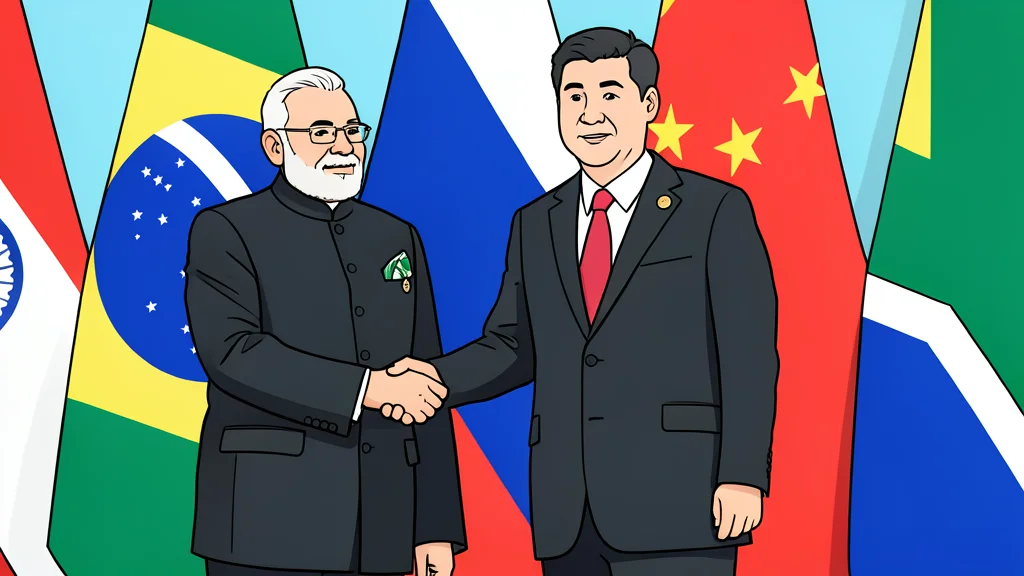
China’s leader arrives in India for the first time in seven years, signaling a tentative shift in one of Asia's most complex bilateral relationships.
President Xi Jinping arrived in New Delhi on September 12, 2026, for the BRICS summit, marking his first visit to India in seven years. The meeting with Prime Minister Narendra Modi represents a significant moment for a relationship that has endured considerable strain since the 2020 border clashes. According to the GN auto geopolitics/asia-pacific: India China border report, this engagement offers a critical opportunity to assess whether the diplomatic frost is genuinely thawing or if the interaction remains a calculated, low-level management of tensions.
The context for this meeting is heavily influenced by the shifting power dynamics between the two nations. While the relationship was once characterized by a sense of collegiate development, recent years have seen a widening gap in economic metrics and a hardening of public perceptions. The current diplomatic overtures appear to be driven less by shared ideological vision and more by strategic necessity and economic pragmatism on both sides.
Perceptions of Economic Asymmetry
Journalist and author Pallavi Aiyar, speaking in an interview with South Asian Voices, described the current state of relations as calibrated and cautious. She noted that the camaraderie of the early 2000s, when both nations viewed themselves as emerging Asian powers, has largely dissipated. Aiyar observed that in China, there is a growing perception that India is attempting to punch above its weight, a view fueled by the significant divergence in GDP per capita, which is now roughly five times higher in China.
This shift in perception has led to a more negative view of India among Chinese observers, who may see their neighbor as a laggard or a hubristic actor propped up by Western support. Aiyar suggested that this psychological distance makes genuine strategic cooperation difficult, as the sense of equal partnership has been replaced by a hierarchy of economic capability and global influence.
Strategic Calculus and External Pressure
The timing of this engagement is also linked to broader geopolitical pressures. According to Aiyar, Beijing views the current international climate, particularly the pressures exerted by the United States, as a potential window to dislodge India from anti-China alignments. By engaging India directly, China may be attempting to demonstrate that its interests do not necessarily align with the Quad or other Western-led security architectures.
Economic factors also play a central role in this tactical reset. India represents a massive market for Chinese goods, and Beijing has a need for outlets to absorb its industrial capacity. The shared border, spanning thousands of kilometers, ensures that regardless of political rhetoric, the two nations remain inextricably linked neighbors who must manage their differences to prevent conflict.
Uncertain Trajectory for Border Stability
As the summit proceeds, the focus remains on whether these high-level talks will translate into tangible improvements in border security and trade. The relationship is better than it was five years ago, but it remains far from the cooperative posture of two decades past. The forward question for analysts and observers is whether this meeting will serve as a genuine reset or merely a temporary pause in a long-standing strategic rivalry.