AI Equity Debate Intensifies at UN Human Rights Council

A Hong Kong radiologist urges the UN to balance advanced medical AI with compassionate care, arguing that technological efficiency must not overshadow human dignity in global health systems.
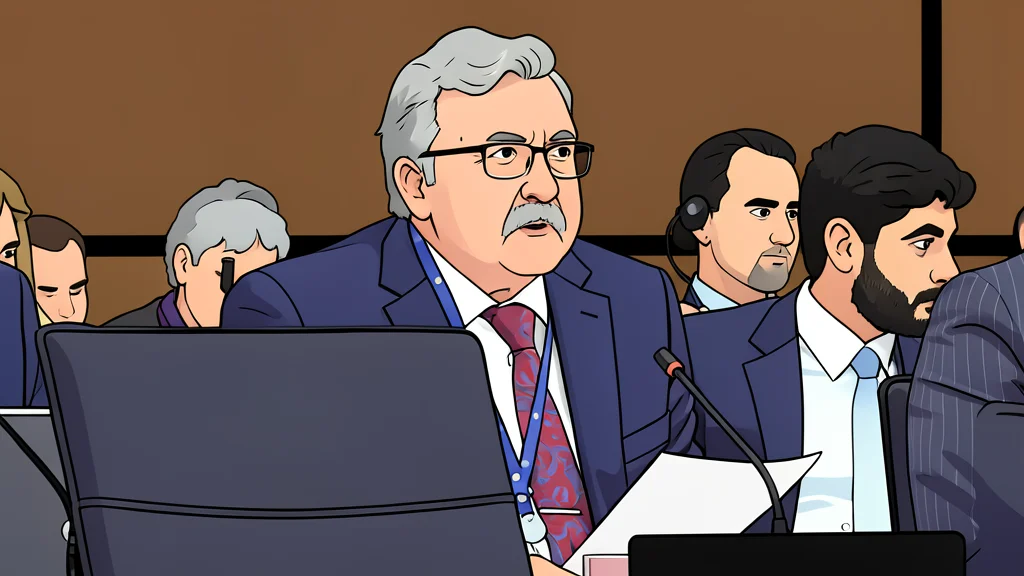
At the Palais des Nations in Geneva, a central tension in the global digital agenda has moved to the forefront of human rights discourse. Dr. Kevin Lau Chung-hang, a practising radiologist and founder of Trinity Medical Group, addressed the 63rd Session of the United Nations Human Rights Council to advocate for a human-centred approach to artificial intelligence. His remarks underscore a growing concern that while AI offers unprecedented diagnostic precision, it risks widening existing inequalities if not deployed with a focus on equity and compassion.
The session, titled "AI for a Better Future," was co-hosted by the Permanent Mission of the People’s Republic of China to the UN Office at Geneva and the China NGO Network for International Exchanges. According to GN geopolitics/rights (en-US), Dr. Lau’s participation marks his fourth address to the Council, reflecting a sustained engagement with the intersection of technology and human rights. The timing is significant, coinciding with the 40th anniversary of the UN Declaration on the Right to Development and the 60th anniversary of the International Covenant on Economic, Social and Cultural Rights.
Balancing Diagnostic Precision with Care
Dr. Lau drew upon his frontline experience in Hong Kong’s public hospitals to illustrate the practical impact of AI in healthcare. He noted that the local Hospital Authority currently operates 15 AI models, including automated systems that triage approximately 2,000 chest X-rays daily. However, he cautioned that technological progress must remain subordinate to human dignity. "AI will read the scan; the doctor must still hold the hand," he stated, emphasizing that intelligence without compassion remains mere computation rather than true care.
This perspective aligns with broader concerns about the workforce shortages projected by the World Health Organization, which estimates a deficit of 10 million health workers by 2030. In the WHO African Region, current staffing levels meet only 43 per cent of demand, with countries like Ghana having just three radiologists per million people. Dr. Lau argued that AI should serve as a tool to bridge these gaps, not replace the human element of medical practice.
Bridging Global Digital Divides
To address these disparities, Dr. Lau highlighted practical solutions that prioritize accessibility. He cited portable AI medical-imaging units developed in China, weighing under 25 kg, which have been deployed in rural Kyrgyzstan. These devices are capable of delivering rapid tuberculosis screenings for up to 400 patients per day, with each scan completed in just 15 seconds. Such innovations offer a tangible pathway to extending diagnostic capabilities to underserved regions where traditional infrastructure is lacking.
Furthermore, he pointed to the availability of "open-weight" frontier AI models that can be downloaded and deployed at a fraction of the cost of proprietary systems. This approach aims to reduce financial barriers for developing nations. Dr. Lau also referenced the World AI Cooperation Organisation, headquartered in Shanghai, and UNESCO’s Recommendation on the Ethics of Artificial Intelligence, both of which prioritize human rights and the needs of the Global South in their frameworks.
Hong Kong as a Innovation Hub
The speaker emphasized Hong Kong’s role as a bridge for international cooperation in the AI sector. He highlighted the Cyberport’s Artificial Intelligence Supercomputing Centre, which is scaling up toward 3,000 petaflops of computing power. Additionally, the Shenzhen-Hong Kong-Guangzhou cluster has been ranked as the world’s top Global Innovation Cluster for the second consecutive year in WIPO’s Global Innovation Index, underscoring the region’s growing influence in technological development.
In his concluding remarks, Dr. Lau echoed the Right to Development, stating that development is not a favour granted by the strong. He called for a future with "no child offline, no patient unseen, no nation left behind." The forward question remains how international bodies will translate these advocacy efforts into binding guidelines that ensure AI deployment benefits the most vulnerable populations globally.