Pakistan's CPEC Industrial Zone Faces Critical Infrastructure Shortfalls
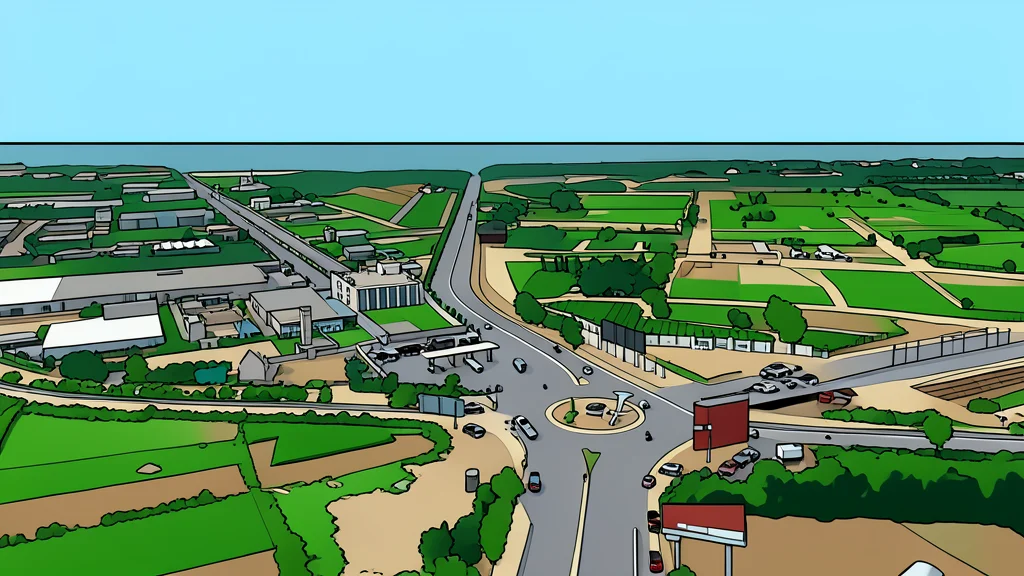
Despite billions in committed investment, Pakistan's flagship industrial zone lacks basic utilities and trade infrastructure, a new field survey reveals.
Faisalabad's Allama Iqbal Industrial City, the first Special Economic Zone prioritized under the China-Pakistan Economic Corridor, has attracted over 327 billion rupees in committed investment. However, a recent on-site survey indicates that physical infrastructure has failed to match this financial inflow. While 223 of the planned 424 plots have been allotted, tenants report significant gaps in basic services, creating a disconnect between the zone's strategic ambitions and its operational reality.
The assessment, which reviewed the zone's administration and four operating firms, highlights that water is supplied only through individual firm-bored wells due to the absence of a zone-wide piped network. Sewerage systems remain under construction, and no Combined Effluent Treatment Plant has been funded, forcing companies to manage industrial wastewater independently. These deficiencies are now listed among the most urgent priorities by the zone's own senior management.
Basic Utilities Remain Fragmented
According to the survey, the lack of centralized utility infrastructure presents a major operational hurdle for manufacturers. The zone's management acknowledges that the "One-Window Operation" facilitation service is not yet fully functional or time-bound. Additionally, there is no dedicated public transport for workers, and security measures for commuting staff are considered inadequate. These issues are particularly acute for firms that rely on stable power and water for continuous production cycles.
Tenant companies have echoed these concerns, noting that mobile signal and internet coverage across the zone is weak. This digital instability complicates customs filings and coordination with overseas buyers. One wall-tile manufacturer, employing 230 people, stated that reduced gas and electricity costs would be the most significant factor in improving its performance, indicating that energy reliability and pricing are critical pain points.
Trade Infrastructure Is Largely Absent
For a zone designed as an export-oriented manufacturing hub, the absence of basic trade infrastructure is a striking finding. The survey found that AIIC currently has no on-site warehousing, logistics, or customs facilities. These elements were explicitly marked as "not included" in the zone's own infrastructure assessment. Officials identified customs facilitation as the most serious barrier to exports, ranking it above energy costs.
The Diplomat notes that this gap compounds the delays already facing exporters. Without integrated logistics and customs support, firms cannot efficiently move goods to port. This structural deficit undermines the primary economic goal of the Special Economic Zone, which is to streamline production and facilitate international trade through reduced friction and cost.
Industrial Synergy Remains Weak
The survey also reveals limited integration among tenants. Three of the four companies surveyed, including a China-Pakistan steel joint venture, reported no supply or sourcing relationships with other firms in the zone. They operate as stand-alone units rather than as part of an integrated industrial cluster. Only one food-processing exporter reported a working intra-zone linkage, sourcing construction steel from a neighboring tenant.
Furthermore, two of the four firms surveyed, including the steel venture, reported exporting none of their output at all. This suggests that the current environment does not yet support the export-driven model envisioned for CPEC. The forward question is whether the zone administration can rapidly deploy the missing utility and trade infrastructure to transform these isolated operations into a cohesive, export-ready industrial ecosystem.