Bosnia President Condemns Serbia for Mladic Funeral Honors at UN
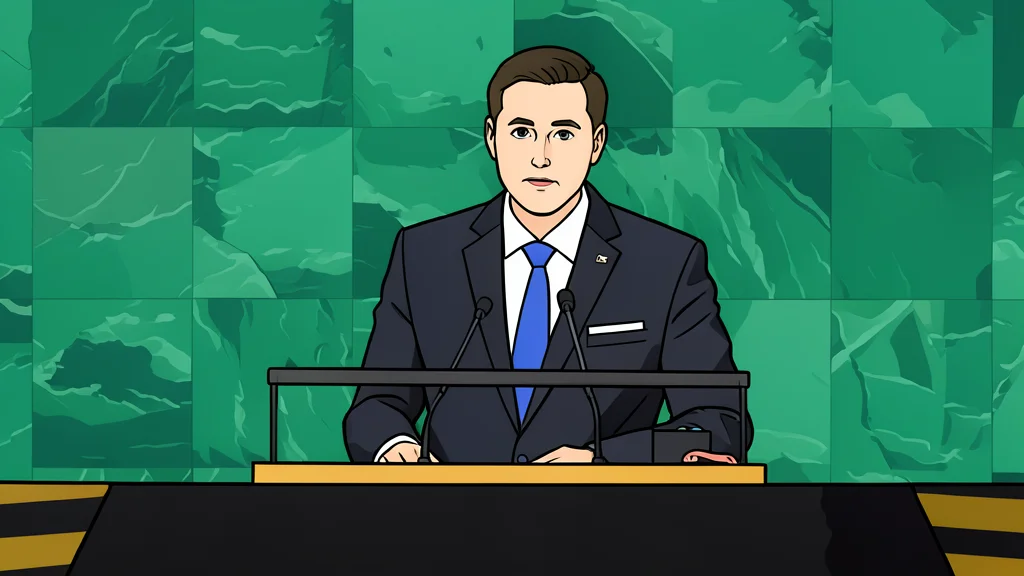
Bosnian presidency chair Denis Becirovic accused Serbian leaders of institutionalizing war criminal glorification during a speech at the UN General Assembly.
Key points
- Denis Becirovic accused Serbian leaders of violating international law by glorifying convicted war criminal Ratko Mladic at his funeral.
- Bosnian Serb presidency member Zeljka Cvijanovic condemned the speech as a unilateral political act that bypassed constitutional procedures.
- Becirovic urged the UN to take concrete measures against officials who honor war criminals, citing the threat to regional stability.
Denis Becirovic, the current chair of Bosnia and Herzegovina’s rotating state presidency, delivered a pointed critique of Serbian leadership during his address to the United Nations General Assembly in New York. Speaking on Tuesday, the Bosniak politician argued that recent state-level honors bestowed upon Ratko Mladic constitute a direct violation of international legal standards and a regression in regional stability.
According to reports from Balkan Insight, Becirovic characterized the public commemorations held in Belgrade for the late general as an "anti-civilisational act." He maintained that such gestures signal that Serbian authorities have not abandoned the ethno-nationalist ideologies that fueled the conflicts of the 1990s, thereby threatening the fragile peace in the Western Balkans.
Accusations of Ideological Continuity
Becirovic emphasized that international judicial bodies have definitively established that genocide occurred on Bosnian soil during the 1992-1995 war. He stated that the conviction of Ratko Mladic by the International Criminal Tribunal for the former Yugoslavia is a matter of settled law, not political opinion. By honoring a figure convicted of genocide and crimes against humanity, Becirovic argued, Serbia aligns itself with the perpetrators of some of Europe’s worst atrocities.
The former Bosnian Serb general died at age 84 while serving a life sentence in a detention unit in the Netherlands. Becirovic urged international organizations to move beyond verbal condemnation and implement concrete measures against political figures who continue to rehabilitate war criminals at the state level. He described the defense of historical truth as the only viable path to long-term regional peace.
Internal Dispute Over State Representation
The speech triggered immediate backlash from Bosnian Serb political leaders within the country. Zeljka Cvijanovic, the Serb member of the state presidency, rejected Becirovic’s characterization of the remarks as a state position. She accused him of bypassing constitutional procedures and engaging in a unilateral performance that reflected his personal views rather than the collective stance of the Bosnian state.
Cvijanovic stated that the address damaged internal trust and spread hate by manipulating facts about regional relationships. This dispute highlights the deep internal divisions within Bosnia’s tripartite leadership, where Bosnian Serb politicians often reject the jurisdiction of international courts regarding the Srebrenica massacres and view Mladic as a national hero rather than a convicted criminal.
Regional Stability and International Law
The confrontation at the UN underscores the ongoing tension between nationalist narratives in the Western Balkans and the rulings of international tribunals. While the Bosnian presidency argues for strict adherence to international legal precedents, local political actors continue to leverage wartime memory for domestic political gain. This divergence poses a challenge for European and international policymakers seeking to integrate the region into broader security and economic frameworks.
Observers will now watch for reactions from the European Union and other diplomatic partners, who must balance their support for the rule of law with the need for political compromise in a deeply divided country. The next few months may reveal whether international pressure can curb the glorification of war criminals or if such rhetoric remains a persistent feature of Balkan politics.