NHRC Survey Finds 71% of South Korean Local Council Members Face Discrimination

A new national survey indicates that the vast majority of local council members in South Korea have experienced unfair treatment or discrimination.
Key points
- 71.2% of surveyed local council members reported experiencing discrimination or unfair treatment.
- Local councils are currently excluded from mandatory human rights education despite existing ordinances.
- The NHRC recommends amending laws to mandate human rights training for council staff and members.
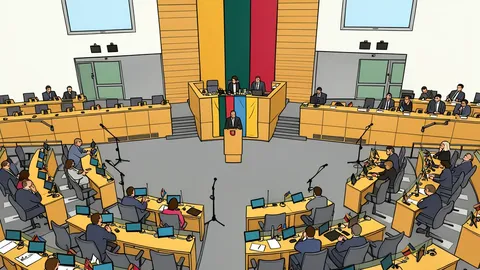
According to a recent survey conducted by the National Human Rights Commission (NHRC), 71.2% of local council members in South Korea have experienced discrimination or unfair treatment within their workplaces. The study, which targeted 525 council members and 79 human rights instructors, highlights a significant gap between the expected role of local councils as protectors of human rights and the reality of internal organizational culture.
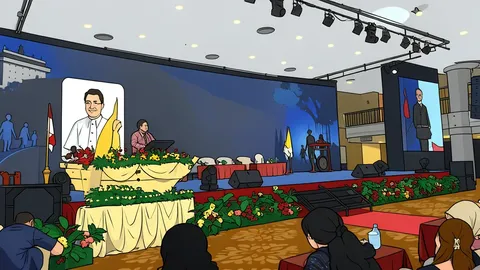
The findings were presented at a discussion held on September 22 at the National Human Rights Education Institute in Yongin, Gyeonggi Province. The commission noted that while many metropolitan and municipal governments have enacted basic human rights ordinances, local councils remain largely excluded from mandatory human rights education, leading to recurring issues such as power abuse and workplace bullying.
Survey reveals deep-seated hierarchical issues
The data indicates that 60.4% of respondents described their councils as operating under an authoritarian hierarchy, while 27.8% reported experiencing workplace bullying. The NHRC criticized the tendency within these bodies to dismiss such incidents as routine practices or personal conflicts rather than recognizing them as systemic human rights violations. This lack of capacity to define problems through a human rights lens has allowed similar issues to recur under a culture of silence.
Recent high-profile incidents underscore the severity of these problems. One case involved a professional committee member in the Yongsan District Council who was dismissed after allegedly insulting a contract worker with derogatory remarks about their educational background and family occupation. Another case in Gangseo District involved a councilor facing controversy for habitual verbal abuse toward public officials, illustrating the persistent nature of such conduct despite public scrutiny.
Education gaps hinder organizational reform
The NHRC identified the absence of structured human rights education as a primary reason for low awareness and recurring violations. Although 16 metropolitan and municipal governments have implemented their own human rights ordinances, council members and their staff are often exempt from mandatory training. Jang Myeong-seon, a representative from the Constitutional Policy Research Institute who conducted the survey, noted that only four councils provided records of human rights education between 2022 and 2024, with many confusing it with standard violence prevention training.
To address this gap, the discussion proposed institutionalizing human rights education by linking its completion to political party nominations and legislative performance evaluations. Kim Beom-jo, head of the NHRC’s Human Rights Education Planning Division, suggested that political parties should create environments for pre-election training, allowing council members to carry this awareness into their legislative activities from the start of their terms.
Recommendations for legal and institutional change
The commission has recommended that the Ministry of the Interior and Safety amend existing laws, including the Local Public Officials Training Act, to mandate human rights education for all council members and staff. Additionally, provincial governors are urged to include council-targeted human rights education in their training plans and to develop specific content that addresses the unique challenges of local governance.
Internationally, the integration of human rights education into local governance is more established. For example, the UK’s Local Government Association distributes workbooks on equality and inclusion, while Canada’s Saskatoon City mandates ethics and anti-bullying training within 60 days of elections. These examples provide a framework for South Korea to consider as it seeks to strengthen the human rights culture within its local councils. The coming months will likely see further debate on how to legally enforce these educational requirements.